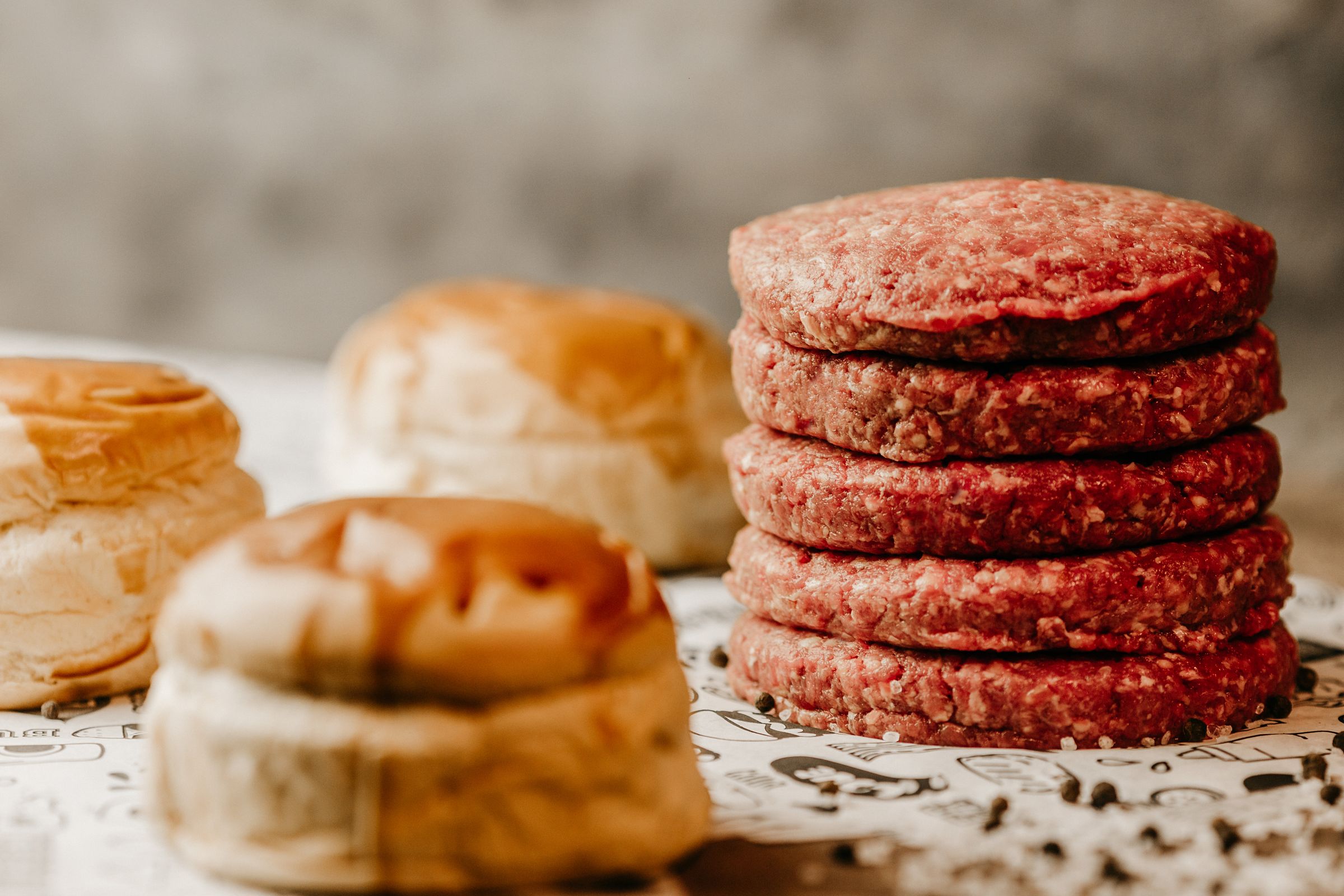
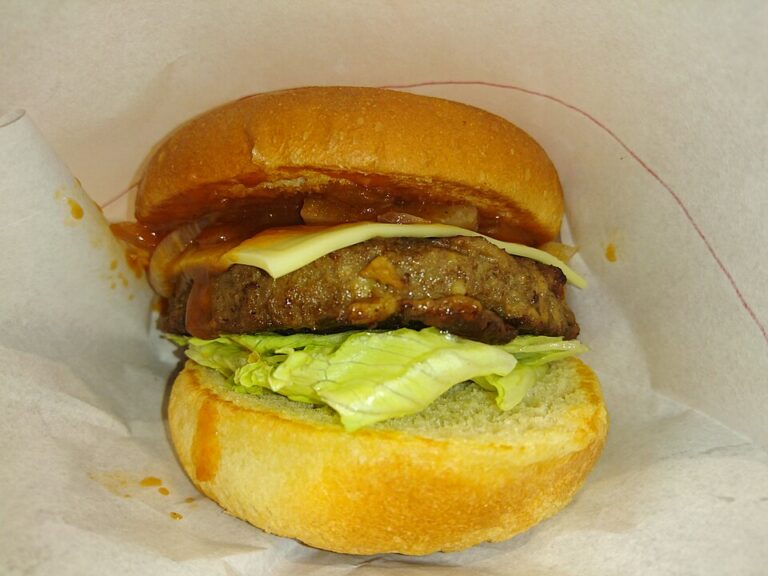
A juicy beef burger does not depend on hiding the meat under cheese, sauces and toppings. The result is largely decided before those extras arrive: meat quality, fat level, thickness, handling and cooking. A good fresh beef patty can taste excellent with salt, a properly heated pan and a few minutes of attention.
Ground meat is different from an intact steak. Grinding greatly increases exposed surface area and can distribute microorganisms from the original surface throughout the patty. That makes internal temperature particularly important when cooking burgers.
Start with a burger that suits the result you want
If you buy formed patties, check the weight, composition and storage instructions. A 100% beef burger lets the flavour and texture of the meat remain central. If you shape your own from minced beef, do not knead it like bread dough: excessive handling can make the final texture dense.
Form patties slightly wider than the bun because they will shrink during cooking. Around 1.5-2 cm thick is manageable in a home kitchen and gives you enough depth to brown the outside without unnecessarily drying the interior.
Should you make a dent in the centre?
With relatively thick patties, a gentle indentation in the centre can help. Meat contracts as it cooks and often bulges upwards; a shallow depression helps the burger remain more even.
You do not need to make a hole or press aggressively. A light thumbprint on one side before cooking is enough.
When should you salt a burger?
For an already formed patty, season the outside immediately before it goes onto the heat. Mixing salt throughout ground beef a long time before cooking can change the protein structure and produce a tighter, more sausage-like texture.
Pepper, spices and herbs are optional. If the beef itself is good, start simple and add only flavours that genuinely improve the burger you want.
Pan, griddle or barbecue?
All three work. A heavy frying pan gives excellent control and holds heat well. A flat griddle makes it easier to cook several patties. A barbecue adds fire and smoke character but needs more attention because dripping fat can create flare-ups.
Whichever method you choose, preheat properly. A surface that is not hot enough extends cooking time and makes strong browning more difficult. If the beef already has enough fat, very little additional oil may be needed.
Do not keep pressing the burger while it cooks
A common mistake is repeatedly pushing down with a spatula. This forces rendered fat and moisture out onto the cooking surface. It may create an impressive sizzle, but it does not help the burger stay juicy.
The deliberate exception is a smash burger, where a ball of beef is firmly pressed at the beginning against a very hot griddle to maximise crust. That is a different style. A thick burger intended to retain a substantial centre should not be repeatedly smashed halfway through cooking.
How often should you turn it?
There is no need to treat “turn only once” as a strict law. Turn the patty when a good crust has developed and continue cooking until the centre reaches the target. Sensible turning does not magically trap or release juices; total exposure to heat matters much more.
Use a wide spatula rather than stabbing the burger with a fork.
Internal temperature matters with ground beef
Unlike an intact steak, the original meat surface has been mixed throughout a burger. As a conservative food-safety standard, USDA recommends cooking ground beef to 71 °C / 160 °F in the centre, measured with a food thermometer.
For a thin patty, insert the thermometer probe from the side so the tip reaches the true centre. Interior colour alone is not a reliable safety test.
How can a burger reach 71 °C without becoming unnecessarily dry?
The answer is not to cook slowly for a very long time. A burger can reach a safe temperature while retaining good eating quality if you start with suitable beef, avoid overworking it, use a practical thickness and brown it over sufficient heat.
- Preheat the cooking surface properly.
- Do not press the patty during cooking.
- Measure the centre instead of adding several “just in case” minutes.
- Remove it once the target is reached rather than leaving it over heat.
- Do not hold finished burgers on the hot griddle while waiting for everybody else.
What about very thin burgers?
Thin patties cook quickly and develop a high proportion of browned surface. With this format, the main challenge is not preserving a rosy centre but removing them promptly once cooked. Have the buns and toppings ready before the meat goes on.
For several people, cook in batches rather than crowding the griddle. Too much cold meat at once lowers the surface temperature and encourages steaming.
When should cheese be added?
Add cheese at the end, when the burger is almost finished. Covering the pan briefly can help it melt without dramatically extending the meat's cooking time.
Do not leave the burger on the heat for an extra minute simply to melt cheese. On a small patty, that extra minute can noticeably dry the meat.
Does a burger need to rest?
It does not need the long rest used for a large beef roast or thick steak. A minute while you assemble the bun is usually plenty. A thin burger left for five or ten minutes will simply cool and may release more liquid into the bun.
How should raw burgers be stored?
Ground meat has a shorter refrigerated window than an intact steak. USDA home-storage guidance recommends using or freezing raw ground beef within 1-2 days when held at 4 °C / 40 °F or below. Always follow the label if the product gives a shorter period.
If you buy several packs for later meals, freeze the portions you will not use promptly. Our guide to storing fresh meat explains how to organise a larger order.
Burgers are useful for barbecue planning
They are also one of the easiest formats to count for a group. You can plan one patty per adult as part of a mixed menu and add other cuts around it. For larger gatherings, see our guide to how much meat to buy for a barbecue.
Common mistakes that dry out burgers
- Using extremely lean beef when you want a rich, juicy result.
- Compressing and kneading the patty too much.
- Starting with a pan that has not fully heated.
- Repeatedly pressing with the spatula.
- Adding extra cooking time without measuring the centre.
- Holding cooked patties over heat while the rest of the meal catches up.
Food-safety reference
The ground-beef temperature guidance used here comes from the USDA Food Safety and Inspection Service ground beef safety guidance.
Fresh burgers and meat available from the shop
-
Sale!
 Select options
This product has multiple variants. The options may be chosen on the product page
Select options
This product has multiple variants. The options may be chosen on the product page




 4 Weekly 7 kg Vegetable Boxes
  Lean diced beef / beef ragout