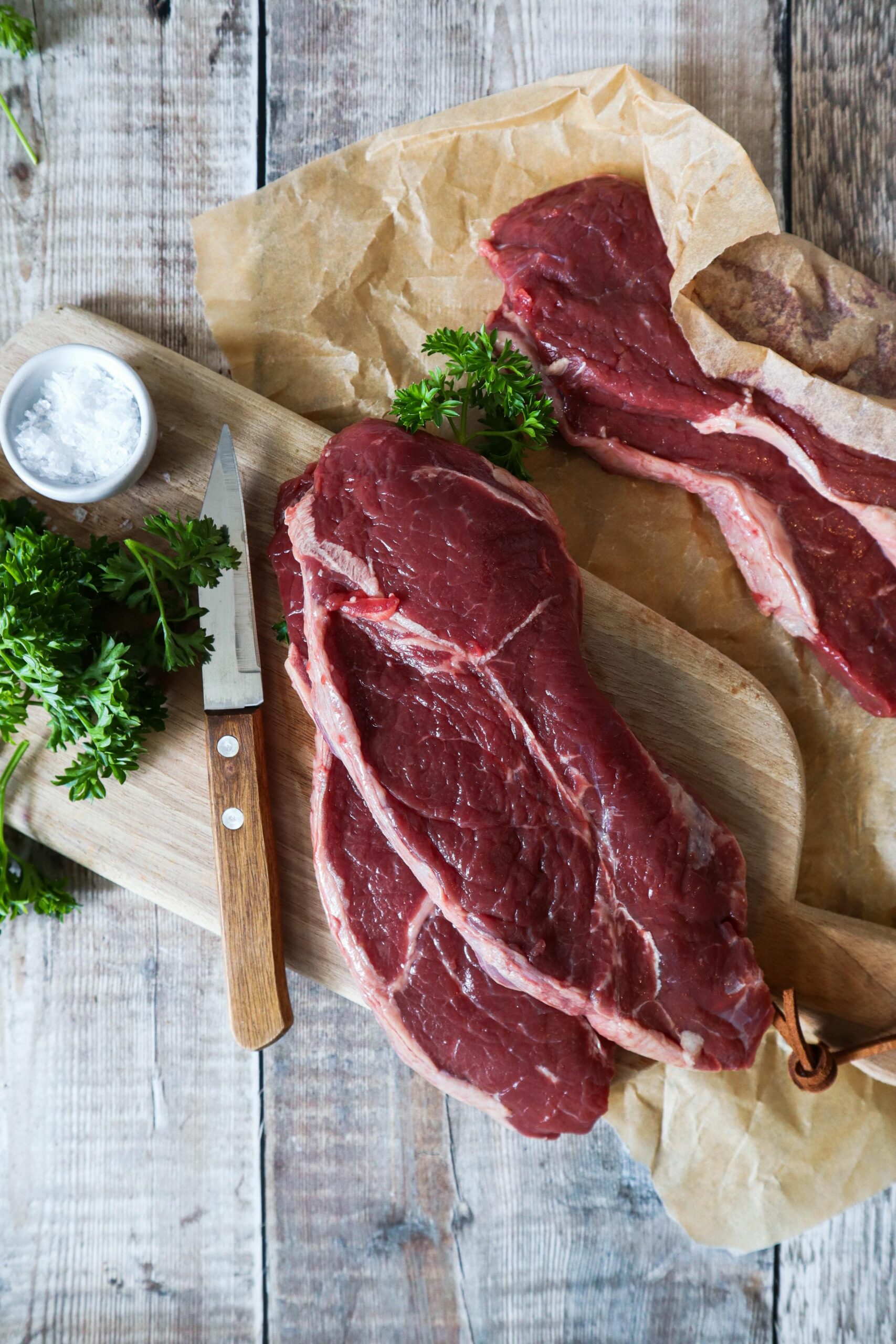
Cutting meat against the grain means slicing across the direction of the muscle fibres. It is a simple technique, but it can noticeably improve the perceived tenderness of steaks, roasts and cuts with pronounced fibres. It does not chemically tenderise meat; it simply shortens the fibres you have to chew.
The method is especially useful for active-muscle cuts such as chuck, lean roasting pieces, skirt-type cuts and many steaks served in slices. Learning to see fibre direction helps you get more from the beef without changing the recipe or adding ingredients.
What is the grain of meat?
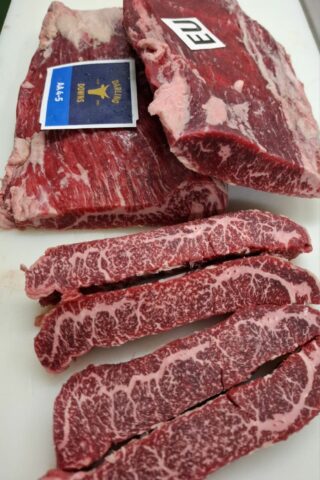
Look closely at raw or cooked beef and you can often see long lines running through the muscle. These indicate the main direction of the muscle fibres. This is the “grain” in the phrase “cut against the grain”.
Slice parallel to those lines and each piece contains long fibres. Slice across them and the same fibres are divided into much shorter sections. Your teeth then have less work to do, which makes the bite feel more tender.
Why does cutting against the grain improve tenderness?
Perceived tenderness does not depend only on how soft the cooked muscle is. Fibre length within each bite matters too. A properly cooked piece can still feel chewy when served with long fibres, while exactly the same beef can feel more tender after correct slicing.
This does not replace good cooking. Overcooked steak will still be dry, and a connective-tissue-rich cut may still need slow cooking. Final slicing is simply one of the easiest improvements available.
How to identify fibre direction
- Look for parallel lines on the surface of the beef.
- Notice the direction in which the muscle bundles stretch.
- Check several areas of a large cut because the grain can change.
- If fat or marinade hides the surface, inspect a clean side.
- When unsure, make one small test cut and inspect the cross-section.
It is often easier to identify the grain while the beef is raw. Remember its direction before cooking so you know how to position the knife later.
What does “against” the grain actually mean?
Imagine the fibres running from left to right. Cutting against them means bringing the knife from top to bottom, crossing those lines at roughly a right angle. Mathematical precision is unnecessary, but a more perpendicular slice leaves shorter fibres.
You may also angle the knife relative to the board to create wider slices. Do not confuse that slicing angle with the direction of the cut relative to the muscle fibres.
How to cut against the grain step by step
- Find the grain before or after cooking.
- Position the meat so the fibre lines are easy to see.
- Use a sharp knife to avoid tearing the surface.
- Slice across the fibres rather than following them.
- Choose the thickness according to the cut and dish.
- Serve promptly if the beef is already cooked.
Should you slice before or after cooking?
It depends on the dish. A steak or roast is normally cooked whole and sliced after resting. For stir-fries, fajitas and some skewers, raw beef can be sliced against the grain before cooking to create tender strips.
When slicing raw meat, keeping it properly chilled helps it hold its shape and makes even slices easier. Maintain good hygiene and keep utensils that touched raw meat away from ready-to-eat food.
How thick should slices be?
| Preparation | Useful thickness | Goal |
|---|---|---|
| Roast served in slices | Medium to thin | Easy chewing without losing all texture. |
| Stir-fry strips | Thin | Fast, even cooking. |
| Large steak for sharing | Medium slices | Preserve juiciness and show internal doneness. |
| Very fibrous beef | Thinner slices | Shorten the fibres further in each bite. |
There is no universal thickness. The more pronounced the grain, the more noticeable the benefit of relatively thin slices.
Which cuts benefit most?
The technique is most useful for cuts with long visible fibres and muscles that work harder. Beef chuck is a good example. It also helps with lean roasting cuts, skirt-type steaks and beef prepared as strips.
The effect may be less dramatic in an exceptionally tender fillet, but slicing across visible fibres is still good practice.
How to slice cooked steak
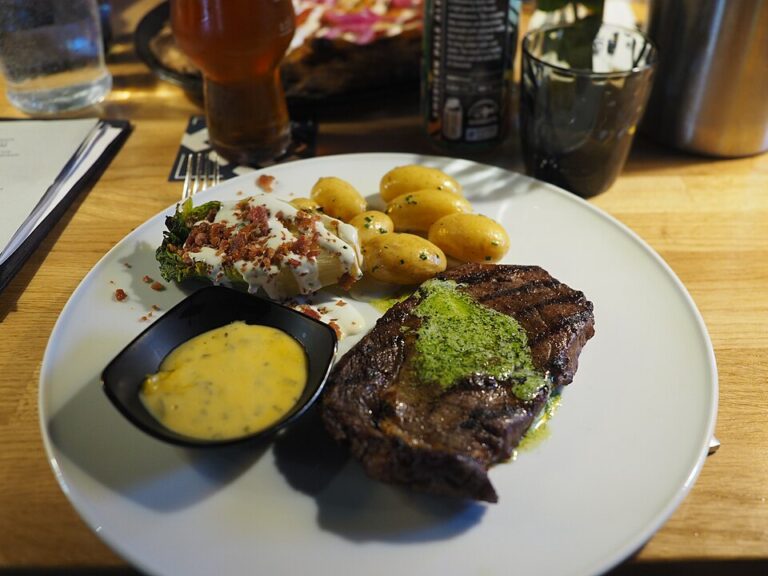
After cooking a thick steak, allow it to rest appropriately for its size. Then identify the fibres again, especially if the browned crust has made them difficult to see. Use long, clean knife strokes rather than repeatedly sawing through the meat.
Correct slicing is especially valuable for lean beef. See our guide to cooking tender and juicy beef steaks.
How to cut beef for stir-fry
Find the grain in the raw piece and rotate the beef so the knife can cross it. Make strips of similar thickness so they cook at the same speed. If some are very thin and others thick, the smallest pieces will dry out first.
Cook in batches in a properly hot pan to avoid excess steaming. Good slicing improves texture, but it cannot compensate for prolonged overcooking.
What if the grain changes direction?
Some large pieces contain different muscles or fibre groups running in different directions. Do not force yourself to slice the entire roast one way. Separate it along natural divisions, then rotate each section before slicing.
This is particularly useful with irregular roasts. The aim is for the final slices to cross the main grain of each individual section.
The knife matters too
A long, thin, sharp knife creates clean slices with less pressure. A dull blade crushes and tears meat, especially when it is juicy. You do not need an exotic tool, but you do need a maintained edge and a stable cutting board.
For bone-in meat, do not force a slicing knife against bone. Separate the meat appropriately first, then slice the edible portion against the grain.
Common mistakes
- Following the fibre lines because they look like the natural slicing direction.
- Failing to check whether grain direction changes across a large cut.
- Using a dull knife and tearing the meat.
- Slicing a roast immediately without resting it.
- Cutting stir-fry strips in very different sizes.
- Assuming against-the-grain slicing can fix severely overcooked meat.
Frequently asked questions
Does cutting against the grain change flavour?
No. The flavour is unchanged, but texture and the overall eating experience can improve substantially.
Can meat be cut against the grain before cooking?
Yes, especially for strips, stir-fries and some marinades. Large roasts are generally easier to cook whole and slice afterwards.
What if I cannot see the fibres?
Inspect the sides, change the lighting or make a small test cut. Grain can be less obvious in very tender or heavily marbled cuts.
Improve any cut with one simple technique
Buying good beef matters, but preparation matters too. Identifying the grain and slicing across it takes seconds and can make the same piece much more enjoyable to eat.
-
Sale!
 Select options
This product has multiple variants. The options may be chosen on the product page
Select options
This product has multiple variants. The options may be chosen on the product page



 Hot Green Peppers in Vinegar, 314 ml
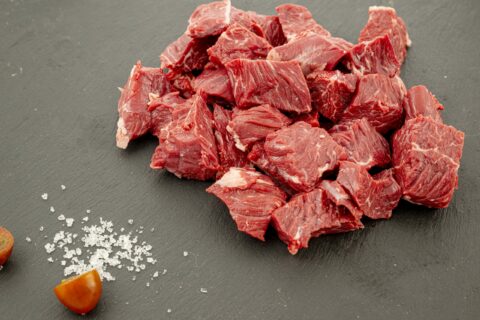
 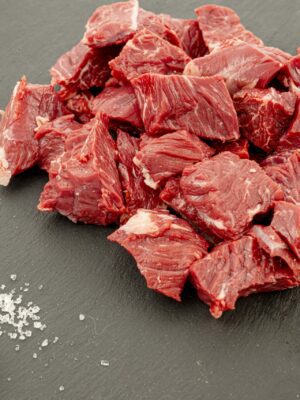 Lean diced beef / beef ragout