
A piece of meat can sit in a freezer for weeks or months before the obvious question appears: is it still good? The answer depends on what “good” means. Food safety and eating quality are not the same thing. Meat kept continuously frozen at around -18°C can remain safe for a very long time, while flavour, juiciness, colour and texture gradually decline.
Domestic freezer charts should therefore be read mainly as quality guidelines, not automatic expiry dates. Whole cuts, ground meat, burgers and cooked dishes do not deteriorate at the same rate, and packaging makes a major difference.
Quick freezer storage table
| Type | Best-quality guideline at -18°C | Why |
|---|---|---|
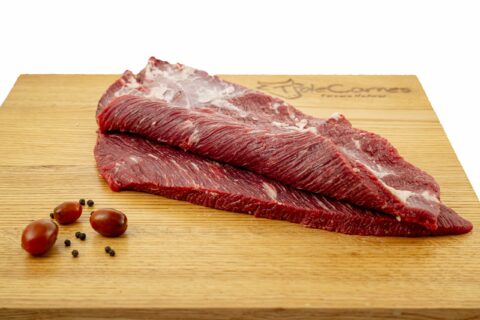
| Beef steaks and whole cuts | 4–12 months | Less exposed surface |
| Roasts and large pieces | 4–12 months | Structure is well protected when wrapped correctly |
| Raw ground beef | 3–4 months | Very large exposed surface area |
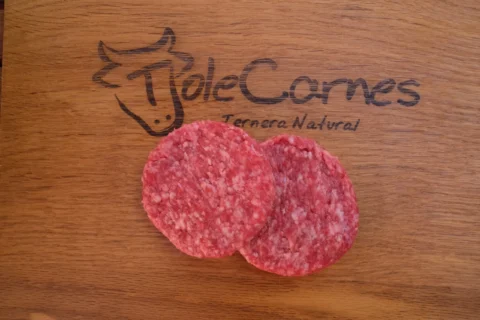
| Raw burgers | 3–4 months | Similar behaviour to ground meat |
| Cooked beef | 2–3 months | Texture and accompanying sauces may decline sooner |
These ranges align with common food-safety guidance such as USDA freezer storage recommendations. If food has remained continuously frozen, the end of a quality window is not a switch that suddenly makes the meat unsafe.
Does frozen meat never expire?
Freezing stops microbial growth, but it does not sterilise food and it does not reverse anything that happened before freezing. Slow chemical and physical changes continue: oxidation, dehydration and damage caused by ice crystals can all affect the final eating quality.
The statement that continuously frozen food can remain safe indefinitely only makes sense when the cold chain has genuinely remained intact. Home freezers can experience door openings, power cuts, partial thawing or unstable temperatures.
Why whole cuts keep quality longer than ground beef
A steak or roast leaves much of the muscle protected inside the cut. Grinding dramatically increases the surface exposed to oxygen. Pigments and fats become more vulnerable to oxidation, and texture can suffer more quickly.
That is why an eight-month-old frozen burger may be noticeably poorer in quality than a whole beef cut stored for the same period even if both remained safely frozen.
What freezing does to meat
Water in the tissue forms ice crystals. Slower freezing tends to produce larger crystals that can damage cellular structures more. During thawing, part of the liquid is then released as purge.
Freezing does not automatically ruin meat. Fast freezing, tight packaging and controlled thawing can preserve excellent quality. But every freeze-thaw cycle adds physical change, which is why our guide to refreezing thawed meat separates safety from quality.
Freezer burn: what it is
Dry grey-brown or pale patches caused by air reaching the frozen surface are known as freezer burn. Water leaves the exposed area, producing dry and leathery texture.
Freezer burn is primarily a quality problem, not evidence of food poisoning. Small affected areas can be trimmed. If most of a premium cut is badly burned, it may simply no longer be worth cooking.
Packaging can add months of useful quality
Original retail packaging may be adequate for a short period if intact. For longer storage, reduce air contact as much as possible. Heavy freezer bags, tight double wrapping and vacuum packaging are all useful.
- Press excess air from freezer bags.
- Freeze in meal-size portions.
- Label contents and date clearly.
- Freeze ground beef in thin flat packs for faster freezing and thawing.
- Avoid loading the freezer with a large volume of warm food at once.
Does vacuum packaging make frozen meat last forever?
No. Vacuum packaging is excellent at reducing dehydration and oxidation, so it often preserves quality better than a loose bag full of air. It does not stop every physical change and it cannot compensate for an interrupted cold chain.
Vacuum-packed raw beef can also look darker or more purple because less oxygen is available to the meat pigment. Colour alone should not be treated as a spoilage test.
How long can you freeze steak?
Steaks and whole beef cuts generally sit in the four-to-twelve-month quality range when frozen and packaged well. For premium steak intended for a very simple cooking method, using it sooner can make sense because subtle aroma and texture matter more.
If you are freezing a premium cut for a particular meal, label both the freezing date and the exact cut. This simple habit prevents an expensive steak from remaining forgotten for months merely because it is still frozen.
How long can you freeze ground beef?
Ground beef is more delicate. Aim for about three to four months for best quality. Longer continuous frozen storage does not automatically mean unsafe food, but oxidation, colour change, purge and stale flavours become more likely.
How long can you freeze burgers?
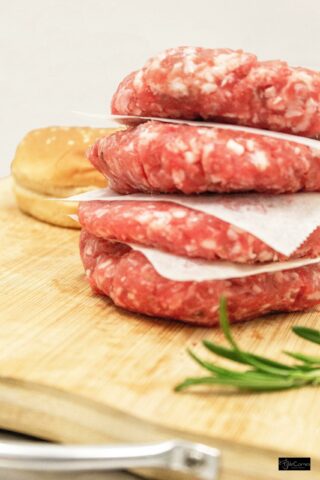
Raw burgers behave much like ground beef: roughly three to four months for best quality. Burgers containing cheese, vegetables or sauces may behave differently because each ingredient freezes differently.
Separate patties before freezing so that you can remove only the number required.
Cooked beef has a shorter quality window
Cooked beef dishes are commonly kept for around two to three months for best freezer quality. Sauces, emulsions, potatoes and vegetables can deteriorate before the meat itself. Stews often freeze well because the sauce helps protect moisture.
Cool cooked food promptly, divide it into shallow containers and freeze in practical portions rather than leaving a large pot at room temperature for hours.
The real freezer temperature matters
These guidelines assume a freezer around -18°C. A small compartment that barely maintains freezing temperature and fluctuates frequently is not equivalent.
If you depend heavily on frozen storage, a simple independent freezer thermometer is useful. Stable areas away from the door are normally better for meat.
How can you tell that frozen meat has been stored too long?
Before thawing, look for torn packaging, huge ice crystals, severe freezer burn or signs of partial thawing. After safe refrigerator thawing, assess odour, surface condition and the package. A clearly unpleasant smell, abnormal slime or a doubtful temperature history are reasons to discard the meat.
Colour alone is not enough. Myoglobin can change colour because of oxygen conditions without the meat necessarily being spoiled.
Do not ruin months of good storage during thawing
The refrigerator is the best general method because the meat stays cold throughout the process. Cold-water and microwave thawing are faster, but the meat should normally be cooked immediately afterwards.
Do not leave meat on the counter for hours. The surface can warm into a temperature range favourable to bacterial growth while the centre remains frozen.
A simple freezer priority system
- Use ground meat and burgers first.
- Then rotate cooked meat dishes.
- Well-wrapped whole cuts have more quality margin.
- Always date every pack.
- Follow FIFO: first in, first out.
Bottom line
For quality, think 3–4 months for ground beef and burgers, 2–3 months for cooked beef and roughly 4–12 months for steaks, roasts and whole cuts. These are quality windows rather than magical safety deadlines.
Stable temperature, low-air packaging, sensible portions, visible dates and safe thawing matter more than any single number. Managed properly, the freezer is not where meat goes to be forgotten; it is a practical tool for buying and cooking better.


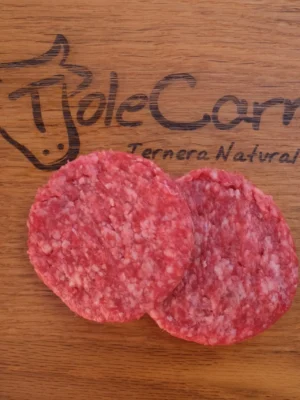 100% beef burgers – gluten-free (2)