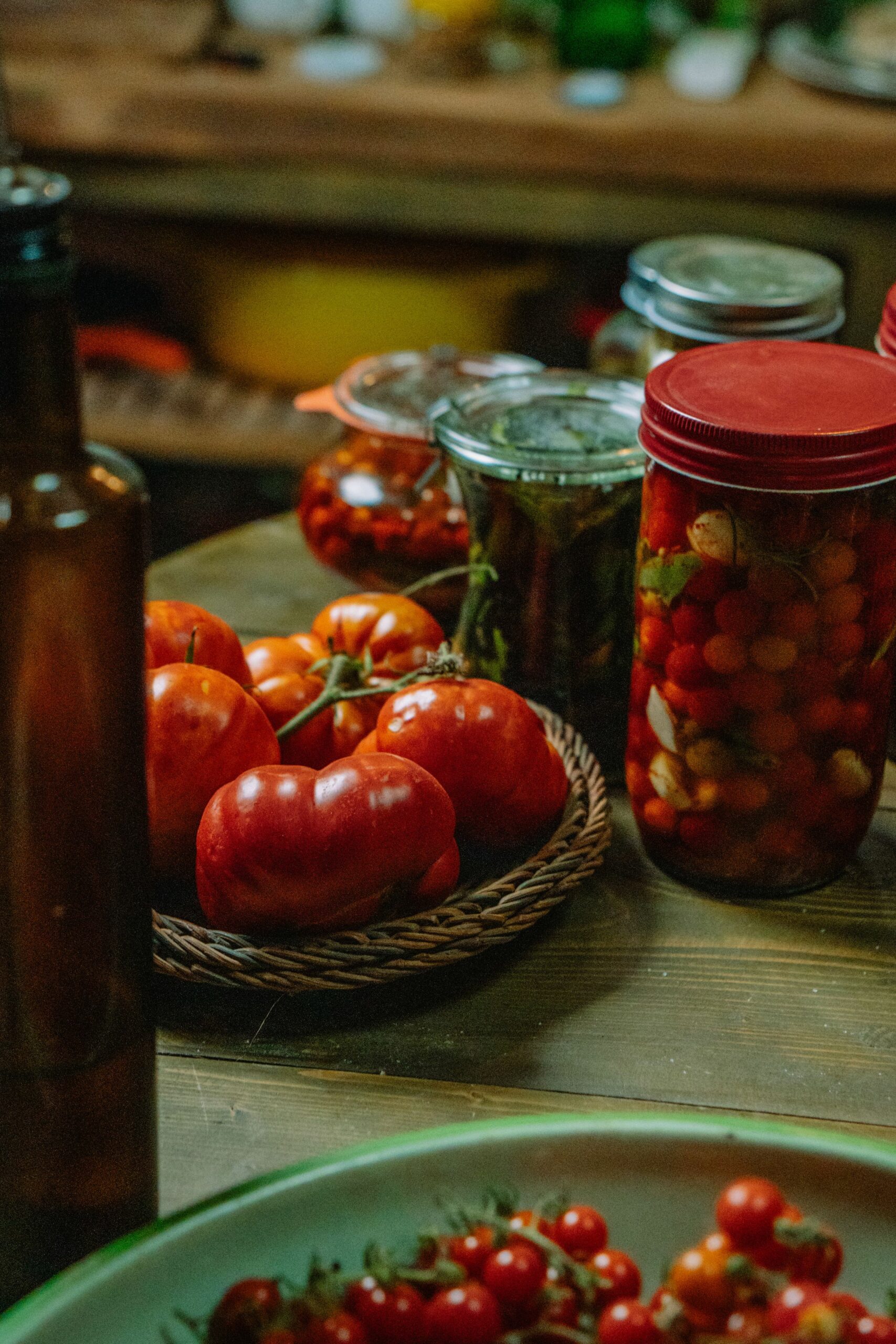
A good vegetable preserve can look extremely simple: a jar, vegetables and a packing liquid. Yet the label contains far more useful information than most shoppers use. Reading it properly lets you compare products fairly, understand how much food you are actually buying and identify formulation choices that influence taste, texture and culinary use.
Food information in the European Union is regulated in considerable detail. Labels do not all have to look identical, but certain information must be provided clearly. The useful skill is knowing what each item means and, equally importantly, what it does not prove.
Start with the name of the food
A brand can use creative marketing language, but the legal or descriptive name of the food should tell you what you are buying. Roasted peppers are not the same as a pepper preparation, vegetable spread or vinegar preserve. This description gives context before you interpret claims on the front of the jar.
Where preparation affects the nature of the food, wording such as roasted, peeled, chopped, pickled or packed in oil may be needed so the consumer is not misled.
Ingredients are generally listed by quantity
Ingredients are normally declared in descending order of weight as they are used in manufacturing. The first items therefore tell you a great deal. In a straightforward vegetable preserve, you would normally expect the featured vegetable to play a major role.
Water, oil, vinegar, salt, sugar, spices, acids or other ingredients may follow depending on the recipe. A longer ingredient list is not automatically worse: a pickle or marinade naturally requires a different formulation from vegetables packed in water. The important question is whether the recipe suits the product you want.
Why some featured ingredients show a percentage
When an ingredient appears in the name, is emphasised in words or pictures, or is essential to characterise the food, EU rules may require a quantitative declaration of that ingredient. This helps consumers interpret products where one component is central to the marketing.
Not every ingredient needs a percentage, so the absence of a figure beside a minor ingredient does not automatically mean the label is incomplete.
Net weight and drained net weight
For solid food presented in a liquid medium, the total contents include that liquid. Where applicable, the label also gives a drained net weight: the amount of solid food remaining when the packing medium is removed under the relevant conditions.
This is one of the most useful figures when comparing two similar jars. They may have identical total weight while one contains more liquid and less vegetable. If you do not use the liquid, drained weight is much closer to the amount that will actually reach the plate.
The packing liquid is not always waste
Water, brine, oil, vinegar or sauce are part of the product design. Some are normally discarded, while others can have culinary value. Oil may carry aromas from the preserved vegetables; a strong brine may be less useful in the final recipe.
There is no universal rule that the liquid must always be thrown away. Check its ingredients and taste. Use it when it improves the dish and drain it when it does not.
Salt, sugar and the nutrition declaration
Salt can come from the vegetable itself and from the packing liquid. Nutrition information helps compare products more objectively. If the preserve will be combined with cured meat or another salty ingredient, checking salt before seasoning the dish can prevent an unbalanced result.
The nutrition line for sugars includes sugars naturally present in food as well as any added sugars. The ingredient list tells you whether sugar has actually been added as an ingredient.
Allergens must be identifiable
If a preserve contains an allergen that is subject to mandatory declaration, it must be emphasised in the ingredient list so it can be identified. This is especially relevant in sauces, marinades and more complex preparations even when the main vegetable itself is not an issue.
People with food allergies should always read the product-specific information and any relevant cross-contamination warnings rather than judging from the appearance of the jar.
Best-before and use-by dates are different
Many shelf-stable preserves use a best-before date, which relates to the period during which the food retains its expected quality under suitable conditions. A use-by date is intended for foods that are highly perishable from a microbiological point of view and may present an immediate danger after a short period.
The distinction matters. In either case, a severely damaged, leaking, swollen or compromised container requires separate attention regardless of the printed date.
Ambient storage instructions apply to the unopened product
A commercially sterilised preserve can remain shelf-stable while sealed and intact when stored according to the producer's instructions. Opening changes the system: air enters, utensils can introduce microorganisms and the sealed barrier that supported shelf stability is gone.
That is why labels commonly specify refrigeration after opening and may state how quickly to consume the product. Those product-specific instructions take priority over general rules.
Does the label have to state origin?
Origin is not mandatory in exactly the same way for every food. EU law requires it in particular situations and also where failing to state it could mislead consumers about the food's true origin. Protected quality schemes and sector-specific rules can add further requirements.
A flag on the front, the address of the responsible company, the place of manufacture and the agricultural origin of the vegetable are not necessarily the same thing. They should not be treated as interchangeable.
The operator's address is not proof of where vegetables were grown
The label identifies the food business operator responsible for the information. That address tells you who is commercially responsible, but it does not automatically prove where the peppers, tomatoes or other ingredients were grown.
If agricultural origin matters to you, look for a specific origin statement or clear producer information rather than inferring it from a company address.
How to compare two preserves quickly
First make sure they are genuinely the same type of product. Then compare drained weight, the first ingredients, salt, packing medium and jar size. Check storage instructions after opening and consider whether you normally finish that size before quality declines.
Finally think about use. A preserve intended to be eaten straight from the jar needs a different balance from one that will become part of a stew or sauce. The most useful label is not the shortest one; it is the one that lets you understand what you are buying and how to use it.



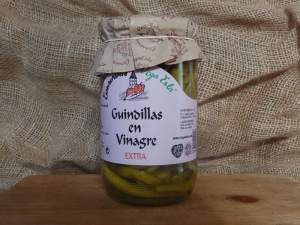 Chili Peppers in Vinegar, 720 ml
  Lean diced beef / beef ragout