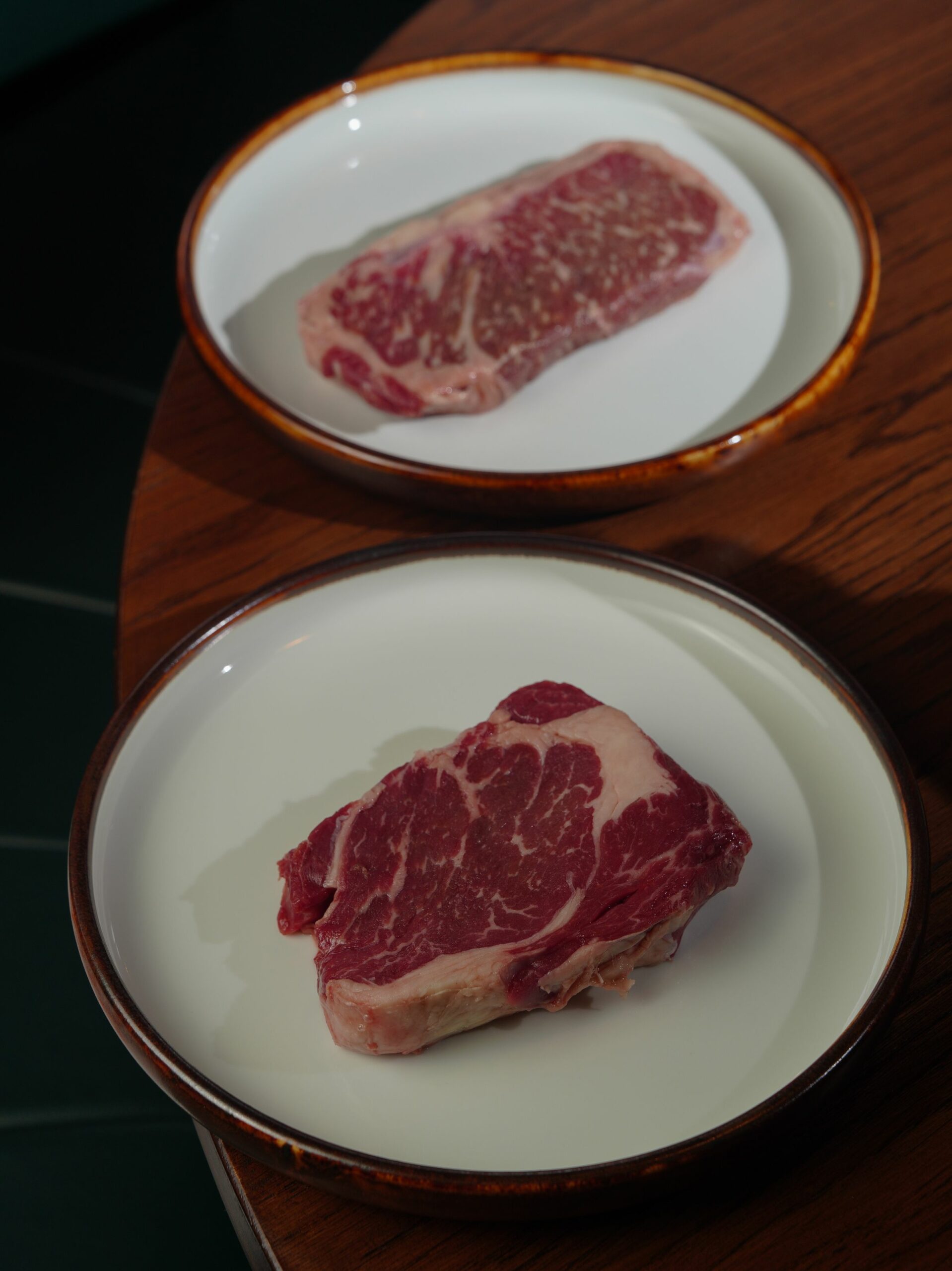
Bone-in rib steak and entrecôte often appear side by side when you are choosing beef for a pan or grill. Both are typically tender loin steaks intended for relatively fast cooking, but bone, thickness, portion format and presentation make them different eating experiences.
Names vary between countries, regions and butchers. Instead of relying on a rigid label, check exactly where the steak comes from, whether it is bone-in, how thick it is and what it weighs. Those details tell you more about how it will cook.
What is a bone-in rib steak?
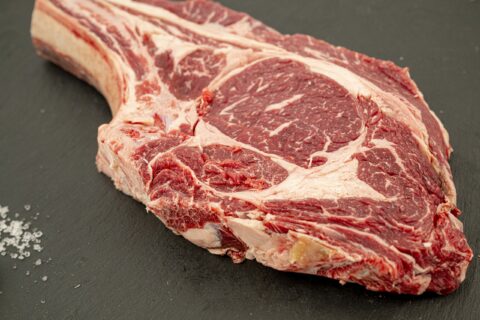
In the Spanish market, a chuletón is generally a large bone-in beef steak cut from the loin or rib area. It is often sold thick enough to develop a strong crust while keeping the centre at a chosen doneness.
The bone gives the steak structure and a dramatic presentation. It also means that part of the purchased weight is not edible meat, which matters when calculating portions and comparing prices.
What is entrecôte?
Entrecôte is normally sold as a boneless steak from the loin/rib area. Thickness and marbling vary, but the boneless format makes it easy to portion and convenient for a frying pan or griddle.
Because there is no large bone, a greater proportion of the purchased weight is edible beef and fat.
Rib steak vs entrecôte at a glance
| Bone-in rib steak | Entrecôte | |
|---|---|---|
| Bone | Usually yes. | No. |
| Typical thickness | Often thick. | Variable; individual portions are common. |
| Format | Excellent centrepiece or sharing steak. | Convenient individual steak. |
| Cooking | Thick cuts need careful centre-temperature control. | Quick to cook when cut thin or medium. |
| Weight yield | Some purchased weight is bone. | Higher edible proportion. |
| Presentation | More dramatic. | Simpler and easier to handle. |
Which has more flavour?
The cut name alone cannot answer that. Flavour depends heavily on the animal, feeding, intramuscular fat, aging and cooking. A well-marbled entrecôte can be more flavourful than a lean bone-in steak, and the reverse can also be true.
The bone changes the format and cooking geometry, but it does not automatically make the meat superior. If you want a deeper, more mature profile, also consider fat level and how the beef has been aged.
Which is juicier?
Juiciness depends mainly on fat, thickness and avoiding overcooking. A large rib steak is frequently sold thick, which gives you time to brown the outside while keeping a cooler centre. A thick entrecôte can be cooked by the same principle.
For either cut, a dry surface and an internal thermometer are more reliable than a fixed number of minutes. Our beef doneness guide explains how to measure the centre.
Which should you choose for a barbecue?
A thick bone-in steak works particularly well on a grill with two heat zones: sear over strong heat, then move to gentler heat to finish the centre. A thick entrecôte also works very well, while the bone-in steak offers a more theatrical sharing format.
Do not let flare-ups from dripping fat burn the surface for long periods. Move the steak away from persistent flames when necessary.
Which is easier in a frying pan or griddle?
Entrecôte is usually more convenient in a domestic kitchen because it fits a pan easily. A very large bone-in steak can be wider than the usable cooking surface, so parts of it may not make proper contact.
For a thick rib steak, pan plus oven is an excellent option. Our guide to cooking a thick rib steak at home compares pan, griddle, grill and oven methods.
How much do you need per person?
For a boneless entrecôte, roughly 250-350 g can be a generous adult portion, although appetite and side dishes change the calculation considerably. With a bone-in steak, remember that the bone contributes to the weight. Cuts of 700 g, 1 kg or more are commonly treated as sharing steaks.
Think in terms of edible meat and the rest of the menu rather than a single rule. Potatoes, peppers, salad and starters all reduce the amount of beef required.
How to compare value properly
The price per kilo of a bone-in steak includes bone; the entrecôte price normally does not. Equal price tags therefore do not mean equal cost per edible kilo. For online orders, include shipping and check the actual weight range of each piece.
A dry-aged steak may also carry the cost of moisture loss and trimming. Compare origin, aging, marbling, format and delivered price, not simply the steak name.
So which should you choose?
Choose a bone-in rib steak when you want a thick, impressive sharing cut for the grill and enjoy managing a large steak carefully. Choose entrecôte when you want an easy-to-portion boneless steak that fits comfortably in a pan or on a griddle.
With good-quality beef there is no automatic winner. The better choice is the one that matches your equipment, number of diners and preferred style of cooking.
Frequently asked questions
Does “chuletón” always mean exactly the same anatomical cut?
No. Commercial terminology varies, so ask the producer for the exact section when that distinction matters.
Can entrecôte be dry-aged?
Yes. Aging and steak format are separate variables. Entrecôte may be fresh or cut from an aged loin.
Which is better for two people?
One large bone-in steak is convenient for sharing. Two entrecôtes make it easier to cook each serving to a different doneness.
Explore beef cuts from producers
-
Sale!
 Select options
This product has multiple variants. The options may be chosen on the product page
Select options
This product has multiple variants. The options may be chosen on the product page



 100% mature beef burgers – gluten-free (2)