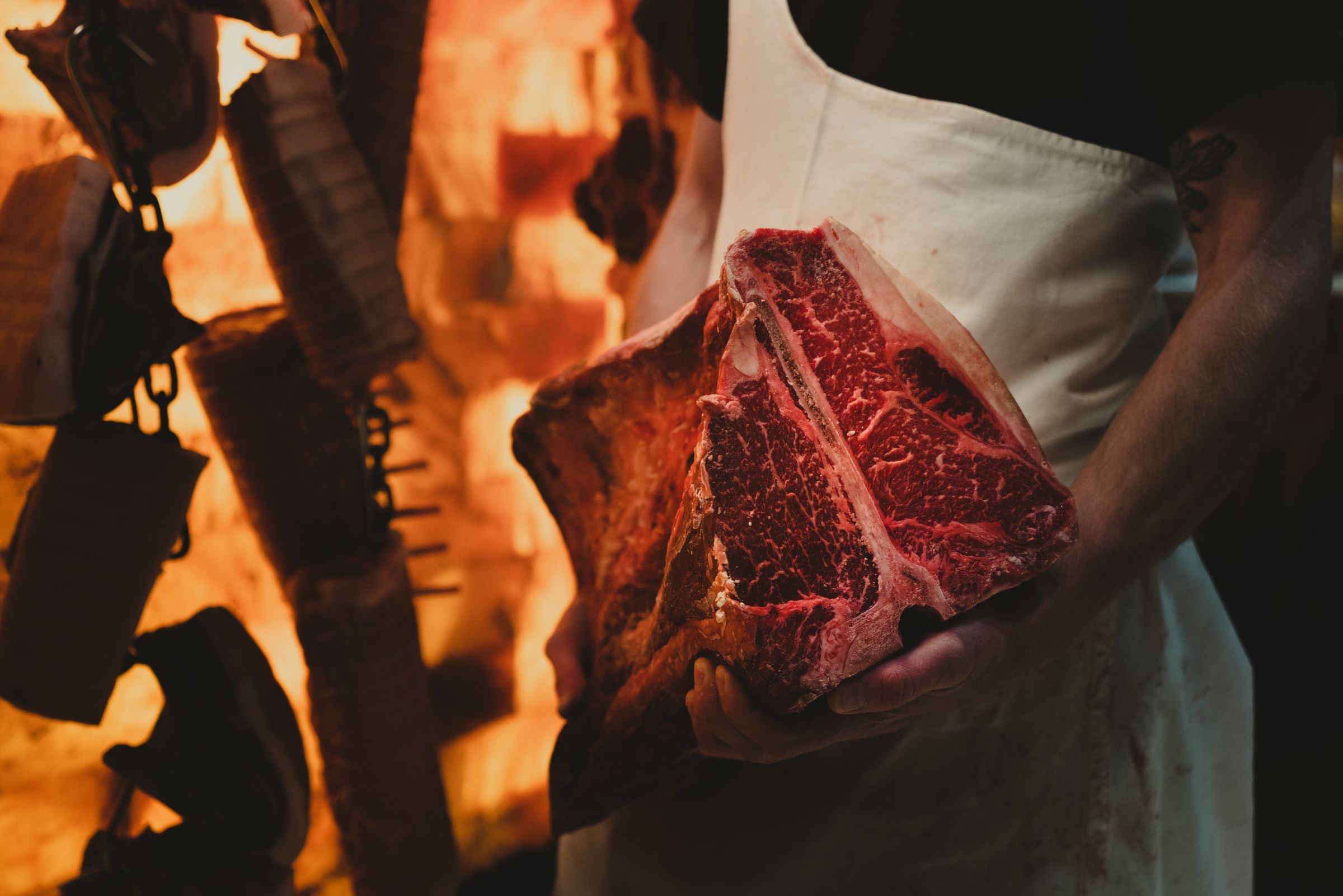
Dry-aged beef is increasingly sold with a number attached to it: 21, 30, 45, 60 days or more. That number is useful, but it is not a quality score. Breed, feeding, cut, fat level, aging-room conditions, trimming and your own taste can matter just as much.
The useful question is therefore not “what is the highest number?” but “what kind of beef do I want?” A shorter aging period can preserve a cleaner beef flavour, while longer dry aging can create greater concentration and more pronounced nutty, buttery or cured notes.
What does aging beef actually mean?
After slaughter, natural changes take place in muscle. Enzymes already present in the meat act on parts of the muscle structure and can improve tenderness over time. With dry aging, large cuts are also held unpackaged in a carefully controlled cold room. Surface moisture is lost, the outside dries and the flavour gradually changes.
Professional aging depends on controlled refrigeration, humidity, airflow and hygiene. It is not the same as leaving a steak in a domestic refrigerator for several weeks. Purpose-built aging rooms maintain stable conditions, and the dry exterior is trimmed away before the edible cut is sold.
Dry aging versus wet aging
These two processes are often grouped together, but they produce different results. Dry-aged beef is exposed to the controlled chamber environment, so it loses moisture and develops a dry outer layer that must be removed. The yield falls and flavour becomes more concentrated.
Wet-aged beef matures inside a vacuum bag. Enzymatic tenderisation still occurs, but there is no comparable evaporation and trimming loss. The flavour profile and production cost are consequently different. Neither method is automatically superior; they are different products.
What do 21, 30, 45 or 60 days mean?
The number tells you duration, not guaranteed quality. Two 30-day steaks can taste quite different because the starting beef and aging conditions differ.
| Approximate aging time | Typical aim | Who may enjoy it |
|---|---|---|
| Around 21 days | Improved tenderness with a relatively clean, familiar beef flavour. | First-time buyers and people who prefer subtle aging character. |
| 30-40 days | More concentration and clearly noticeable aging notes. | Buyers who want an obvious difference without going to extremes. |
| 45-60 days | A stronger profile, sometimes described as nutty, buttery or cured. | People who already know they enjoy mature flavours. |
| More than 60 days | A very distinctive experience that depends heavily on cut and process. | An intentional specialist choice, not automatically the “best” steak. |
These ranges are only a guide. Aging does not progress in a straight line: twice as many days does not mean twice the tenderness or twice the quality.
Why does dry-aged beef cost more?
Time is only part of the cost. During dry aging, the beef loses water, and the dry outside must be trimmed before sale. Less sellable meat remains from the original piece. Aging-room space, energy, monitoring, tied-up stock and labour also add cost.
That makes a simple price-per-kilo comparison between fresh and dry-aged beef incomplete. Origin, marbling, steak thickness, cut and delivery format are also important.
Which cuts suit dry aging?
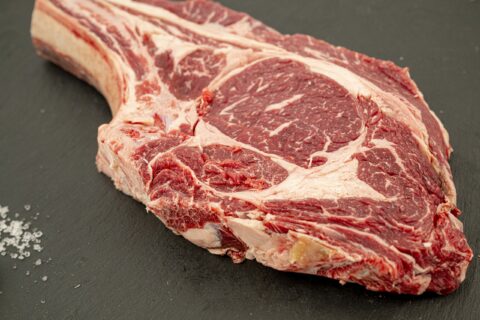
Dry aging is commonly applied to large, well-protected sections such as the rib and loin. Their size and fat cover help protect the edible centre while the outside dries. These areas produce steaks such as bone-in rib steak and entrecôte as well as the tomahawk.
Very lean meat does not necessarily benefit from extreme aging. Intramuscular fat, or marbling, contributes to flavour and perceived juiciness, so aging days should never be your only buying criterion.
How to choose dry-aged beef online
Look for specific information. A good listing should identify the cut, approximate weight, storage requirements and the aging period if aging is part of the sales claim. Information about origin, producer and chilled delivery makes the purchase easier to evaluate.
- For a first purchase: roughly 20-35 days often gives an accessible introduction.
- For greater intensity: consider longer aging from a seller who clearly explains the process.
- For pan or grill cooking: choose enough thickness to brown the outside before the centre overshoots.
- For value comparisons: compare actual weight, shipping and format, not only the advertised unit price.
Do more aging days always mean more tenderness?
No. A significant part of tenderisation occurs during the earlier part of aging. Later on, the most obvious difference may be flavour rather than a continuously softer texture. At that stage, part of the higher price reflects moisture loss, trimming and the distinctive character of the product.
How should you cook dry-aged beef?
Keep the technique simple enough to taste what you bought: dry the surface, season sensibly, create a strong crust and control the centre. A thermometer is far more repeatable than a fixed number of minutes for thick steaks. See our guide to beef doneness and internal temperature and our full guide to cooking a thick rib steak at home.
How to recognise a well-considered purchase
The strongest buying signal is not an enormous aging number. It is clear information: what cut you are receiving, where it comes from, how it has been stored, what flavour intensity to expect and what the delivered product actually costs. Traceability and precise descriptions tell you more than an impressive number without context.
Frequently asked questions
Is dry-aged beef simply old meat?
No. It is beef matured under controlled conditions. Stable refrigeration, airflow, humidity management and hygiene distinguish professional dry aging from uncontrolled storage.
Should dry-aged beef smell strong?
Longer aging can create stronger aromas, but intensity is not the same as spoilage. If a delivered product has a damaged pack, abnormal signs or a questionable cold chain, do not rely on the aging label to assume it is safe.
Is 30 days better than 45?
Neither is universally better. Around 30 days often offers balance; 45 days may be more assertive. The right choice depends on the beef and your preference.
Beef cuts to explore
-
Sale!
 Select options
This product has multiple variants. The options may be chosen on the product page
Select options
This product has multiple variants. The options may be chosen on the product page

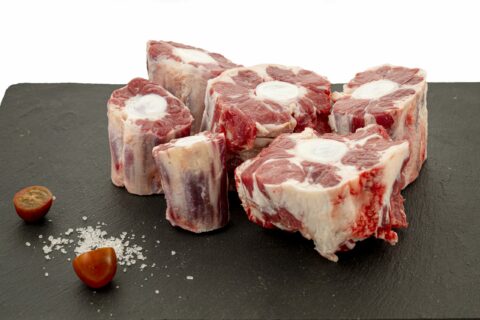
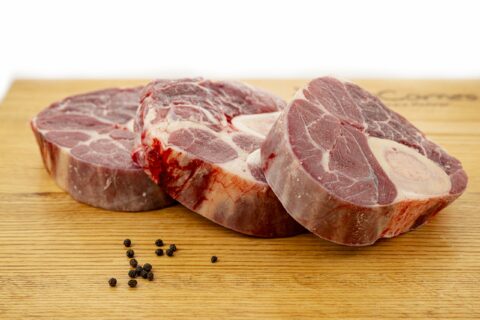


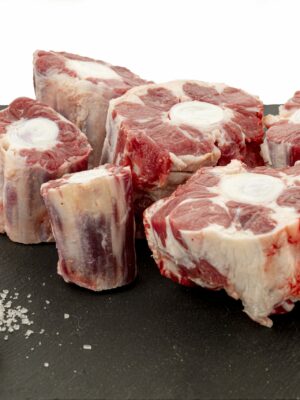 Oxtail