An exotic-meat barbecue works best as a tasting, not as a contest to serve the rarest animal. The practical challenge is that kangaroo steaks, ostrich medallions, bison cuts and prepared burgers may require different heat, cooking methods and safety measures.
Plan the menu before lighting the grill. You do not need every item ready at the same minute. You want clearly identified, safely cooked portions served in manageable amounts so guests can compare flavour without wasting good food.
Start with a small, well-described menu
For four guests, choose perhaps three different products: ostrich portions specifically sold for grilling, an identifiable bison steak and a processed exotic burger with a full ingredient list. If you include kangaroo, pick a loin or steak cut intended for a grill, not stewing cubes. Portion sizes depend on whether this is a tasting or a full meal.
Check species, cut, net weight, fresh or frozen status, cooking instructions and allergens before buying. An exotic burger can contain additional meats, fats and seasonings. Do not assume its name describes the entire ingredient list.
Choose cuts, not just animal names
| Product | What to choose | What to avoid |
|---|---|---|
| Ostrich | Similarly sized steaks or medallions suitable for the grill | Automatically applying beef-steak cooking guidance |
| Kangaroo | Loin or cuts explicitly intended for direct heat | Assuming every kangaroo muscle cooks as a tender steak |
| Bison | A clearly identified steak with known thickness and origin | Confusing it with water buffalo through translation |
| Prepared burgers | Complete ingredients, species and safe cooking instructions | Serving ground meat as if it were intact steak |
Our ostrich guide and kangaroo cooking guide explain why the specific cut changes the preparation.
Set up two heat zones and a sensible sequence
Prepare an area for more direct browning and another with lower heat for finishing when necessary. Surface browning does not guarantee safe internal cooking. Put vegetables, potatoes, buns and sauces in order before starting, and label the platters for each type of meat.
Do not crowd the grill with more different cuts than you can monitor. Keep raw and cooked meat on different plates and use clean tongs. If you only have one pair, clean it thoroughly when switching from raw to ready-to-eat food.
Keep perishable food refrigerated until needed. Serving smaller batches is more manageable and safer than leaving an entire selection of raw meat in the sun while guests talk.
Use a thermometer: the animal name is not enough
The USDA grilling guidance points out that a browned exterior can hide an undercooked centre. For intact beef, USDA recommends 63°C (145°F) with a three-minute rest; for ground beef, 71°C (160°F); and for common poultry, 74°C (165°F). Do not apply those values blindly to every unusual animal. Read and follow species- and product-specific instructions.
Wild boar requires particular caution because of Trichinella and the need for appropriate controls. Do not present wild boar as something to serve rare. Our wild boar stew guide covers the specific handling and cooking considerations in more detail.
Do not partly grill food, put it away and finish it hours later. Plan each item as a complete cooking and serving process, maintaining proper refrigeration before and afterwards.
Serve a fair tasting rather than a confusing mixed grill
Offer a small first portion of each product without dominant sauces. Roasted vegetables, potatoes, simple bread and water make sensible accompaniments. Then let guests add condiments and decide what they prefer.
Ask three separate questions: how was the natural meat flavour, what was the texture like, and how much did the cooking method or seasoning contribute? Keep names and ingredients visible. A burger containing several meats should never be introduced as pure kangaroo.
Make it repeatable
A well-organised barbecue is one you could make again because you know which cut you bought, its portion weight, how it was stored and how you verified its cooking. Notes are more useful than relying on a vague memory of two minutes per side.
For a meal centred on prepared patties rather than whole cuts, our exotic-meat burger comparison addresses composition and specific handling. Unusual animals may start the conversation; thoughtful preparation makes a memorable meal.
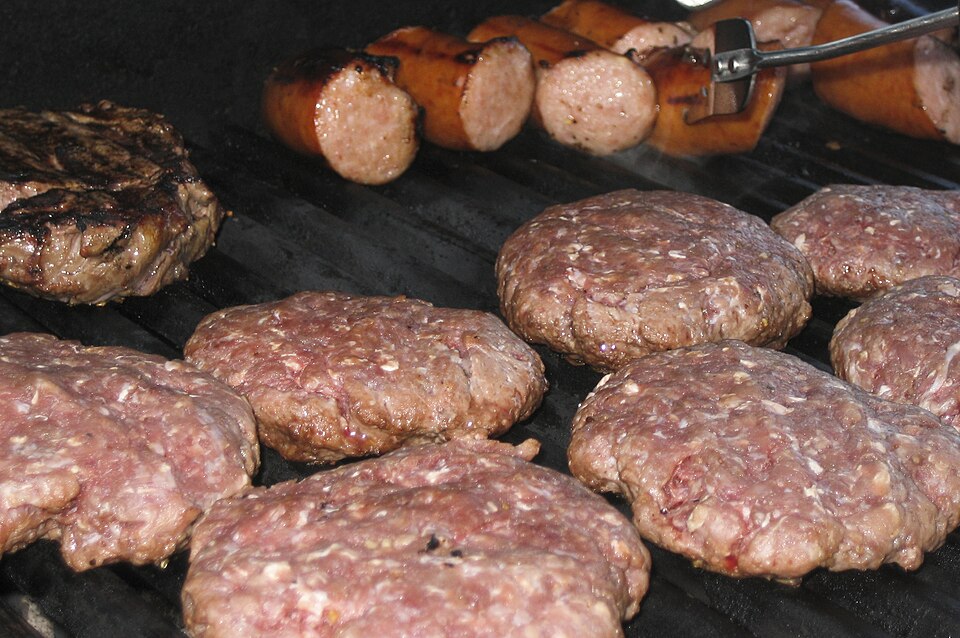
Illustrative image of barbecue cooking; the meat species are unidentified and this is not a shop product image. Photograph: doopokko / Wikimedia Commons. License CC BY-SA 2.0. Image resized for web display.