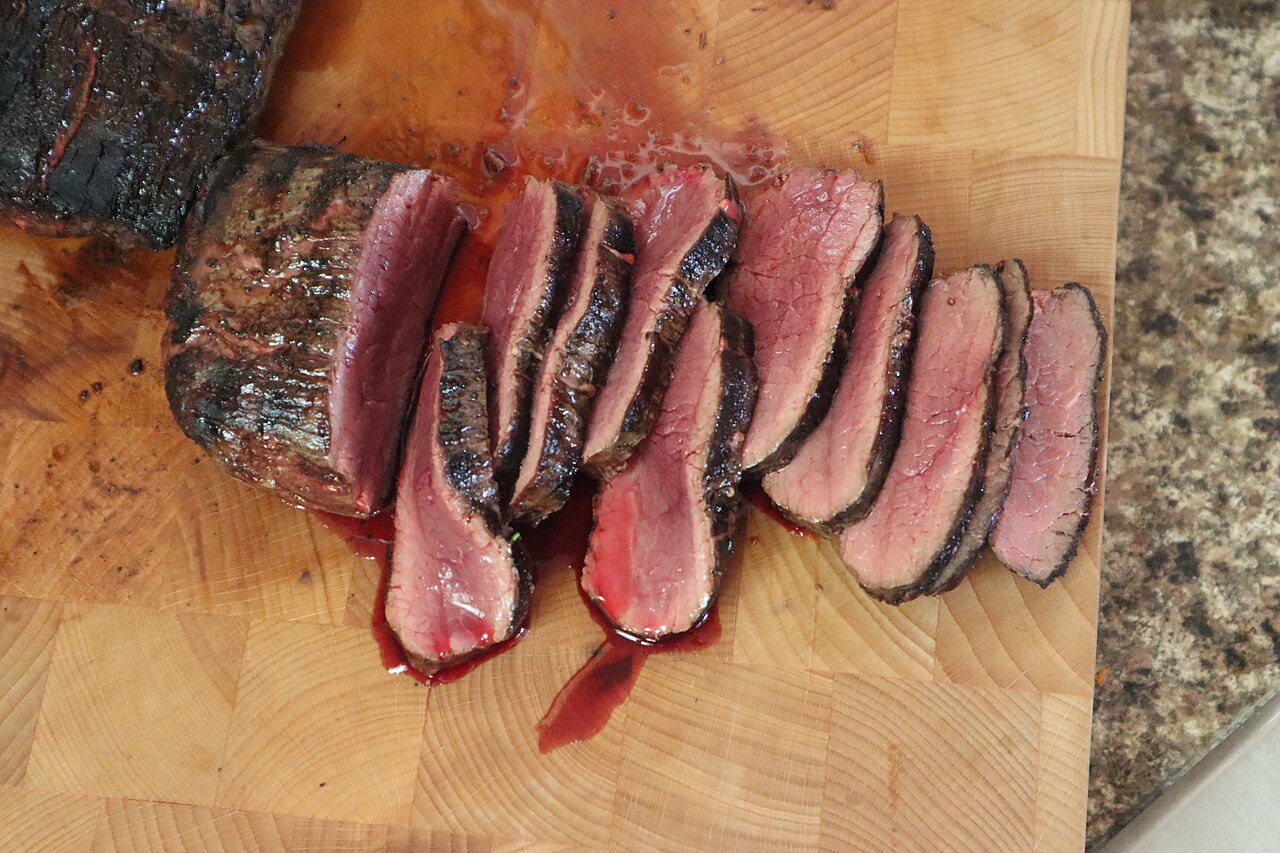
Ostrich meat produces an immediate surprise: although it comes from a bird, the flesh is deep red and looks much closer to a beef steak than to chicken breast. Its appeal is not that it impersonates another meat. It offers a relatively gentle, distinctly meaty flavour and a different texture, without requiring exotic spices or complicated equipment.
There is one distinction that matters more than the animal's name: an ostrich fillet, stewing cubes and an ostrich burger are different cooking products. The species alone cannot tell you whether to use a hot pan, a covered pot or ground-meat precautions.
What does ostrich actually taste like?
Simply seasoned ostrich can taste clean and red-meaty, with an intensity some diners compare to lean beef. That comparison is a starting point, not a promise. The particular muscle, its handling and how it is cooked affect both flavour and texture. It is not chicken disguised by its colour, nor will it necessarily behave like beef tenderloin.
For a first tasting, a modest seasoning and a side of mushrooms or potatoes tell you more than a powerful marinade. If you make a sauce, serve it separately. You want to discover the meat rather than the sauce manufacturer's recipe.
Lean does not mean that every cut is tender
Ostrich is often sold as relatively lean meat. But low fat and tenderness are different concepts. Tenderness depends on muscle structure and connective tissue; fat contributes to a perception of juiciness, but cannot make every muscle behave like tenderloin.
| Product format | Best approach | Common mistake |
|---|---|---|
| Tender steak or medallion | Controlled pan cooking suited to its thickness | Keeping it on the heat long after it is properly cooked |
| Stewing cubes | Moist cooking with vegetables and stock | Flash-frying a slow-cooking cut |
| Burger or prepared meat | Follow the actual ingredient list and safe cooking instructions | Using intact-steak doneness rules |
Check the weight as carefully as the cut. A dramatic photograph does not reveal how many useful servings you will receive. The weight, packaging and intended cooking method are practical buying criteria.
Ostrich with mushrooms: a simple dinner for two
You need 300–350 g of ostrich steak or medallions labelled for pan cooking, 200 g mushrooms, one shallot, a little olive oil, salt, pepper and thyme. Choose pieces of similar thickness for more predictable cooking.
- Start with the vegetables. Soften the shallot and sauté the mushrooms until most of their liquid evaporates. Set them aside.
- Prepare the meat safely. Thaw in the refrigerator if required by the label. Pat the surface dry and keep utensils used for raw meat separate.
- Heat a sturdy pan. Add a little oil. Brown the pieces without crowding the pan; turn when the first side has developed some colour.
- Check the centre. Exact minutes are unreliable because thickness and heat differ. Use a thermometer and follow the product's applicable food-safety instructions; do not casually copy beef-steak cooking charts for a ratite bird.
- Finish and serve. Transfer to a clean plate, slice across the grain if appropriate and serve with the mushrooms, thyme and perhaps a squeeze of lemon.
If the pack says stewing meat, change course. Brown in batches, soften vegetables and simmer in stock until safely cooked and tender. It is better to respect the cut than to force it into the wrong recipe.
Nutrition: read the product rather than the headline
Ostrich provides protein and minerals, including iron. Yet there is no nutritional value that precisely represents every ostrich product. A plain fillet, a seasoned burger and a breaded preparation can contain very different amounts of fat, salt and other ingredients. Compare actual labels and serving sizes when nutrition influences your choice.
It is also misleading to describe any meat as unconditionally healthy. Cooking method, portion size and the rest of a person's diet all matter.
Food safety and how to choose a useful product
The dark-red colour makes visual doneness especially deceptive. The USDA food-thermometer guidance explains why colour and surface browning cannot confirm a safe centre. Specific safe-cooking instructions should come from the product and the relevant food-safety authority, particularly for mince or processed products.
Do not leave frozen meat on the countertop for hours or put cooked portions back onto a raw-meat tray. Keep the raw juices away from salads and other ready-to-eat foods.
For a first purchase, seek a clearly identified species, cut, origin, weight, storage condition and preparation guidance. For a more focused kitchen project, continue with our pan-seared ostrich tenderloin recipe: it develops a specific method rather than repeating this general introduction.
nIllustrative photo of the food by Angelbmartin / Wikimedia Commons. License CC BY-SA 4.0. Image resized for web display.

 Calabaza
  20 Kg de patatas rojas rudolph
  Lombarda
  Promocion manchon confitado