An ostrich egg is not simply a chicken egg made much larger. Its shell is unusually strong, the volume demands suitable kitchen equipment, and the contents can provide a shared meal. To get good results, focus less on the novelty and more on the practical questions: how much liquid egg is there, how can you open the shell safely, and what recipe lets the mixture heat evenly?
The crucial point is that one ostrich egg does not equal a fixed number of servings. Individual eggs vary, and their total weight includes a thick shell. Dividing the whole weight by that of an ordinary hen's egg is not a sound recipe conversion.
Weight, yield and recipe substitutions
Food retailers commonly describe ostrich eggs weighing roughly one to two kilograms with their shells, though individual examples vary. For cooking, the meaningful number is the weight of liquid egg once opened. The share occupied by shell, yolk and white is not identical in every egg.
In baking, measure beaten egg by weight rather than assuming that one unusual egg equals a precise number of small ones. For an omelette served to a group, decide how many grams of egg you normally want per person. A full meal needs a different portion from a tiny shared tasting.
Opening an ostrich egg without taking unnecessary risks
First check that the egg comes from an authorised food chain, has been stored as instructed and has an intact shell. Do not use one with suspicious cracks or signs of spoilage. Wash hands and set up a stable, easy-to-clean workspace.
The thick shell may require special equipment. Follow the supplier's recommended opening method; use suitable hand or eye protection if that method calls for it. Do not hold the egg in one hand while attacking it with an improvised sharp tool. The aim is a meal, not a kitchen injury.
Have a large clean bowl ready. Once opened, pour out the contents and remove any shell fragments. Beat evenly, then weigh portions into separate containers if you are cooking more than one dish. Keep the work surface and utensils clean.
A sharing omelette with potatoes and onions
This example uses about 800 g liquid ostrich egg, 750 g potatoes, two medium onions, olive oil, salt and pepper. It is an adjustable ratio, not a claim about the exact contents of every ostrich egg. If you have more liquid egg, prepare another batch; if less, scale the potatoes and onions down.
- Cook the potatoes first. Slice thinly and cook gently in oil until tender, then drain well.
- Soften the onions. Cook them separately until mild and slightly sweet. Combine them with the drained potatoes.
- Weigh and beat the egg. Use a generously sized clean bowl. Let the hot vegetables cool slightly before adding them to avoid partly cooking the egg in the bowl.
- Split the mixture when needed. One enormous omelette may brown outside while remaining insufficiently heated at the centre. Two manageable omelettes or an oven frittata are easier to cook consistently.
- Verify safe cooking. FoodSafety.gov recommends 71°C (160°F) for egg dishes. Use a thermometer in the centre rather than assuming a browned surface is enough.
- Serve and chill promptly. Clean utensils after handling raw egg and refrigerate leftovers without unnecessary delay.
This approach works even when the egg contains more or less liquid than expected. The pan size, portions and temperature matter more than the appearance of the shell.
Scrambled egg, frittata and baking
Scrambled egg is convenient when you need to cook several smaller portions, while a baked frittata provides a broad cooking surface if you verify its centre. For cakes and custards, weighing the liquid egg is a better starting point than swapping whole egg counts. Differences in the yolk-to-white ratio can affect texture as well.
If a recipe normally uses raw or lightly cooked egg, do not assume a giant egg is safer than a hen's egg. Consider properly pasteurised egg products when an uncooked application is necessary, particularly for vulnerable diners.
Planning storage and the occasion
Choose ostrich eggs for a meal you can plan: decide on the number of guests, the opening method and the pans available. Once opened, raw egg is perishable. Keep it refrigerated, minimise time at room temperature and respect the supplier's storage instructions.
The shell can be kept as a curiosity, but cleaning and decorating it should not share an unclean workspace with ready-to-eat food. If you are also curious about a different product from the species, our ostrich meat guide covers something entirely separate.
Weigh what you actually have, divide large batches when necessary and check the finished temperature. Those small practical decisions turn an awkwardly large egg into a food worth sharing.
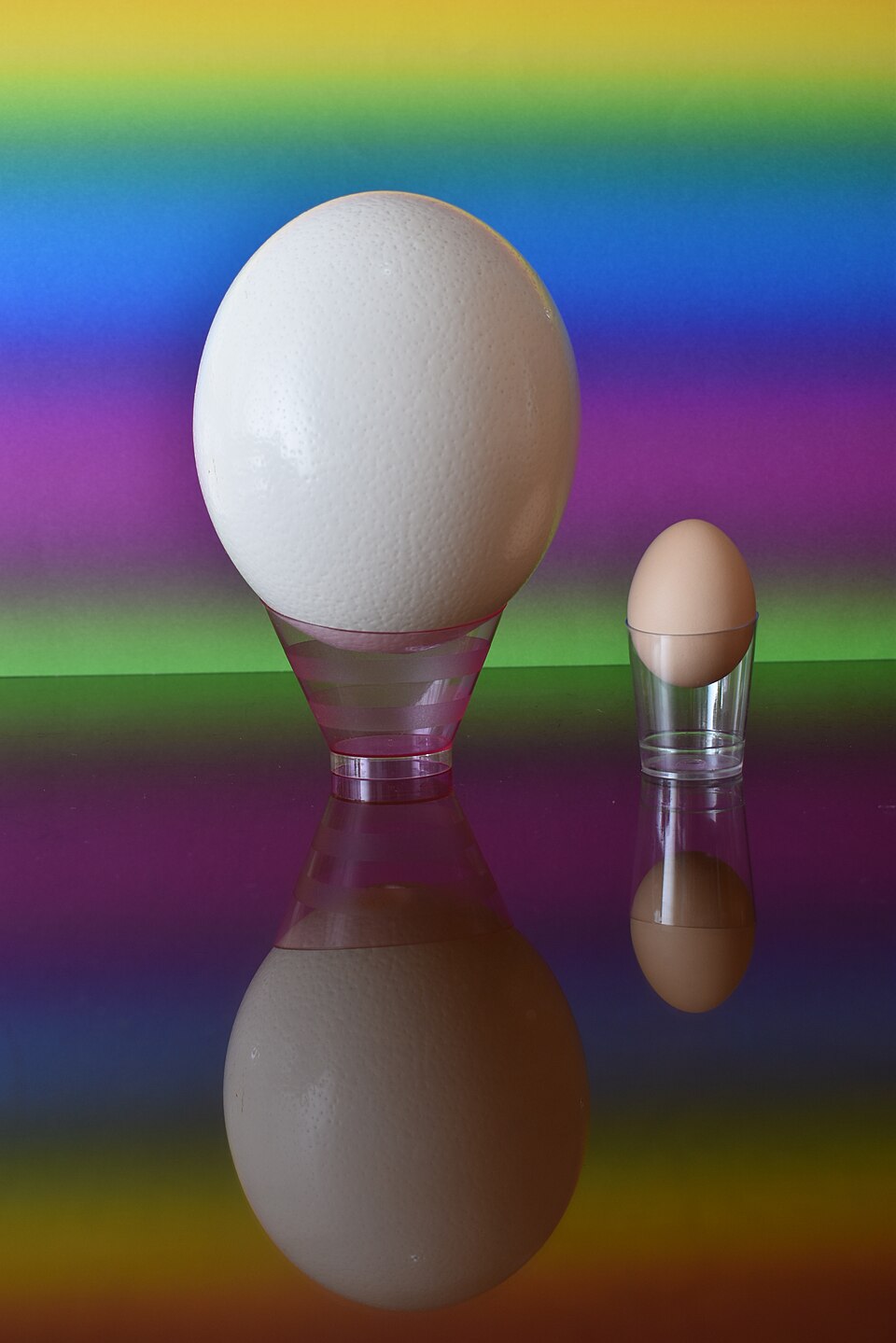
Visual comparison of ostrich and chicken egg sizes; actual egg weights vary. Photograph: Annatsach / Wikimedia Commons. License CC BY-SA 4.0. Image resized for web display.