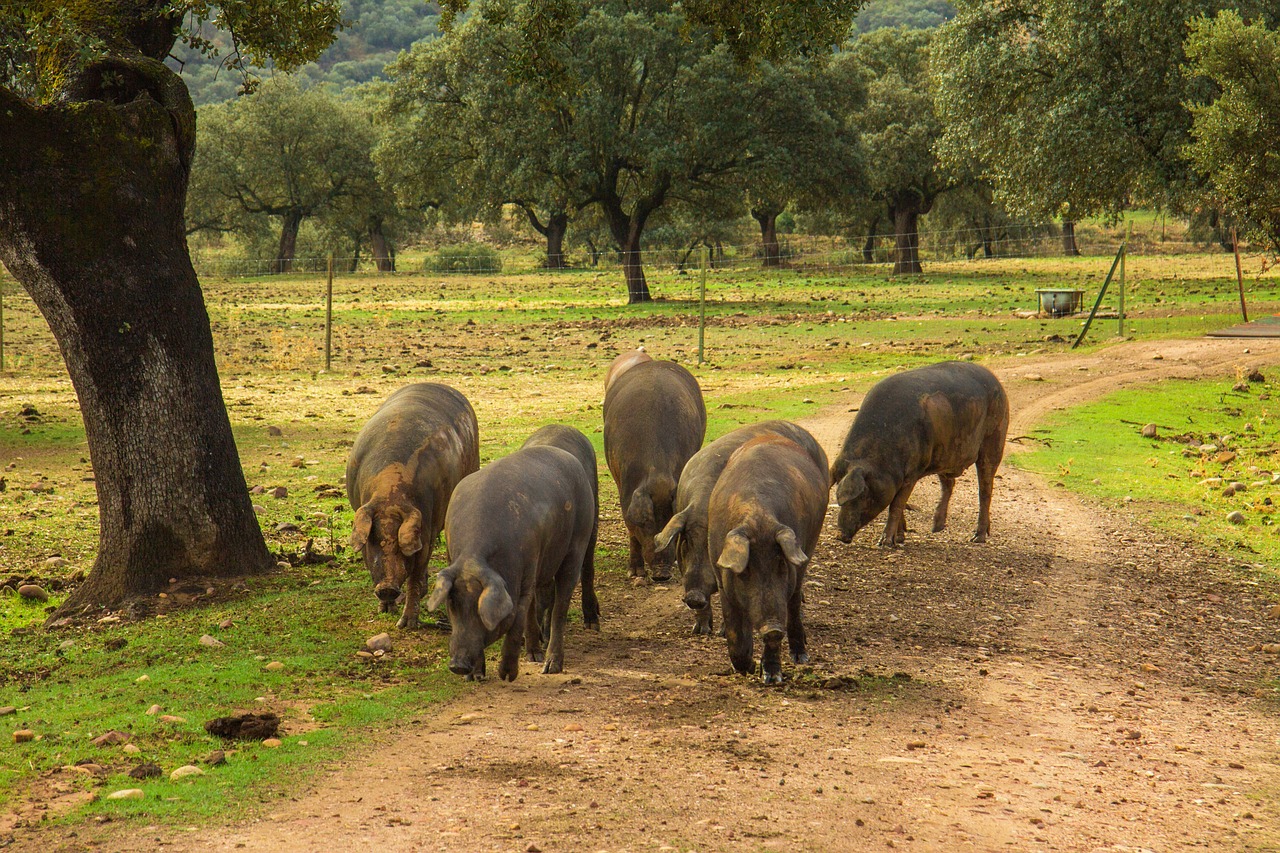
Iberian ham does not belong to one town or one province. Salamanca, the Sierra de Huelva, Extremadura and northern Córdoba contain some of the best-known traditions and designations, each with its own landscape and production history.
A designation of origin, a production area or a curing tradition provides context but does not replace reading the whole product. With Iberian ham it helps to separate three layers: geographical certification where applicable, the legal breed and feeding category, and the producer’s decisions during salting, drying and maturation. Keeping these layers separate prevents shortcuts such as assuming that a famous place name always means acorn-fed or 100% Iberian.
Quick summary
| Salamanca | Guijuelo and its drying-room and cellar tradition. |
|---|---|
| Huelva | Jabugo and the Sierra de Huelva. |
| Extremadura | Extensive dehesa areas and the Dehesa de Extremadura PDO. |
| Córdoba | Los Pedroches and the dehesa of northern Córdoba. |
Geographical origin and place of processing are not the same thing
To understand a ham, distinguish where the animal is raised, where raw material originates and where the leg is processed or cured. PDO specifications define these relationships precisely. Very short marketing descriptions can hide that complexity.
Salamanca and Guijuelo
Guijuelo is the major Salamanca reference. Its tradition is associated with drying rooms and cellars in an inland area with cold winters. When comparing products, verify PDO status on the label rather than inferring it from the producer’s address.
Huelva, Extremadura and Los Pedroches
The Sierra de Huelva is linked with Jabugo; Extremadura with extensive dehesa culture and its own PDO; and northern Córdoba with Los Pedroches. They are different territories sharing the importance of Iberian pigs and long curing processes.
Do not turn the map into a best-to-worst ranking
Origin provides context and, where a PDO exists, certification. Perceived quality also depends on category, raw material, producer and processing. It is more useful to ask which style and product you want than to assume one province always wins.
How to use this information in practice
Use origin as one decision layer: first verify certification and category, then compare producer, format, price per kilo and your consumption rate. The map helps you understand the product; it does not replace the product sheet.
Before buying, check the sales designation, Iberian category, breed percentage where applicable, producer, format, weight and storage instructions. If a PDO is claimed, verify its specific identification as well. The goal is not to collect seals, but to understand what each piece of information contributes and whether it matches what you want to buy.
Frequently asked questions
Does origin determine flavour on its own?
No. Territory matters, but so do breed, feeding, weight, salting, drying, time and producer decisions. Trends and context are more useful than fixed flavour rules.
Do more curing months always mean better ham?
Not necessarily. Time must suit the ham and the process. A month count alone does not explain texture, salt balance or aroma development.
What information should I compare?
Check Iberian category, breed percentage where relevant, producer, format, weight, storage and certifications, then use sensory descriptions to choose according to preference.
Related guides
Continue exploring the English food journal for practical guides on Iberian ham, serving, storage, labels and origin.
Bottom line
The main idea is to use origin as verifiable information rather than a shortcut. The better you connect territory, certification, legal category and processing, the easier it becomes to compare products on useful criteria instead of paying for words that do not mean exactly what they appear to mean.
Sources and references
This guide prioritises institutional sources and designation bodies. Current product specifications are the reference point when a specific certification requirement needs to be checked.

