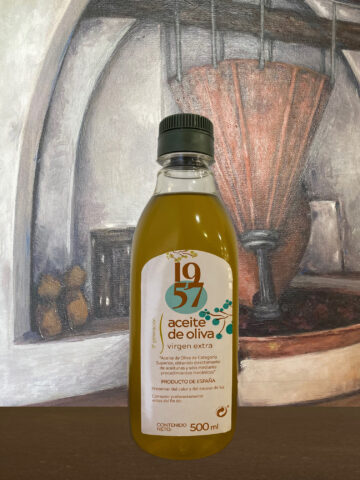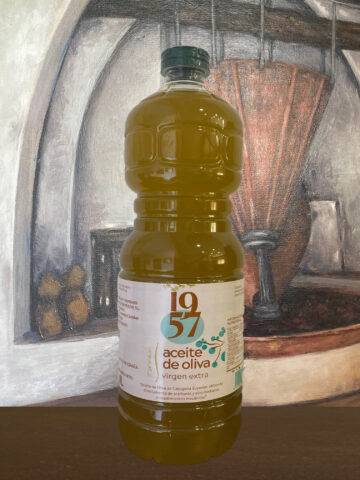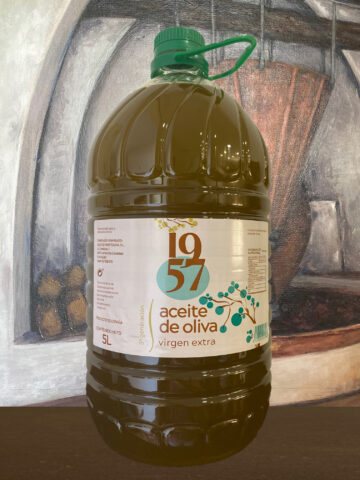
Extra virgin olive oil (EVOO) is nutritionally an almost entirely fat-based food. Yet that description misses an important part of the picture: most of its fat is monounsaturated and EVOO also retains a small fraction of minor compounds — including vitamin E and phenolic compounds — that helps explain why two extra virgin olive oils can differ even when their nutrition labels look very similar.
It helps to separate two levels. The major fraction consists of triglycerides and fatty acids. The minor fraction, much smaller by weight, contains tocopherols, phenols, sterols, pigments and other compounds. A standard nutrition panel mainly describes the first group; many compounds linked to flavour, bitterness, pungency and oxidative stability are not listed separately.
Related guides: olive oil calories per tablespoon and 100 golive oil or sunflower oil for fryingwhy olive oil turns cloudy or solid in the coldshop olive oil
Quick answer: what nutrients does EVOO provide?
- Fat: virtually all its energy comes from fat.
- Oleic acid: the predominant fatty acid and a monounsaturated fat.
- Polyunsaturated fatty acids: mainly linoleic acid, with smaller amounts of linolenic acid.
- Saturated fatty acids: chiefly palmitic acid and smaller amounts of stearic acid.
- Vitamin E: mainly present as tocopherols.
- Phenolic compounds: EVOO can contain hydroxytyrosol, tyrosol and secoiridoid derivatives, among others.
Olive oil is not a meaningful source of protein, carbohydrate, fibre or salt. It also contains no cholesterol, because cholesterol is an animal sterol.
Fat is the main nutrient
Like other edible oils, EVOO is energy dense because fat provides about 9 kcal per gram. A relatively small serving therefore contains substantial energy. This is not a judgement about whether the food is “good” or “bad”; it simply means portion size matters when interpreting calories.
The distinctive feature is its fatty-acid pattern, with a high proportion of monounsaturated fatty acids. Oleic acid is the most important. Its exact share depends on olive cultivar, climate, fruit maturity and other production variables.
Oleic acid: the characteristic fat in olive oil
Oleic acid is a monounsaturated omega-9 fatty acid. Standards and scientific literature commonly place it within a broad range of roughly 55% to 83% of total fatty acids. That range is normal: oils made from different cultivars do not need to have identical fatty-acid profiles.
A high oleic-acid percentage does not by itself prove that an oil is extra virgin. EVOO classification also depends on chemical quality criteria and sensory assessment. See our dedicated guide to what oleic acid is and how much olive oil contains.
Vitamin E and other minor compounds
Vitamin E in olive oil appears mainly as alpha-tocopherol, a fat-soluble antioxidant. Its concentration is not fixed and can change with cultivar, harvest, processing and storage.
EVOO also contains a phenolic fraction made up of several families of compounds. Although tiny compared with the fat fraction, these compounds matter for oxidative stability and sensory character. They are associated with some of the bitterness and throat pungency found in certain extra virgin olive oils.
For more detail, read our guides to olive oil polyphenols and antioxidants in EVOO.
What types of fat does EVOO contain?
| Type of fat | Main components | Key point |
|---|---|---|
| Monounsaturated | Oleic acid | Usually the dominant and most characteristic fraction. |
| Polyunsaturated | Linoleic and linolenic acids | Present in smaller proportions that vary among oils. |
| Saturated | Palmitic and stearic acids | Present, but usually below the monounsaturated fraction. |
Are polyphenols shown on the nutrition label?
Usually not. Mandatory nutrition information focuses on energy, fat, saturates, carbohydrate, sugars, protein and salt. Two EVOOs can therefore have almost identical nutrition panels while differing in phenolic content, aroma, bitterness, pungency or resistance to oxidation.
Do nutrients change when EVOO is heated?
Cooking does not make its fatty-acid profile vanish, but heat, time and oxygen can reduce some minor compounds and accelerate oxidation reactions. Different compounds respond differently. Our guide to what really changes when EVOO is heated explains this in more detail.
Why there is no single number for “EVOO nutrients”
The exact composition of a bottle depends on cultivar, harvest and processing. Fatty-acid composition falls within recognised ranges, while phenolic compounds and tocopherols can vary much more. It is therefore more accurate to discuss typical composition and ranges than to assign one universal polyphenol or vitamin-E figure to every extra virgin olive oil.
Conclusion
EVOO is primarily fat, but its nutritional composition is more informative than a calorie figure alone. Monounsaturated fatty acids — especially oleic acid — predominate, while vitamin E, phenolic compounds and other minor constituents occur in much smaller amounts. A nutrition label and the minor-compound profile describe different parts of the same food.
Frequently asked questions
Does EVOO contain protein?
Not in nutritionally meaningful amounts. Its composition is dominated by fat.
Does extra virgin olive oil contain cholesterol?
No. Plant oils contain no cholesterol, although they do contain plant sterols.
Does EVOO contain vitamin E?
Yes. It contains tocopherols, especially alpha-tocopherol, although the amount varies among oils.
Do all EVOOs contain the same amount of polyphenols?
No. Cultivar, fruit maturity, processing and storage can produce large differences.
Extra virgin olive oils
-
EMDO Selection
-
EMDO Selection
-
EMDO Selection Sale