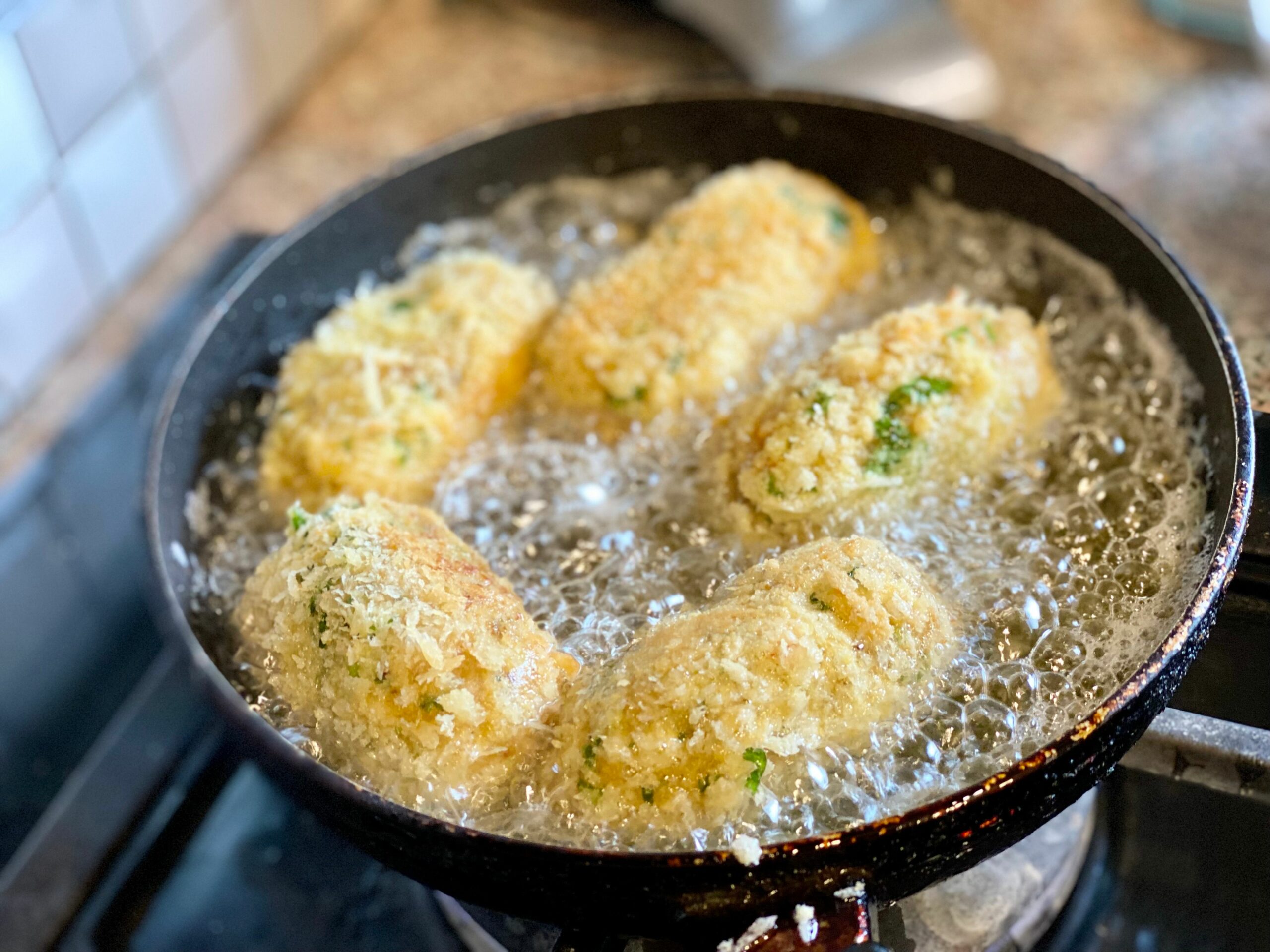
“Is olive oil or sunflower oil better for frying?” sounds like a two-option question, but it actually compares several different oils. Extra virgin olive oil is not the same as refined olive oil blended with virgin oils, and conventional sunflower behaves differently from high-oleic sunflower. The best choice depends on heat stability, flavour, reuse, frying style and budget.
The most useful starting point is to reject the old myth that olive oil “cannot be used for frying”. It can. Its high oleic-acid content gives it good thermal stability. High-oleic sunflower can also be considerably more stable than conventional sunflower.
Related guides: olive oil calories per tablespoon and 100 gwhat oleic acid in olive oil iswhy olive oil turns cloudy or solid in the coldshop olive oil
Quick comparison
| Oil | Frying stability | Flavour | Best fit |
|---|---|---|---|
| Extra virgin olive oil | High with good temperature control | Distinctive | When flavour and stability both matter |
| Olive oil | High | More neutral | Frequent frying |
| High-oleic sunflower | High | Very neutral | Neutral-tasting frying |
| Conventional sunflower | Lower than high-oleic oils | Neutral | Occasional controlled use |
Fatty-acid composition matters
Frying exposes oil to oxygen, heat and water from food. Oxidation and other degradation reactions gradually increase. Oils rich in oleic acid, a monounsaturated fat, tend to resist oxidation better than oils very rich in linoleic acid.
That is one reason olive oils perform well and one reason high-oleic sunflower exists: sunflower varieties have been selected to contain much more oleic acid than conventional sunflower oil.
Extra virgin olive oil works for frying
Extra virgin olive oil is obtained directly from olives by mechanical processes and retains aroma compounds and natural antioxidants. Heating reduces some of those compounds, but it does not make EVOO unsuitable for frying.
Its fatty-acid profile and antioxidants provide useful stability. The practical trade-offs are flavour and price: a powerful EVOO can influence the food, and some cooks prefer to reserve their most expensive bottle for raw use.
For the legal categories, see our complete guide to extra virgin, virgin, olive and pomace oils.
What does plain “olive oil” mean?
A bottle labelled simply olive oil is a blend of refined olive oil and edible virgin olive oils. It usually tastes more neutral than EVOO and has good thermal performance.
For frequent frying where you do not want strong flavour, this can be a very practical option. It is not merely “bad EVOO”; it is a different legal category made through a different process.
Conventional sunflower oil
Conventional sunflower is often rich in linoleic acid. That contributes to its neutral flavour but also makes it more susceptible to oxidation during repeated high-temperature use.
It can still be used for frying. The point is to be more cautious about reuse, temperature and prolonged heating.
High-oleic sunflower is a different product
High-oleic sunflower contains far more oleic acid. Frying studies show substantially better oxidative stability than conventional sunflower. In practice it offers a useful combination: neutral flavour and strong heat stability.
Smoke point is not the whole story
Smoke point is useful but overused as a single measure of cooking quality. Oxidative stability also depends on fatty-acid profile, antioxidants, heating time, food moisture and repeated cycles.
Domestic deep frying commonly works around 170–180°C. The goal is not to approach smoking. If oil is visibly smoking, it is too hot.
Which oil tastes most neutral?
Refined sunflower and refined-category olive oil are generally neutral. EVOO may contribute green, ripe, bitter or peppery notes depending on variety and harvest. That can enhance potatoes, eggs and Mediterranean fritters, but it may not suit every recipe.
Which makes food crispier?
Crispness depends more on temperature, food moisture, batter, batch size and heat recovery than on choosing olive versus sunflower. Overloading the fryer drops the temperature and can make food absorb more oil.
Can frying oil be reused?
Sometimes, but there is no universal number of safe reuses. It depends on what was fried, temperature, duration and filtration. Bread crumbs leave particles, fish transfers flavour and wet foods accelerate degradation.
Cool and filter used oil, then store it sealed and protected from light. Discard oil with rancid odour, abnormal persistent foaming, smoke at unexpectedly low temperature, excessive viscosity or severe darkening.
What should you choose?
- Flavourful Mediterranean frying: EVOO or olive oil.
- Neutral frequent frying: mild olive oil or high-oleic sunflower.
- Occasional budget frying: conventional sunflower can work with careful temperature control.
- Pan cooking with little fat: EVOO performs very well and contributes flavour.
One-off frying versus repeated frying: why the answer changes
A single quick batch of frying does not challenge an oil in the same way as keeping it hot through several consecutive batches. The longer oil remains at frying temperature, and the more cycles it experiences in contact with oxygen, moisture and food particles, the more its oxidative stability matters. That is where oils naturally rich in oleic acid — including olive oils and high-oleic sunflower — become particularly attractive.
For one short shallow-frying session, sensory preference and good technique may matter more to the home cook than small differences in long-term stability. Keeping the oil at the right temperature, avoiding visible smoke and not overcrowding the pan can have a larger effect on the result than switching between two otherwise suitable oils.
Repeated frying makes maintenance more important as well. Filter crumbs after use, protect cooled oil from light and air, and do not keep extending its life simply because it still looks reasonably clear. Degradation is not always visible.
Can fresh oil revive old frying oil?
Adding fresh oil increases the volume and dilutes the old oil, but it does not remove oxidation products and other compounds that have already formed. If used oil has developed rancid odour, persistent abnormal foaming, excessive viscosity, unusually early smoking or obvious deterioration, topping it up with new oil does not reset it. Discard the degraded oil and start again with a clean batch.
Bottom line
For both stability and flavour, extra virgin olive oil is an excellent frying fat. For a more neutral profile, olive oil or high-oleic sunflower are strong choices. Conventional sunflower is usable, but its typical higher polyunsaturated content makes it less resistant to long repeated frying cycles.
The bigger practical wins come from temperature control, avoiding degraded oil, filtering particles and choosing the right category for the job rather than searching for one universal winner.
Olive oils
-
EMDO Selection
-
EMDO Selection
-
EMDO Selection Sale

 Canela Beans
  Pedrosillano Chickpeas
  Beef osso buco
  100% mature beef burgers – gluten-free (2)