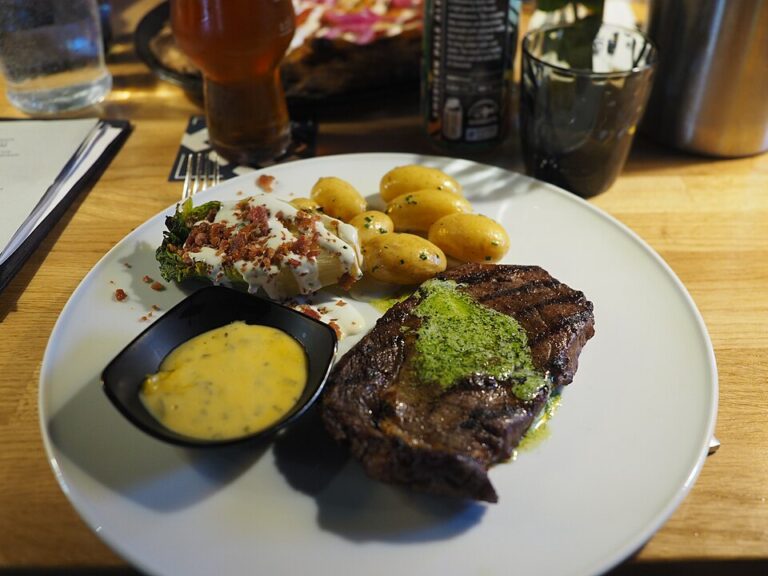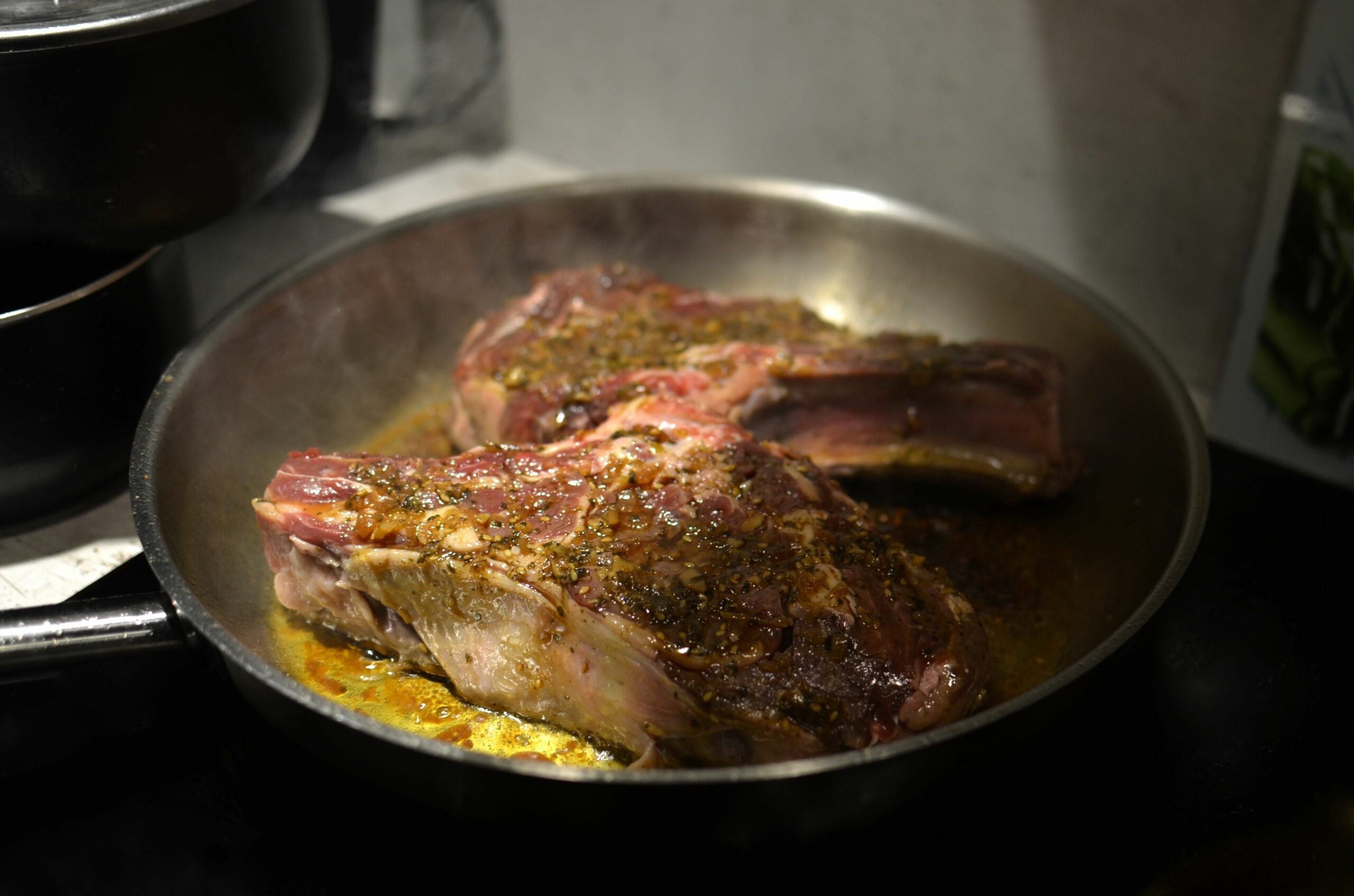
“You need to sear meat to seal in the juices” is one of the most repeated pieces of cooking advice. The problem is that it combines two separate ideas. High-heat browning is absolutely valuable for flavour, but it does not create a waterproof layer that physically locks all the water inside the meat.
A browned crust still contains pores, cracks and pathways through which vapour and liquid can move. A seared steak continues to lose weight as it cooks. The real reason to brown meat is different: high surface heat drives chemical reactions that create hundreds of aromatic compounds and transform texture.
What does “searing” actually mean?
In cooking, searing usually means brief contact with a very hot pan, griddle or grill to brown the exterior. The word is useful as a visual description but misleading if interpreted as hermetically closing the meat.
No new membrane forms around the steak. Instead, the surface becomes drier and browner as proteins and sugars are transformed by heat. That crust changes flavour and texture; it does not turn the meat into a sealed container.
The Maillard reaction: the real reason to brown meat
When the surface is dry enough and reaches sufficiently high temperatures, amino acids react with carbonyl compounds to create a huge family of aromatic molecules. We describe this broad network as the Maillard reaction.
The result is roasted, nutty, savoury and deeply meaty aroma that does not develop to the same degree in meat simply simmered in water. A good crust matters because it adds sensory complexity.
Why wet meat struggles to brown
Surface water has to evaporate before temperature can rise rapidly. If meat enters the pan wet, much of the available energy is spent on evaporation. As long as a substantial water film remains, strong browning is delayed.
Patting meat dry and avoiding an overcrowded pan are therefore more useful than trying to create a mythical “juice barrier”. Our article on white foam when cooking meat explains how water and coagulated proteins collect when pan temperature drops.
Does searing make meat lose more water?
Do not swing to the opposite extreme. A quick sear does not automatically make meat drier. Moisture loss depends on the whole cooking process: final core temperature, exposure time, thickness, cut composition and method.
Very intense but brief heat can create a strong crust while the centre remains rare. Gentle heat applied for too long can still take the core to a high temperature and expel more moisture. Juiciness cannot therefore be judged simply by whether the meat was seared first.
What really makes meat juicy?
The main variable is avoiding unnecessary overcooking. As muscle proteins heat and contract, their ability to retain water changes. The higher the centre is driven, the more moisture is generally lost.
The cut also matters. A marbled entrecote may seem juicier than a very lean steak even at similar water loss because melted fat contributes lubrication and the sensory impression of succulence.
Sear first or sear last?
Both approaches work. In a classic method, meat is browned first and then finished at gentler heat or in the oven. In a reverse sear, the piece cooks gently first and receives intense browning at the end.
The fact that reverse searing can produce extremely juicy meat proves that the crust does not need to appear first to “trap” anything. What matters is controlling the centre and leaving enough heat capacity at the end to dry and brown the surface.
Searing meat for a stew
When meat is browned before stewing, the aim is not to stop stock entering or juices leaving. During long cooking, liquid interacts with the meat and meat juices become part of the sauce.
We brown because toasted compounds form on the meat and the bottom of the pan. Deglazing then dissolves many of those flavour compounds into the cooking liquid.
Do juices on the plate mean the meat was cooked badly?
No. All meat loses some water as it cooks. Liquid on the plate is not proof of failure. The relevant questions are how much was lost and what the final texture feels like.
It is also normal for more liquid to escape when a piece is cut immediately after leaving the heat. Resting allows internal temperature gradients and pressure to settle. Our guide to resting meat after cooking explains that process in more detail.
Does piercing meat drain all the juices?
A puncture can release some liquid locally, but the steak is not a water balloon that empties through one hole. Muscle tissue does not work like a sealed bag.
Tongs are still preferable to repeatedly stabbing meat with a fork because they damage the surface less. A properly used probe thermometer provides far more useful information than the tiny amount of liquid lost through its insertion point.
What about bringing meat to room temperature?
Another common myth says that all meat must reach room temperature before cooking. Our guide to bringing meat towards room temperature explains that the centre of a thick steak warms much more slowly than the surface.
For browning, a dry exterior and a pan with enough stored heat have a much greater immediate effect than a small difference in core temperature.
How to build a crust without drying the centre
- Dry the meat thoroughly before cooking.
- Use a pan or griddle with sufficient heat capacity.
- Do not overcrowd the cooking surface.
- Adjust time to thickness, not weight alone.
- For thick cuts, monitor internal temperature.
- Rest the meat when the type of cut benefits from it.
Is more crust always better?
No. Deep browning can be delicious, but a carbonised, bitter surface is no longer simply “more Maillard”. The goal is to build flavour without burning spices, fat or the outer tissue.
The ideal intensity depends on the cut. Tenderloin and entrecote can benefit from different approaches because the latter usually contains more fat and intrinsic flavour.
The myth in one sentence
Searing does not lock in juices; browning develops flavour. That is the useful distinction. When a seared steak is juicy, it is not because it was sealed shut, but because the cook controlled internal doneness while building a browned exterior.
Understanding this gives you more freedom: sear before, after or in stages according to the cut and technique, without relying on an explanation that does not match the physics.