There is a widespread association between deep green olive oil and maximum quality. The visual message is powerful: vivid green suggests freshness, early harvest and intensity. The mistake is turning that impression into a rule. EVOO colour alone cannot determine quality.
Extra virgin olive oil may be green, yellow-green, golden or somewhere in between and still fully meet the requirements of its category. Colour mainly reflects pigments and is influenced by cultivar, olive ripeness, growing conditions and processing.
What gives olive oil its colour?
Green tones are associated largely with chlorophyll-family pigments, while yellow and golden tones are linked with carotenoids. Their relative presence changes with the fruit and its stage of maturity.
Greener olives often have a different pigment profile from riper fruit, but you cannot look at a bottle and reconstruct its entire harvest history accurately.
Green does not automatically mean better
Early-harvest EVOO can be strongly green, but not every early oil has the same colour. A different cultivar may produce a less green oil while delivering outstanding quality.
Colour is also affected by bottle glass, ambient light, oil depth and background. Comparing two bottles visually is not a quality test.
Golden does not mean old or refined
It is equally wrong to assume that golden oil has lost quality or must be refined. Some extra virgin oils are naturally more yellow or golden because of pigment composition and fruit maturity.
Legal category is established through defined chemical and sensory criteria, not hue.
Professional tasting deliberately hides colour
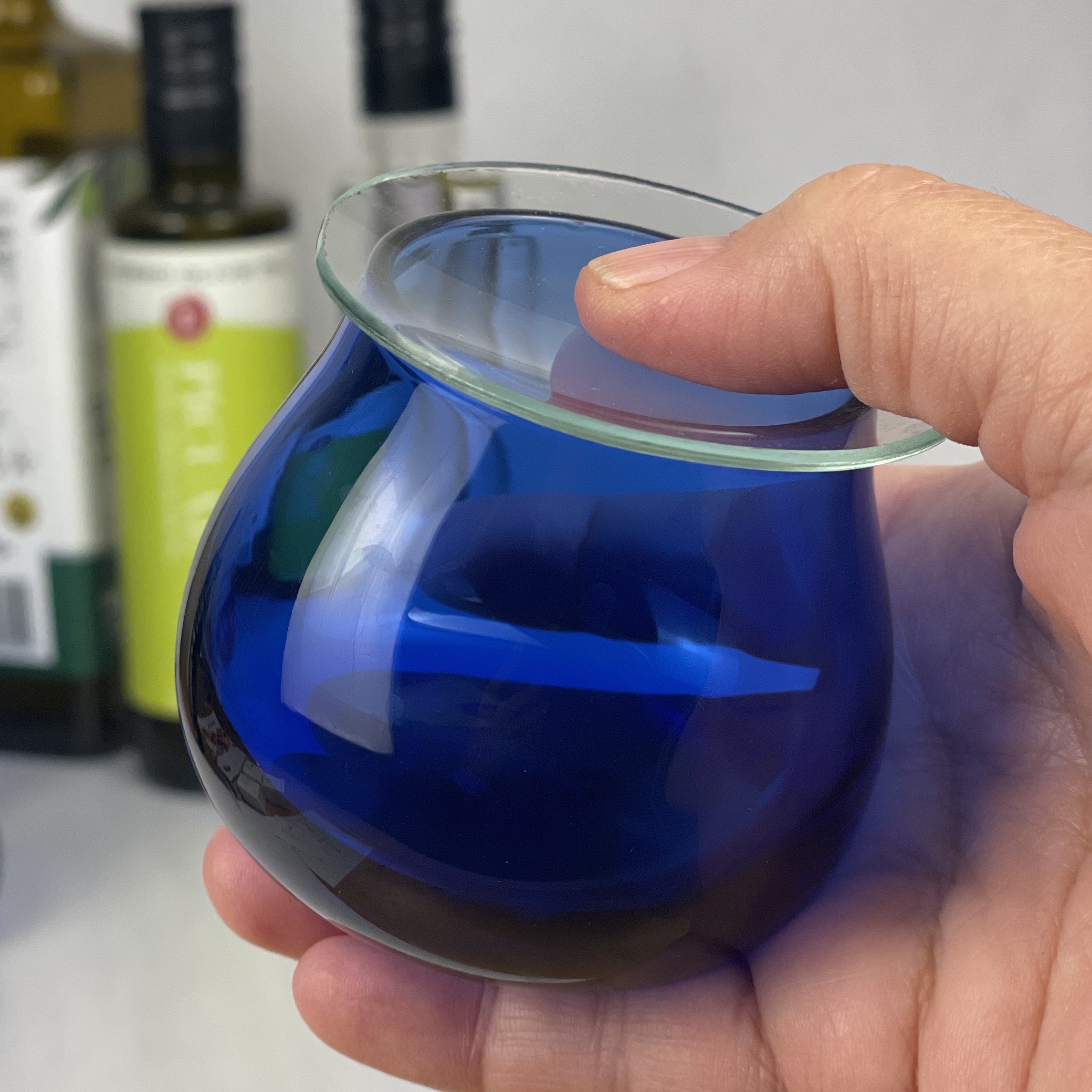
The International Olive Council specifies characteristics for glasses used in sensory assessment. One purpose of the dark-coloured glass is to prevent the taster from clearly seeing the oil's colour and forming a visual prejudice before smelling and tasting.
This is revealing: if colour were a reliable measure of sensory quality, hiding it would make little sense. Assessment focuses on aroma, flavour, defects and positive attributes, not on visual expectations.
What actually matters in EVOO assessment
Extra virgin olive oil must satisfy relevant chemical parameters and, under official sensory assessment, show no sensory defects and have fruitiness. For consumers, freshness, balance, intensity, bitterness and pungency also shape the experience.
None of these can be measured simply by deciding whether the liquid looks greener or more yellow.
Cultivar and colour
Different olive cultivars produce different pigment profiles. Even within the same cultivar, season, location, climate and ripeness can change appearance.
A rigid rule such as “this cultivar must be green” is therefore not reliable. Tendencies exist, but an individual oil must be judged from its complete information and sensory profile.
Ripeness matters, but does not provide an exact visual code
Pigments change as olives mature, and many early-harvest oils show stronger green tones. Yet final colour also depends on cultivar, extraction, filtration, storage and time.
If you want to know whether an oil is early harvest, use producer and harvest information rather than guessing only from colour. See our guide to early-harvest EVOO.
Does filtration change colour?
It can change appearance, particularly cloudiness. Unfiltered oil may contain tiny fruit particles and residual moisture that scatter light. That does not automatically mean it is greener or higher quality.
Filtered oil may appear brighter and clearer. Our guide to filtered vs unfiltered EVOO explains why filtration is mainly a processing and stability question.
Storage changes appearance too
Light, oxygen, heat and time drive chemical changes, and pigments can degrade. Colour may evolve during ageing, but there is no domestic visual scale that accurately measures oil condition.
An oil can retain an attractive green tone while oxidising, and a naturally golden oil can remain in excellent condition.
Cold makes visual judgement even less reliable
At low temperature, olive oil may become cloudy, crystallise or partially solidify. That can change its appearance dramatically without proving deterioration.
See our guide to why olive oil turns cloudy in the cold.
Why commercial photographs favour very green oil
Green visually communicates freshness, vegetation and nature. It is powerful food styling. But an advertising photograph is not a tasting panel. Visual appeal and technical assessment are different things.
How to compare two EVOOs more intelligently
- Confirm both are genuinely extra virgin olive oil.
- Review origin, producer and harvest information where available.
- Consider packaging and protection from light.
- Taste aroma, fruitiness, bitterness, pungency and balance.
- Match style to intended use.
- Do not score quality from colour.
Our guide to reading an olive-oil label helps separate useful information from visual impressions and marketing.
Can you taste at home in a clear glass?
Of course. For enjoyment there is no problem. But if you want a more objective comparison, try not to let colour establish expectations before you smell the oil. Similar opaque containers can help.
A simple rule
- Deep green: may reflect certain pigments and styles, but does not prove superior quality.
- Golden: can be completely normal in excellent EVOO.
- Cloudy from cold: is not a quality score.
- To judge quality: category, chemistry, sensory assessment, freshness and storage matter far more.
Frequently asked questions
Must the best EVOO be green?
No. There is no mandatory colour for top-quality extra virgin olive oil.
Is very yellow oil a lower grade?
Grade cannot be inferred from colour. Excellent EVOO can be naturally golden.
Why do professional tasters use blue or dark glasses?
To hide colour and reduce visual bias during sensory assessment.
Can colour tell me whether oil is rancid?
Not reliably. Rancidity is assessed primarily through sensory deterioration and oxidation history, not one particular hue.
Olive oils available now
-
EMDO Selection
-
EMDO Selection
-
EMDO Selection Sale
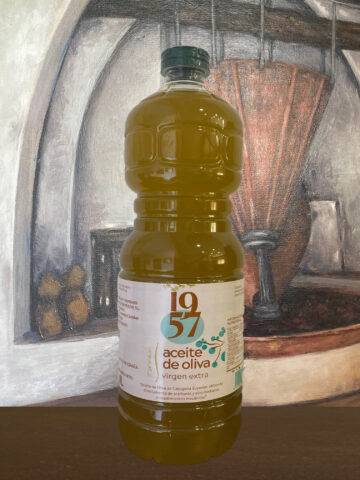
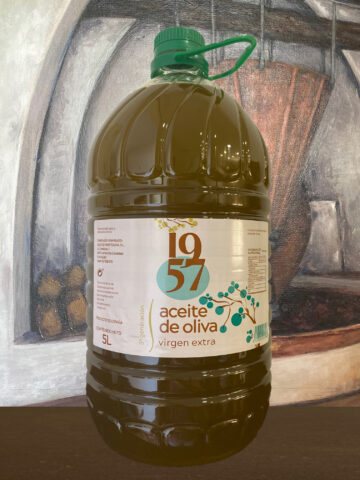
Technical reference: International Olive Council sensory standard for olive-oil tasting glasses, designed to prevent colour from biasing assessment.