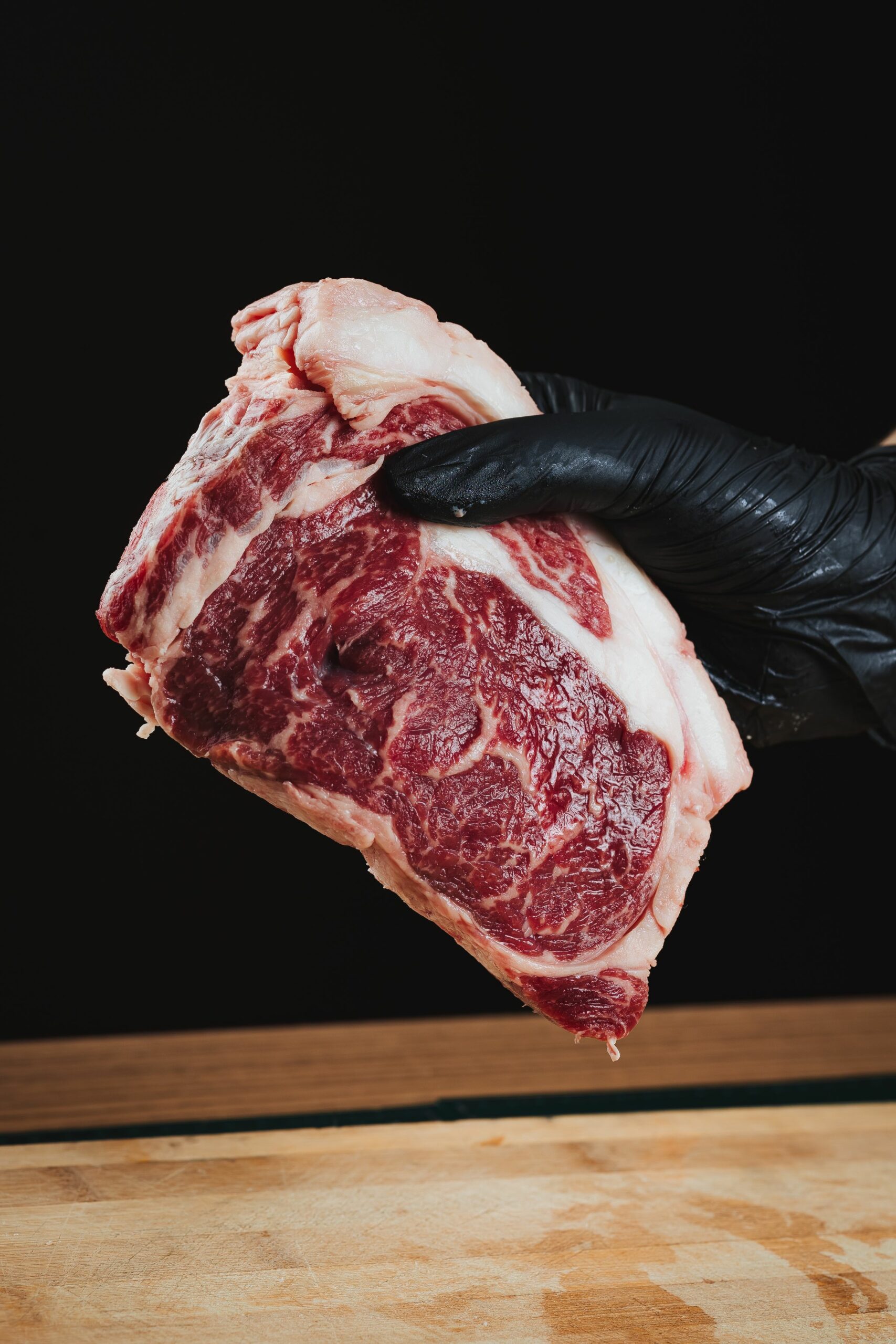
Beef marbling is the pattern of small streaks of fat running through muscle. The name comes from its resemblance to veined marble. In beef, this intramuscular fat can have a major effect on juiciness, flavour and mouthfeel.
More marbling does not automatically mean better beef. The cut, thickness, origin, aging and cooking method still matter. The useful skill is learning what you are looking at so you can choose the steak that matches the result you want.
What exactly is marbling?
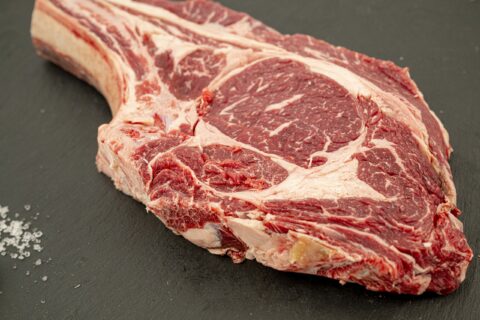
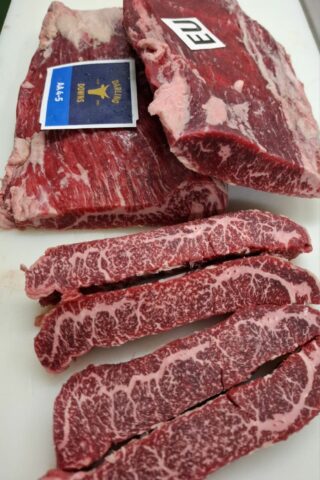
Marbling is fat distributed inside muscle tissue rather than the external fat cap around a cut. It appears as white lines, flecks or small networks running between the red muscle fibres.
During cooking, some of this fat melts. It lubricates the bite, carries aromas and contributes to a richer sense of juiciness. Two steaks of the same size can therefore eat very differently if one is heavily marbled and the other is extremely lean.
Marbling and external fat are different
A steak can have a thick outer fat layer while containing little intramuscular marbling. The reverse can also happen: a neatly trimmed steak may still show many fine white streaks within the muscle.
External fat can protect a cut during some cooking methods and create flavour when browned. Marbling is distributed through the muscle itself and has a more direct effect on each bite.
How marbling affects juiciness
Perceived juiciness does not come only from water retained by the meat. Melted fat also contributes. A well-marbled steak often has a little more tolerance to heat because the mouthfeel stays rich even as some moisture is lost.
It can still be overcooked. Taking a steak far beyond the desired doneness removes moisture and can produce a poor texture even when plenty of fat is present. Marbling gives you some margin, not immunity from bad cooking.
How marbling affects flavour
Fat carries aromatic compounds and, as the steak heats, it contributes to the rich roasted flavours developed at the surface. Highly marbled beef can taste rounder, richer and more intense.
Origin matters too. Breed, feeding, age, husbandry and aging all alter the final flavour profile. It is misleading to attribute everything you taste to one visual feature.
Which cuts often show more marbling?
Intramuscular fat varies between muscles. Rib and upper-loin cuts are often valued because they can combine tenderness with useful marbling. Ribeye, entrecôte, bone-in rib steak and some tomahawks come from these areas.
Other cuts are naturally leaner. Our guide to lean beef explains how to adapt your technique when there is less internal fat.
Marbling in rib steak, entrecôte and tomahawk
When comparing a bone-in rib steak with entrecôte, marbling can be as important as bone and thickness. Two steaks with the same commercial name can look and cook very differently. See our rib steak vs entrecôte guide.
With a tomahawk, the long bone provides visual impact, but the quality of the muscle remains the central issue. Our guide to tomahawk steak explains the format in more detail.
How to judge marbling by eye
- Distribution: even marbling is usually more useful than one isolated band of fat.
- Fineness: many small streaks can melt more evenly.
- Cut: compare like with like rather than comparing tenderloin with ribeye.
- Thickness: interpret photographs alongside the real steak dimensions.
- Trimming: separate intramuscular fat from the external fat cap.
A photograph is useful, but a complete product description should also state cut, weight, origin and storage information.
Is more marbling always better?
No. It depends on taste and recipe. If you want a rich, juicy steak, you may prefer obvious marbling. If you enjoy a cleaner beef flavour and a less fatty mouthfeel, moderate marbling can be more appealing.
There is also a yield consideration. In extremely fatty beef, a significant amount can render during cooking. Price per kilo does not tell the full story if you ignore how much of the piece you actually eat.
What is the relationship between marbling and aging?
Marbling and aging are separate characteristics. Beef can be heavily marbled and fresh, or relatively lean and dry-aged for weeks. Aging changes tenderness, concentration and aroma; marbling describes fat inside the muscle.
When the two are combined in a suitable cut, the flavour can be especially intense. Our guide to dry-aged beef explains what aging days mean and how to interpret them.
How to cook highly marbled beef
A fatty steak benefits from enough heat to brown the surface and render some fat. Dry the exterior, avoid overcrowding the pan and monitor the centre so you do not overshoot the desired doneness.
For thick steaks, combining gentle heat with a powerful finishing sear can work very well. The aim is to render fat gradually without burning the outside before the centre is ready.
Salt, temperature and resting still matter
Marbling does not replace good technique. Sensible seasoning, a dry surface, sufficient heat and a resting period all help. For internal temperature, see our beef doneness guide.
After cooking, rest substantial steaks briefly before slicing. This makes the temperature more even and reduces the rush of liquid when you first cut the meat.
Common marbling mistakes
- Confusing an external fat cap with intramuscular marbling.
- Assuming more white fat always means higher quality.
- Comparing different cuts as though they were identical.
- Ignoring steak thickness and real weight.
- Cooking very marbled meat over weak heat without proper browning.
- Buying only from a photograph without reading the product information.
Frequently asked questions
Is marbled beef more tender?
It can feel richer and more succulent, but structural tenderness also depends on the muscle and connective tissue. Marbling and tenderness can interact, but they are not the same thing.
Does marbling disappear when beef is cooked?
Some fat renders, but not all of it disappears. The melting changes flavour, texture and juiciness.
Can lean beef still be high quality?
Absolutely. Quality is not defined by fat alone. Lean cuts can be excellent when they are well selected and cooked appropriately.
Choose beef for the eating experience you want
Learning to read marbling gives you another useful buying tool. The goal is not always to chase the most fat, but to understand which balance of flavour, richness and juiciness suits you.
-
Sale!
 Select options
This product has multiple variants. The options may be chosen on the product page
Select options
This product has multiple variants. The options may be chosen on the product page