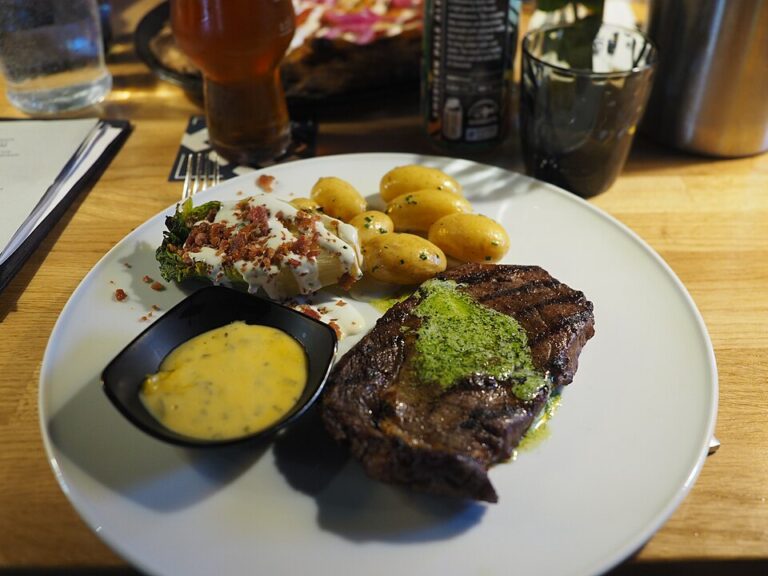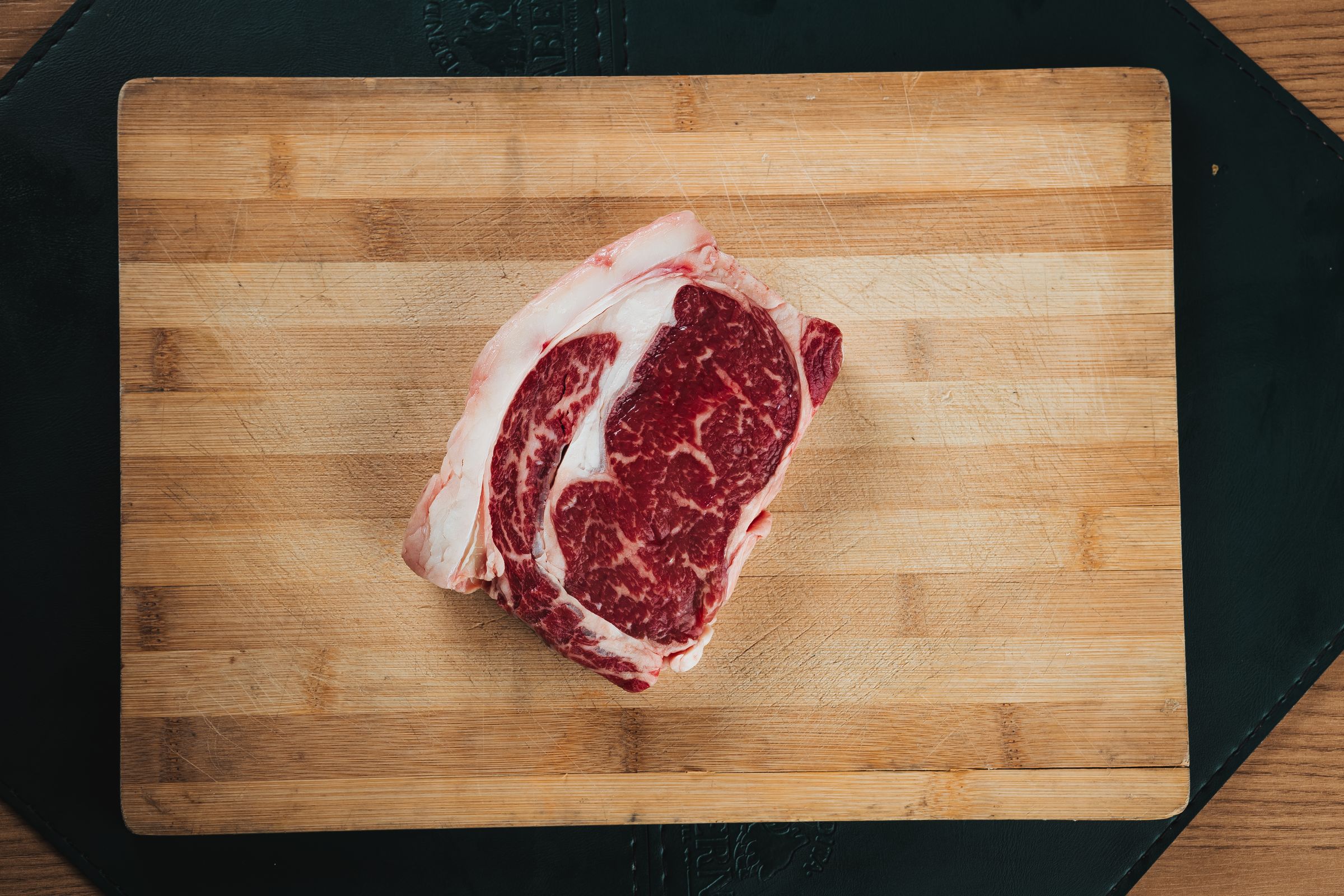
When beef is cooked on a hot pan or grill, cooking time is short and there is little room to correct mistakes. The result depends on much more than the cut name: thickness, fat distribution, surface temperature, exterior moisture, resting and slicing direction can dramatically change the same piece of meat.
Ribeye-style steaks and large bone-in steaks often dominate the conversation, but the useful question is not which is universally “better”. It is which format suits the cooking method, number of diners and texture you want.
Boneless steak and bone-in steak: more than the bone
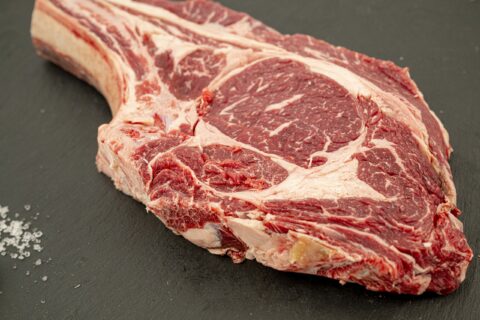
Spanish retail terminology varies, but an entrecot is commonly sold as a thick boneless steak from the loin area, while a chuletón generally keeps the bone and is often cut substantially thicker. Exact naming differs between butchers and regions, so the product description matters.
The bone changes shape and heat transfer near that part of the steak, but it does not automatically make meat tender. Tenderness depends on the muscle, connective tissue, product handling and cooking. Large bone-in steaks also naturally lend themselves to sharing.
Thickness changes the strategy
A thin steak may cook almost all the way through while its exterior browns. A thick steak gives you more options: develop colour first, then manage heat so the centre rises more gradually. Applying the same timing to a one-centimetre steak and a four-centimetre steak makes little sense.
Instead of memorising minutes, pay attention to thickness, starting temperature, pan power and how the meat responds. Domestic cookers vary enormously.
Fat and marbling
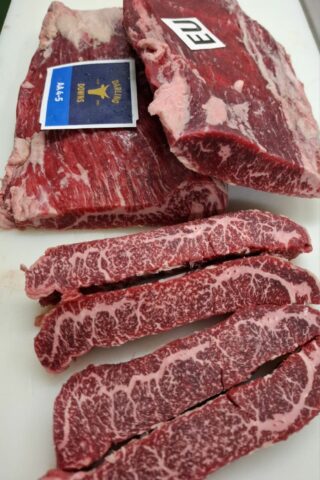
External fat and intramuscular fat do different jobs. Marbling—the fine streaks within the muscle—contributes to perceived juiciness and flavour as the steak cooks. External fat can render and assist browning, although too much dripping directly onto charcoal may cause flare-ups.
Not every pan steak needs extreme marbling. Leaner cuts can be excellent when cooked accurately and served in a way that respects their structure.
A dry surface browns more efficiently
Surface water consumes energy as it evaporates. Gently drying beef with kitchen paper before cooking helps the surface heat more quickly and encourages the browning reactions responsible for roasted aromas.
This matters particularly on a domestic hob. Crowding the pan creates the opposite effect: temperature drops and the meat starts steaming in released moisture. Cook in batches when necessary.
Pan cooking starts with preheating
A properly heated pan helps browning begin quickly. That does not mean maximum heat throughout the entire cook. With thick steaks it can be useful to reduce intensity after the initial sear so the centre can progress without burning the crust.
A heavy pan also recovers heat better after cold meat is added. A small pan packed with steaks will cool dramatically; two batches are often better than one crowded batch.
Grilling: direct and indirect heat
A grill adds distance from the heat source as another variable. If there is enough space, create a hotter zone for browning and a gentler zone for finishing thick pieces. That separates two goals that can conflict: crust development and centre control.
Open flames are not automatically desirable. Constant fat flare-ups can burn the exterior before the inside is ready. Stable embers are easier to control.
When should you salt?
Several approaches work. Salting immediately before cooking is simple and effective. Salting well in advance can also work because the salt has time to dissolve and the exterior can dry again before cooking. The awkward window is often a short wait in which salt has drawn moisture to the surface just before the steak enters a relatively weak pan.
Seasoning quantity should also reflect thickness. A substantial steak needs a different distribution from a very thin cut.
One flip or several?
The “flip only once” rule is not mandatory. Turning a steak several times can promote even cooking, particularly with thicker pieces, provided you use tongs and avoid puncturing the meat unnecessarily. The goal is controlled browning, not adherence to ritual.
Resting the steak
When a thick steak leaves the heat, internal temperature does not freeze instantly. Heat continues to redistribute. A short rest allows that temperature gradient to settle and avoids slicing at the moment of greatest thermal movement.
Resting should match size. A small steak needs little time; a large piece benefits from more. Covering tightly can trap steam and soften the crust.
Slice across the grain
Serving cuts across the direction of the muscle fibres shortens those fibres and usually makes chewing easier. On an individual steak diners may naturally do this themselves. On a large shared steak, identify the grain before carving.
Choosing a format for the occasion
For a fast individual portion: a medium-thickness boneless steak is easy to manage in a pan.
For sharing: a thick bone-in steak creates a natural centrepiece and can be carved after resting.
For a barbecue: combining thick pieces with faster-cooking cuts lets you stagger service.
For diners who prefer leaner meat: choose an appropriate cut rather than overcooking a fatty steak in an attempt to remove its fat.
The right cooking method matters more than one universal recipe
Our guide Which beef cut to choose for each recipe explains why some cuts suit the pan while others suit stewing. For the underlying science, read Why some beef cuts need minutes and others need hours.
The principle is simple: excellent raw material does not remove the need for the right method. Pan and grill reward cuts suited to rapid cooking; other muscles reveal their strengths only when time is allowed to transform connective tissue.
Related beef products
-
Sale!
 Select options
This product has multiple variants. The options may be chosen on the product page
Select options
This product has multiple variants. The options may be chosen on the product page