
Salt is fundamental to cured ham production. It contributes to preservation, lowers water activity and participates in the transformation of texture and flavour during months of drying and maturation. But there is a difference between recognisable seasoning and salt dominating the entire eating experience.
When a ham tastes too salty, the reason may involve salting, the way salt moved through the tissue, drying, the particular area being carved or even slice thickness and serving. Saltiness is not perceived identically throughout a whole ham.
Salt is not instantly uniform
During production, salt enters from the outside and then redistributes through the piece. Movement depends on size, fat, temperature, time and tissue characteristics.
Good curing aims for integration and balance. The goal is not a salt-free ham, but one where salt supports cured-meat and fat aromas rather than covering them.
Why some areas taste saltier
A ham is anatomically uneven. Muscles vary in thickness, some areas are protected by more fat and some surfaces lose more moisture. A drier slice can taste saltier because less water remains and because its texture changes flavour perception.
Do not judge an entire ham from one dry edge or the first slices taken before the carving area has been prepared properly.
Drying concentrates flavour
As water is lost during curing, flavour components become more concentrated. This is part of the desired process, but excessive or uneven drying can produce firmer areas with a stronger salt impression.
Our separate guide to ham that is too dry focuses on texture; the two sensations can occur together.
Thick slices can taste more aggressive
Thickness changes the eating experience. A thick slice needs more chewing and keeps concentrated lean meat and salt in the mouth for longer. Thin carving distributes fat better and allows the slice to soften more easily.
This cannot remove salt from a genuinely over-salted ham, but it can explain why the same piece tastes more balanced when correctly sliced.
Fat helps balance the slice
A slice with an appropriate amount of clean fat often tastes rounder than very dry, completely trimmed lean meat. White or ivory fat is part of Iberian ham's sensory balance and should not automatically be removed.
Does saltier mean lower quality?
One impression is not enough to classify a whole ham. Natural variation and personal preferences exist. But if saltiness is strong, persistent and widespread across several areas, it can reasonably be considered a quality defect because it masks aroma and makes the lean meat feel harsher.
In a premium ham, salt should be integrated rather than the main flavour.
Can home storage make ham taste saltier?
Storage does not add more salt, but it can dry the exposed carving surface. As moisture is lost, that surface can feel harder and more intensely salty.
Protecting the carving face and eating the ham at an appropriate pace reduces this effect. See our guide to storing a started whole ham.
What if the first slices are too salty?
Make sure rind and non-serving external fat have been removed correctly, then cut thin slices from a clean area and reassess. If the problem was limited to a dry surface, the flavour may improve slightly as carving progresses.
Do not remove large amounts without reason. If excessive salt remains through depth and several areas, document the piece and contact the seller or producer.
Can cured ham be desalinated?
Not in a way that preserves the product as intended. Washing or soaking slices damages texture, aroma and fat and is not a recommended solution for ham designed to be eaten as cured meat.
If isolated slices are simply too intense for your preference but otherwise sound, small quantities can be used in cooking without additional salt. That is culinary use, not a repair for defective curing.
Do not hide a defect with accompaniments
Bread or tomato can soften the perceived saltiness at the table, but they should not be used to justify a clearly unbalanced ham. Evaluate a slice on its own at a suitable serving temperature.
What to tell the producer
Give the approximate weight, opening date, affected area, storage conditions and whether the issue continues deeper into the ham. Photographs and batch information help distinguish a dry surface from a broader curing issue.
A practical rule
Salt should be present but integrated. A dry area or thick slice can taste saltier without representing the entire piece. If excessive salt persists across several correctly carved areas, the ham deserves further assessment.
Frequently asked questions
Can the first slices taste saltier?
Yes, especially if the exposed surface is dry or the area has not been prepared correctly. Judge a properly cleaned section.
Can I wash ham to remove salt?
No. It damages the product and is not an appropriate correction for excessive salting.
Is shoulder always saltier than ham?
Do not treat that as an absolute rule. Their anatomy and size differ, but good curing aims for balance in both.
Is very salty ham unsafe?
Salt intensity is primarily a sensory-quality issue, not a direct safety test. Other abnormal smells, textures or signs require separate assessment.
-
EMDO Selection SaleSale!
 Select options
This product has multiple variants. The options may be chosen on the product page
Select options
This product has multiple variants. The options may be chosen on the product page
-
EMDO Selection SaleSale!Select options
This product has multiple variants. The options may be chosen on the product page
-
EMDO Selection SaleSale!Select options
This product has multiple variants. The options may be chosen on the product page
-
EMDO Selection SaleSale!Select options
This product has multiple variants. The options may be chosen on the product page
-
Last units availableSaleSale!Select options
This product has multiple variants. The options may be chosen on the product page

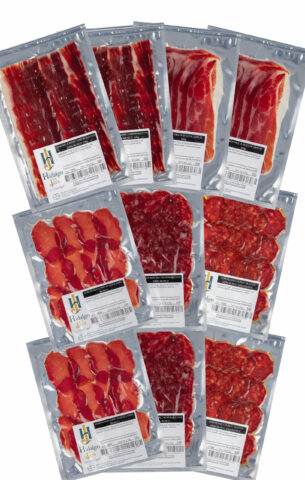

 Tasting pack of 100% Iberian acorn (2x ham, 2x shoulder ham, 2x cured loin, 2x salchichón, 2x chorizo)