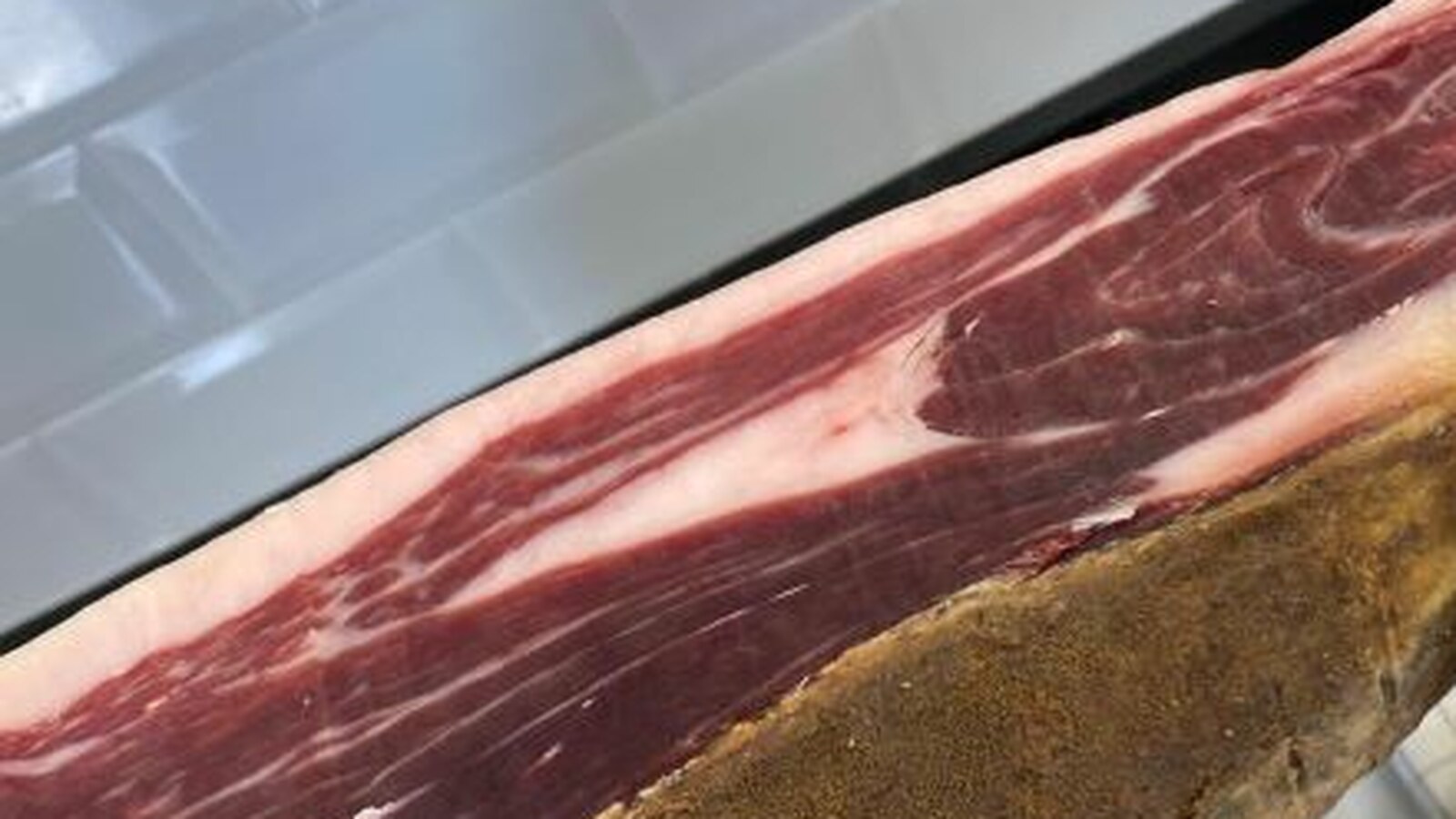
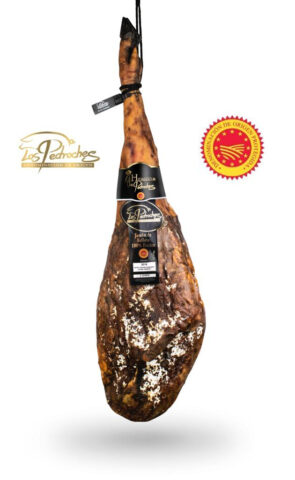
The question “hoof up or hoof down?” can sound like one of those traditions repeated without much explanation. There is, however, a simple logic behind it: the orientation determines which side of the ham you eat first. With the hoof pointing upward, you normally start from the maza, the broader and juicier side. With the hoof pointing downward, you begin on the babilla, which is narrower and generally leaner.
There is no single correct position for every household. The sensible choice depends on how quickly you expect to finish the ham, how many people will eat it and how often you plan to carve. Understanding that prevents a common mistake: opening the most appealing side, leaving it exposed for too long and later finding that part of the ham has lost texture and juiciness.
First, identify the maza and the babilla
The maza is the fuller side of the ham. It offers a broad cutting surface, good fat distribution and a particularly pleasant texture when the ham is properly tempered. It is the side most people associate with large, attractive slices.
The babilla lies on the opposite face. It is narrower, carries less muscle mass and often feels firmer and more cured. Because it has less protective fat, it can show the effects of prolonged exposure sooner once opened. That physical difference is the reason consumption pace matters.
Hoof up: when starting from the maza makes sense
If the ham will be eaten fairly quickly — at a celebration, in a larger household or whenever it is served frequently — placing the hoof upward is a logical option. This opens the maza first, giving you a comfortable working surface and plenty of slices.
It is also a forgiving orientation for less experienced carvers because the cutting face is broad and easier to keep reasonably level. The important point is that consumption should be regular enough for the exposed surface to keep moving rather than sitting untouched for long periods.
Hoof down: why it can suit a slower household
When a ham will be eaten gradually, placing the hoof downward and opening the babilla first can be more practical. The idea is to use the leaner, smaller side before it has a chance to dry excessively, while the maza stays intact beneath its natural rind and outer fat.
This approach is useful for one- or two-person households, or when ham appears only at occasional weekend aperitifs. It does not improve or reduce the intrinsic quality of the ham; it simply organises the order of consumption more intelligently.
Orientation alone does not preserve the ham
One myth is worth removing: hoof position does not magically preserve a ham. What matters is opening only the area you need, protecting the cut between carving sessions and avoiding unnecessary exposure of lean meat and fat.
After carving, clean pieces of the ham's own inner fat can be used to help protect the surface, together with an appropriate cover that reduces direct exposure to air. The ham should also be kept in a cool, dry, ventilated place away from direct heat. Our guide to storing an opened Iberian ham explains this in detail.
Secure the ham before making the first cut
A stable ham stand is both a technical and a safety requirement. The leg must be firmly held around the shank and supported at the lower end, without moving when moderate pressure is applied. Before using a carving knife, check that screws and clamps are properly tightened.
The long, flexible ham knife is for slicing. A shorter, rigid knife is better for removing rind and working around bones. Using each tool for its intended job reduces awkward movements.
Do not remove all the rind at once
Another common mistake is stripping too much rind and outer fat on day one. That layer is natural protection. Remove only what is necessary for the area you are about to carve and leave the rest untouched until you reach it.
As you trim the exterior, keep a few clean, pale pieces of inner fat that can later help cover the cutting surface. Do not confuse them with the yellowed outer fat that may have been exposed during curing and storage.
The first cutting plane affects everything that follows
Creating a stable working surface matters more than producing a perfect slice immediately. The opening cuts should expose the chosen area without creating deep steps. From there, keep the plane as even as possible and advance progressively.
A good slice does not need to be enormous. It should be thin, flexible and, where the anatomy allows, carry a balanced amount of lean and fat. Chasing very long slices often encourages an angled knife and an uneven surface that becomes harder to manage later.
What to do when you reach bone
As the cut approaches bone, do not force the long carving knife forward. A short knife can mark the contour and release the meat close to the bone, helping preserve a clean slice and an even working face.
Once one side is exhausted, turn the ham and work the other. Our complete ham carving and utilisation guide covers the different zones, turning the piece, trimmings and final use.
Does the same rule apply to an Iberian shoulder?
The basic principle is similar: choose the starting side according to consumption pace. A shoulder, however, is smaller, has different anatomy and contains proportionally more bone. It is often consumed sooner than a large ham but also requires more careful work around the bones.
So the maza/babilla logic can guide the initial orientation, while the cutting technique itself should be adapted to the particular piece.
A ten-second rule for deciding
If the ham will be eaten quickly, hoof up and maza first is a straightforward choice. If only a few people will eat it and consumption will be slow, hoof down and babilla first helps use the leaner side before it dries. If you are unsure, think less about exact dates and more about real frequency: will you carve almost every day or only occasionally?
The correct orientation cannot replace good storage, but it can help the second side reach your plate in better condition. That small decision before the first cut can improve how much of the whole ham you genuinely enjoy.
Related hams and shoulders
-
EMDO Selection SaleSale!
 Select options
This product has multiple variants. The options may be chosen on the product page
Select options
This product has multiple variants. The options may be chosen on the product page
-
EMDO Selection SaleSale!Select options
This product has multiple variants. The options may be chosen on the product page
-
EMDO Selection SaleSale!Select options
This product has multiple variants. The options may be chosen on the product page
-
EMDO Selection SaleSale!Select options
This product has multiple variants. The options may be chosen on the product page
-
Last units availableSaleSale!Select options
This product has multiple variants. The options may be chosen on the product page

Sources and references
Consorcio del Jamón Serrano Español — knife carving and ham-stand setup.
 Pedrosillano Chickpeas
 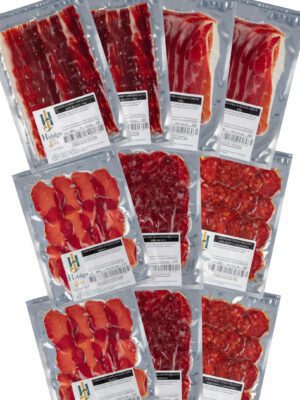 Tasting pack of 100% Iberian acorn (2x ham, 2x shoulder ham, 2x cured loin, 2x salchichón, 2x chorizo)