
Many Spanish butcher shops still refer to first-category, first A, first B, second or third-category beef. Consumers can easily read those labels as an absolute quality ladder: first means “good” and second means “worse”. That interpretation is far too simple.
The traditional system mainly tries to summarise expected tenderness, connective tissue, piece shape and likely culinary use. It is not a universal sensory score and does not guarantee that a “first-category” cut will taste better than a “second-category” one. Boundaries and names can also vary between regions, cutting manuals and individual shops.
What does “first category” usually mean?
Broadly speaking, higher categories group relatively tender muscles that need little prolonged cooking and have shapes suitable for clean, regular steaks. They are convenient for pan-searing, griddling, breading and other quick methods.
Commercial value is also connected to yield. A muscle that produces uniform steaks with little trimming and strong consumer demand usually commands a higher price. That does not automatically mean more flavour.
What does “second category” usually mean?
Second-category pieces may contain more fascia, collagen, connective seams or less regular shapes. Some make perfectly good steaks when trimmed and sliced correctly; others are substantially better for stews, braises, mince or slow cooking.
The connective tissue that looks like a disadvantage on a hot griddle can become an advantage with time and moisture. Collagen transforms during long cooking and contributes body and richness to sauces.
Second category does not mean a lower-quality animal
Two muscles from the same carcass can enter different commercial categories simply because they perform different jobs. A heavily used muscle has a different structure from a protected muscle that does little mechanical work.
A second-category cut can therefore come from an excellent animal with good feeding and handling and produce a superb dish. The label mainly describes culinary suitability and commercial characteristics of the cut, not total carcass quality.
Why is the system not identical in every butcher shop?
There is no single commercial table applied with absolute uniformity throughout Spain. Some traditional schemes divide first category into A and B, others simplify the groups, and many professionals prefer to use the anatomical cut name directly.
It is therefore more useful to ask “which muscle is this?” and “what cooking method do you recommend?” than to buy solely on the word first or second.
Tenderness depends on more than category
Anatomical location matters, but so do animal age, maturation, thickness, cutting direction and cooking. A naturally tender steak can become tough if sliced poorly or overcooked; a so-called second-category cut can become meltingly tender when cooked according to its structure.
Post-mortem maturation also changes texture and perceived tenderness. Comparing two steaks without knowing how they were handled can lead to false conclusions about category.
For pan-searing: low resistance and regular thickness
For fast cooking, you generally want limited tough connective tissue and a shape that allows even steaks. This is where many first-category cuts show their practical advantage.
However, “first-category steak” is still incomplete information. Thickness controls cooking behaviour and marbling changes juiciness. Ask about the actual cut.
For breaded steaks
A breaded steak does not necessarily need the most expensive muscle in the carcass. The coating protects part of the surface and the meat is normally cut thin and cooked quickly. Certain intermediate cuts work extremely well if trimmed and sliced properly.
Buying the most expensive cut for every recipe is not product knowledge; it is failing to match the purchase to the method.
For stews and slow cooking
This is where many second-category pieces become stars. Muscles containing collagen, pronounced fibres and some fat can withstand long cooking and produce broths and sauces with a texture that very lean premium steaks cannot provide.
Using tenderloin in a multi-hour stew often wastes tenderloin's main advantage and charges you for a feature the recipe does not need.
For minced beef
Mincing makes good use of cuts that are not shaped for regular steaks. What matters is suitable raw material, hygienic handling and the fat level needed for the preparation.
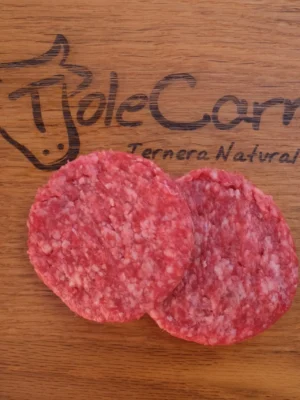
A burger is not automatically better because it is made from a muscle labelled “first category”. Freshness of the mince, blend, fat and cooking may matter more.
What about first A versus first B?
Where this subdivision is used, first A commonly groups especially tender cuts with strong steak yield, while first B includes other cuts also suited to quick cooking but with somewhat different structures. The exact muscles placed in each group vary.
For that reason, memorising one table as if it were immutable law is less useful than understanding what each muscle does and how it should be cooked.
Cutting direction can transform a steak
Slicing across the grain shortens the muscle fibres you need to chew. In strongly grained cuts, this can make a major difference to perceived tenderness. Slicing along the grain can make a perfectly useful muscle seem tougher than it really is.
How to buy more intelligently
- Quick pan cooking: ask for a tender muscle and even steaks.
- Stewing: look for collagen and structure that benefit from time.
- Breading: seek adequate tenderness and good slicing, not category alone.
- Mincing: think about freshness and fat ratio.
- When you see first or second: treat it as a clue, not a verdict.
The anatomical name tells you more
At El Mercado de Origen we prefer explaining what each cut is good for. Our guide to choosing beef cuts for each recipe shows the relationship between muscle, connective tissue and cooking method. That information is more useful than assuming a commercial category summarises everything that matters.
Frequently asked questions
Is second-category beef tough?
Not necessarily. Some cuts contain more connective tissue and need a different technique, but they can become tender and succulent with appropriate cooking.
Does first-category beef have more flavour?
There is no automatic relationship. Flavour depends on fat, animal, maturation and cooking among other factors.
Should I buy first category for stewing?
No. Many excellent stew cuts sit in lower commercial categories precisely because their collagen responds well to long cooking.
Is the classification official and universal?
It is a traditional commercial shorthand, but its subdivisions are not applied identically everywhere. The cut name and recommended use give more precise information.
Browse the meat currently available at El Mercado de Origen.
-
Sale!
 Select options
This product has multiple variants. The options may be chosen on the product page
Select options
This product has multiple variants. The options may be chosen on the product page



 Pardina Lentils
  4 Weekly 7 kg Vegetable Boxes
  10 kg de pimientos lamuyos rojos, especiales para asar
  White Kidney Beans
  12 Jars of Artisan Tomato Fritada, 314 ml
  100% mature beef burgers – gluten-free (2)
  100% beef burgers – gluten-free (2)