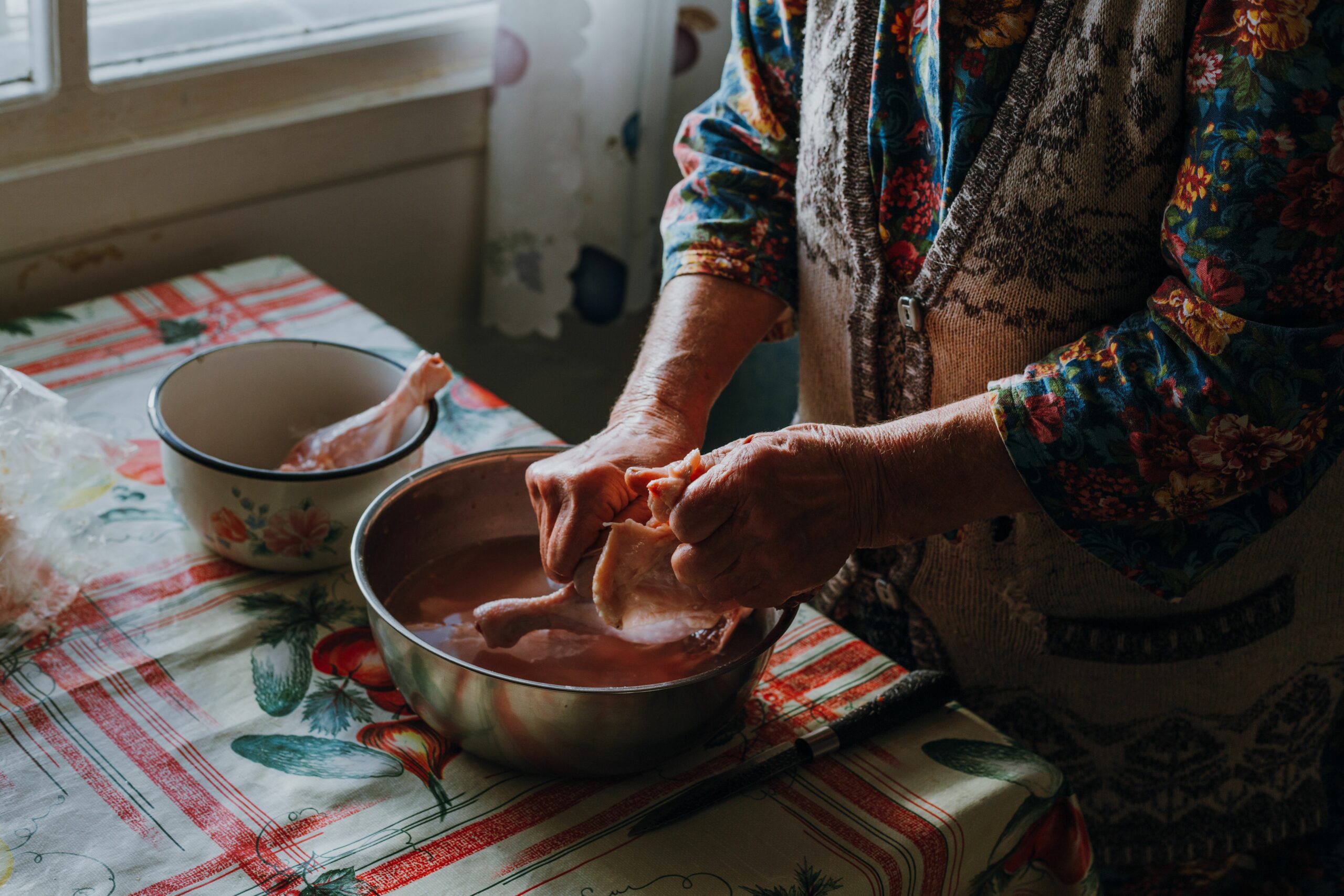
The idea sounds intuitive: we wash fruit, vegetables, dishes and utensils, so why not wash meat before cooking? Raw meat is different for one important reason. Rinsing it under running water does not reliably remove microorganisms and can spread them around the kitchen through droplets and splashes.
Food-safety authorities therefore advise against washing or rinsing raw meat and poultry as a hygiene step. The measures that genuinely control risk are clean handling, separation of raw and cooked foods, correct refrigeration and appropriate cooking.
The problem is not the water itself: it is invisible splashing
When a stream of water hits meat, tiny droplets can reach the sink, tap, worktop, utensils, cloths or nearby foods. Many droplets are too small to notice.
If microorganisms are present on the meat, washing can turn a localised risk into cross-contamination spread across the work area. The problem may appear later when salad, bread or a clean utensil touches a contaminated surface and there is no further cooking step to reduce the risk.
Does water remove bacteria from meat?
Not sufficiently to make the meat safe. Some microorganisms can remain attached to the surface and domestic rinsing is not a controlled decontamination process. Removing a little surface material does not mean the food has been sanitised.
Appropriate cooking is the step designed to reduce microorganisms. For preparations where safety depends on internal temperature, a food thermometer provides meaningful information; the appearance of rinsed meat does not.
What about liquid in the tray?
Liquid released during storage is not a reason to “clean” meat. It can contain water, muscle proteins and pigments. Consumers often call it blood, although most blood is removed during slaughter and bleeding.
If you want a drier surface for better browning, pat the meat with disposable kitchen paper. Throw the paper away immediately and wash your hands. This is a culinary step to reduce surface moisture, not a disinfection method.
Drying is not washing
Patting a steak dry can help the surface brown more efficiently. It does not make raw meat ready to eat and does not replace cooking.
Paper that has touched raw meat should be treated as contaminated material. Do not reuse it to wipe plates, boards or vegetables.
What about vinegar, lemon or salt water?
They should not be treated as household food-safety methods. Vinegar, lemon juice or brine can alter flavour and texture and may be useful as marinades, but they do not replace safe cooking or eliminate cross-contamination during handling.
If you marinate for culinary reasons, use a clean covered container in the refrigerator. Liquid that has been in contact with raw meat should not be served as a sauce unless it receives an appropriate heat treatment.
Never use soap or detergent on meat
Household soap is intended for hands, utensils or surfaces according to its directions, not for food. It can leave chemical residues and offers no food-safety advantage. Meat, fish and poultry should not be washed with detergents.
What to do instead of washing meat
- Maintain the cold chain. Store meat at the stated temperature and minimise unnecessary time at room temperature.
- Separate raw from ready-to-eat foods. Keep meat juices away from salads, bread, fruit and cooked foods.
- Use a clean board. Wash and sanitise boards and utensils after raw-meat preparation before using them for other foods.
- Wash your hands. Use soap and water after handling raw meat and before touching other ingredients.
- Cook appropriately. Correct heat treatment is what controls microbiological risk, particularly in minced meats, stuffed products and poultry.
Why minced meat needs particular care
With an intact muscle, potential contamination is concentrated mainly on the exterior. Grinding mixes that exterior throughout the product. A burger therefore cannot be treated exactly like an intact steak from a food-safety perspective.
Washing minced meat would also damage texture and increase handling without providing reliable decontamination. Good refrigeration, minimal handling and appropriate cooking are what matter.
Should meat be washed after thawing?
No. Thawing can release liquid, but that does not make rinsing a good practice. Remove packaging carefully, prevent drips from reaching other food, pat the surface dry if the recipe benefits from it and clean any surfaces that were contacted.
Safe thawing and washing are separate issues. Water does not make a thawed product safer.
What about visible bone dust?
Sawn cuts can occasionally carry a small visible bone fragment. Remove it locally with a clean utensil or disposable paper rather than rinsing the entire piece.
If meat shows abnormal contamination, damaged packaging, a clearly unpleasant odour or another sign of poor commercial handling, washing is not a solution. Do not use the product and contact the seller.
The sink is not automatically a clean zone
Sinks themselves can carry microorganisms from foods, cloths and utensils. Putting raw meat into the sink increases contact surfaces and subsequent cleaning without providing a useful safety step.
A safer kitchen reduces the journey made by raw meat: from package to board or dish, then to cooking, followed by proper cleaning of hands and equipment.
A simple professional workflow
If you are using the same work area, prepare ready-to-eat ingredients first. Remove them, clean the area and then handle the meat. Use separate utensils where useful. Once meat is cooked, never put it back on the same unwashed plate that held it raw.
This discipline contributes far more to safety than rinsing the meat.
What food-safety guidance says
The USDA Food Safety and Inspection Service specifically advises that washing meat or poultry can increase cross-contamination and is not necessary for safety. Spanish food-safety guidance likewise emphasises separating raw and cooked foods, controlling temperature, washing hands and surfaces and applying safe heat treatment.
The principle is straightforward: do not spread a hazard around the kitchen; control it where it actually matters.
Frequently asked questions
Should I rinse a steak before putting it in the pan?
No. If you want better browning, pat it dry with disposable paper and handle it hygienically rather than rinsing it.
Does vinegar kill bacteria on meat?
It should not be used as a substitute for food-safety measures. It can be part of a marinade for flavour, but safety still depends on correct handling and cooking.
Can I wash chicken, pork or beef?
General food-safety advice is not to wash raw meat or poultry under the tap because of cross-contamination risk.
What should I do after touching raw meat?
Wash your hands with soap and water and properly clean the surfaces and utensils that contacted the raw product.
-
Sale!
 Select options
This product has multiple variants. The options may be chosen on the product page
Select options
This product has multiple variants. The options may be chosen on the product page


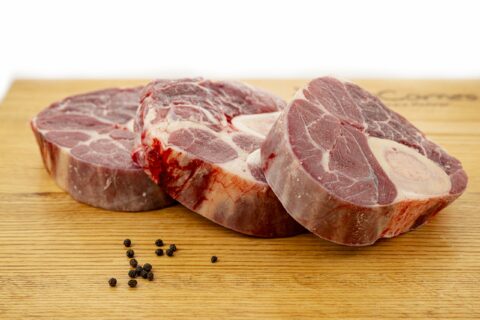

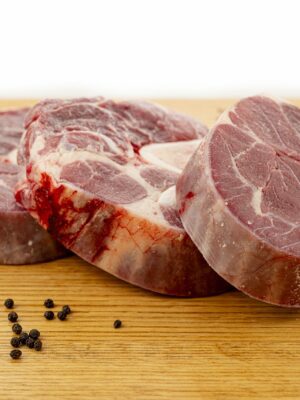 Beef osso buco
 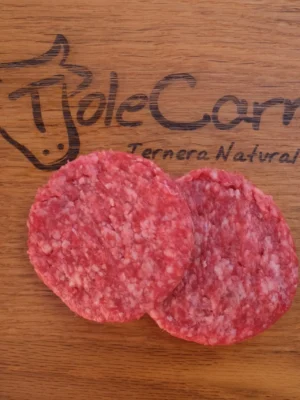 100% beef burgers – gluten-free (2)