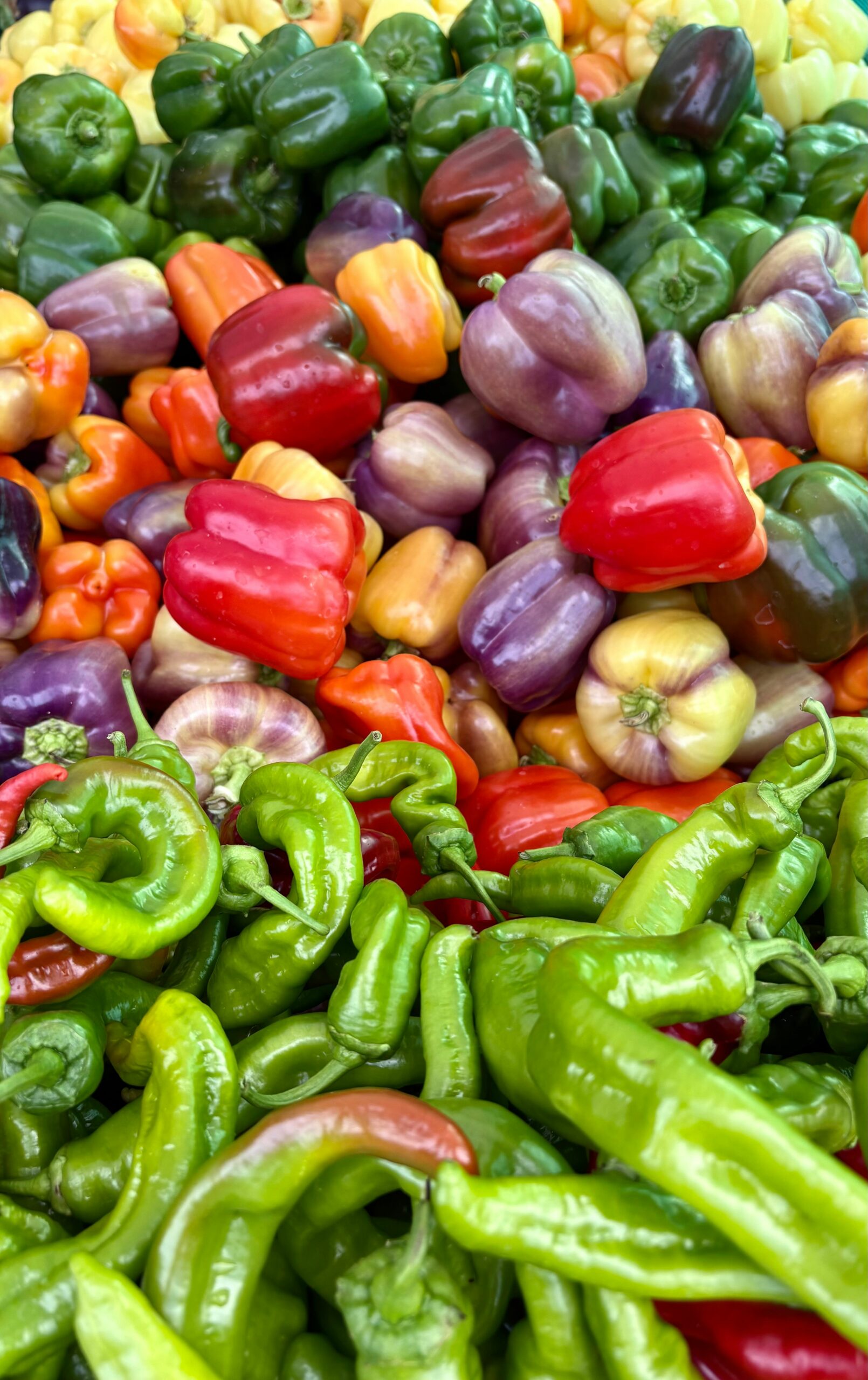
Talking about types of peppers can be confusing because shops mix variety names, commercial shapes, colours and traditional terms. A red and a green pepper may belong to the same type and simply have been harvested at different stages of ripeness, whereas Lamuyo and Italian peppers genuinely differ in shape, wall thickness and texture.
When buying, focus on four features: shape, size, wall thickness and maturity. These make it easier to understand why some peppers are thick and sweet, some are thin and delicate, and others are grown mainly for heat.
Lamuyo pepper
Lamuyo is one of the large pepper types most commonly recognised in Spain. It is generally elongated or rectangular, large and thick-walled. It can be sold green or red depending on maturity. As it ripens red it usually becomes sweeter and develops a fuller flavour.
Its substantial flesh makes it useful whenever a buyer wants plenty of pulp. Choose firm specimens that feel heavy for their size, with taut skin and no soft areas around the stem.
California pepper
The California type is shorter and squarer than Lamuyo, with a regular block shape and clearly defined lobes. Green, red, yellow and orange versions are common. The walls are thick and fleshy and the inside has a broad cavity.
“California” describes a commercial shape, not necessarily where the pepper was grown. California-type peppers can be grown in Spain. If origin matters, check the label or producer information.
Italian pepper
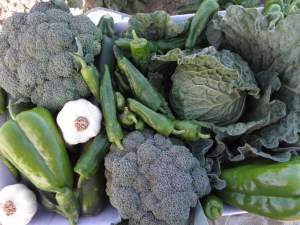
Italian peppers are usually long, narrow and much thinner-walled. They are commonly sold green, although they can mature towards red. Their texture is lighter and more flexible than Lamuyo or California peppers.
Do not confuse naturally thin skin with poor freshness. A good Italian pepper can be light and slender while still feeling firm and looking lively. Deep wrinkles and soft areas are stronger signs of water loss and age.
What is a morrón pepper?
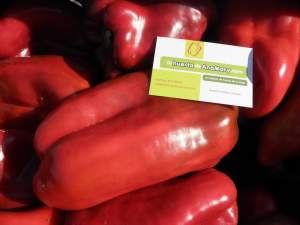
In Spanish, “morrón” is a broad term often used for sweet, fleshy peppers, especially large red ones. Depending on region and retailer, it can overlap with block-shaped types or particular varieties used fresh and for processing.
It does not always identify one botanical variety. If you need a specific characteristic, such as especially thick walls, ask for the variety or commercial type rather than relying only on the general name.
Padrón peppers
Padrón peppers are small, green and thin-skinned. They are famous because heat can vary from one fruit to another. When sold under the protected Pemento de Herbón PDO, the name identifies a specific origin and production rules; “Padrón type” and protected Herbón peppers should not be treated as exactly the same claim.
Their small size clearly separates them from Lamuyo, California and Italian types. Look for firm, bright green fruits without major damage.
Piquillo peppers
Piquillo is a small triangular pepper that turns red at maturity and is particularly well known in preserved form. Piquillo de Lodosa PDO protects a specific production in Navarra under its own rules.
Not every piquillo-style pepper on the market belongs to that designation. If the protected origin matters, check for the PDO on the label.
Ñora and choricero peppers
Ñora peppers are small and round and are commonly sold dried. Choricero peppers are more elongated and are also dried so that their rehydrated flesh can be used. Both are part of Spanish food culture, but they are different peppers and their shape helps distinguish them.
Here the buying goal is not a crisp fresh vegetable but the aroma, colour and flavour of a fruit that has been dried.
Chillies and hot peppers
The Capsicum family includes many hot peppers with very different shapes, sizes and heat levels. In Spain, “guindilla” is a broad name that can refer to several varieties. If controlling heat matters, the exact variety tells you more than colour alone.
Heat comes from capsaicinoids and cannot be judged reliably simply by whether a pepper is red or green. Sweet red peppers and very hot green peppers both exist.
Are red, green, yellow and orange different varieties?
Not necessarily. In many commercial types, colour reflects maturity. A fruit may start green and change to red, yellow or another colour depending on its genetics. Sweetness, aroma, texture and pigments change as it ripens.
Colour therefore matters, but it does not replace the type name. Two red peppers can be very different if one is Lamuyo and the other is piquillo.
How to choose fresh peppers
- Skin: look for a firm, relatively taut surface without extensive wrinkling.
- Weight: thick-walled peppers that feel heavy for their size are usually well hydrated.
- Stem: it should look reasonably fresh rather than completely dried out or damaged.
- Bruising: avoid soft, sunken or broken areas that can accelerate deterioration.
- Origin: check producer and provenance when local or seasonal sourcing matters.
- Purpose: choose thick or thin walls according to the texture you want, not colour alone.
Lamuyo versus California
Lamuyo tends to be longer and larger; California is shorter, squarer and more regular. Both are normally fleshy. When they are side by side, overall silhouette is usually the easiest clue.
Italian versus Lamuyo
Italian peppers are thinner, narrower and lighter. Lamuyo peppers are bulkier and thick-walled. Neither is inherently better: they provide different textures and should be chosen according to what you want from the vegetable.
Frequently asked questions
Is a green pepper simply less ripe than a red pepper?
In many varieties yes, but not in every case. Final colour depends on genetics and harvest stage.
Which peppers have the most flesh?
Lamuyo and California are commonly thick-walled. Italian peppers tend to be thinner.
Are all small peppers hot?
No. Size alone does not determine heat. There are small sweet varieties and very hot ones.
Are morrón and California the same?
Not necessarily. Morrón is used more broadly, while California describes a recognisable block-shaped commercial type with thick walls.
Browse our vegetables for seasonal produce from growers, including peppers when available.
- EMDO Selection