
“High loin” and “low loin” sound almost interchangeable, but in Spanish butchery they describe different sections of the loin and therefore cuts that behave differently. Exact boundaries vary somewhat with cutting system and commercial terminology, but the essential idea remains: high loin lies nearer the rib section, while low loin continues towards the rear of the loin.
That anatomical shift changes muscle shape, fat distribution and the way steaks are portioned. Asking which is “better” therefore makes little sense without asking for what: grilling, pan-searing, a thick sharing steak, a regular individual portion or a richer cut with more fat.
What is high loin?
High loin is associated with the ribward portion of the loin. It produces highly valued cuts known for juiciness and a combination of muscle and fat. Depending on whether bone is retained and how the section is portioned, several commercial presentations can come from this area.
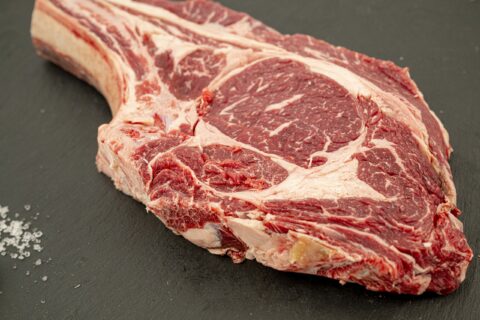
One common visual feature is more conspicuous marbling and a less uniform structure than low loin. That complexity is part of its gastronomic appeal.
What is low loin?
Low loin continues towards the rear. It commonly provides more regular sections and a different balance between lean meat and fat. In many cutting systems it is used for highly consistent pan steaks and premium boneless portions.
More uniform does not mean inferior. A good low loin can be exceptionally tender and flavourful. It simply offers another structure and often less exuberant fat than some parts of high loin.
Marbling is not distributed evenly
Even within one animal, marbling changes along the loin. High loin often shows intramuscular fat and fatty seams that contribute richness during cooking. Low loin tends to present a more continuous muscle shape with peripheral fat that is easier to identify.
This should not be turned into an absolute rule. Breed, feeding, age, finishing and maturation can produce a beautifully marbled low loin or a relatively lean high-loin steak.
Which has more flavour?
When comparing equivalent pieces from the same animal, many diners experience high loin as richer because of its fat. During searing, rendered fat contributes aroma and mouth-coating juiciness.
Low loin gives a cleaner, more even profile. Diners who want the beef fibre itself to dominate and prefer fewer fatty seams may actually favour it.
Texture and chewing
Both sections belong to the loin and can produce tender steaks. This is not a comparison between a heavily worked muscle and a very inactive one. Texture differences are therefore subtler than those between tenderloin and a slow-cooking shank cut.
High loin can alternate tender muscle with fat and different muscle groups. Low loin tends to deliver a more consistent bite from one end of a steak to the other. That consistency is useful when serving several people.
For pan cooking: which should you choose?
Both work extremely well. A low-loin steak of controlled thickness is straightforward in a pan because its surface and shape are relatively regular and cooking is predictable.
High loin is equally rewarding, particularly when you want more fat and a highly aromatic crust. Give fatty sections enough time to render and brown without scorching the exterior.
For grilling: high loin has real character
Thick high-loin cuts are especially popular over a grill. Their combination of thickness and fat allows a strong crust to develop while the centre remains juicy. Rendering fat creates aroma, although drips onto very hot coals can also cause flare-ups.
Low loin is excellent on a grill too and may be easier when you want a regular shape and less fat. Again, the choice is about style rather than grade.
Bone-in or boneless
Anatomical section and presence of bone are separate questions. A loin cut can be sold bone-in or boneless, and that decision changes size, appearance and cooking technique.
Bone adds thermal mass and dramatic presentation, but it does not magically inject juices into the meat. Piece quality, thickness and heat control matter much more.
Why steak names can be confusing
Spanish butchery terminology is not used identically in every region and shop. “Entrecote” generally describes a boneless loin steak, while “chuletón” usually implies a substantial bone-in steak, but exact origin within the loin can vary.
When buying, it is therefore more useful to ask which section the steak comes from, how thick it is and whether it retains bone than to rely on one commercial name alone.
Which works best for several diners?
If you are cooking several steaks that should be similar in size, low loin can make consistency easier. If you want one impressive sharing cut to become the centre of the table, a thick high-loin piece is very attractive.
For a mixed grill, using both sections can be a useful way to compare fat and texture directly.
Dry ageing is not exclusive to either section
Both high and low loin can be part of meat subjected to controlled maturation. Ageing changes aroma, moisture and tenderness perception, so a fair comparison should involve meat treated under similar conditions.
Do not automatically credit high loin for flavour that actually comes from longer maturation, or low loin for tenderness when it has received a different treatment.
How to choose at the butcher counter
- More fat and intensity: look first at high loin.
- Regular steaks and a cleaner profile: low loin often fits well.
- A thick sharing centrepiece: high loin offers spectacular formats.
- Comparing quality: assess marbling, maturation, thickness and origin, not the name alone.
How this relates to other beef cuts
The loin is only one part of the carcass. If you are choosing meat for pan-searing, roasting or stewing, see our complete guide to beef cuts for different recipes. If your question is specifically lean tenderness versus richer marbling, the tenderloin-versus-entrecote comparison addresses that decision more directly.
Frequently asked questions
Is high loin always fattier?
It commonly shows more fat and marbling, but this is not an absolute law. Variation between animals and individual pieces is substantial.
Is low loin lower quality?
No. It can be a premium, tender and flavourful cut. Its structure simply tends to be more regular and somewhat leaner.
Which section makes the best entrecote?
The term entrecote can be used for boneless loin steaks from different positions. Ask the butcher about exact origin and assess thickness and marbling.
Which is easier to cook?
A regularly shaped low-loin steak is often very predictable in a pan. A fattier high-loin cut needs good browning control but can deliver greater aromatic richness.
Browse the meat currently available at El Mercado de Origen.
-
Sale!
 Select options
This product has multiple variants. The options may be chosen on the product page
Select options
This product has multiple variants. The options may be chosen on the product page




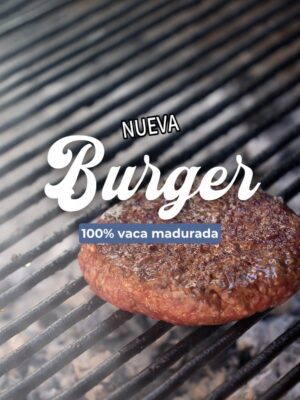 100% mature beef burgers – gluten-free (2)