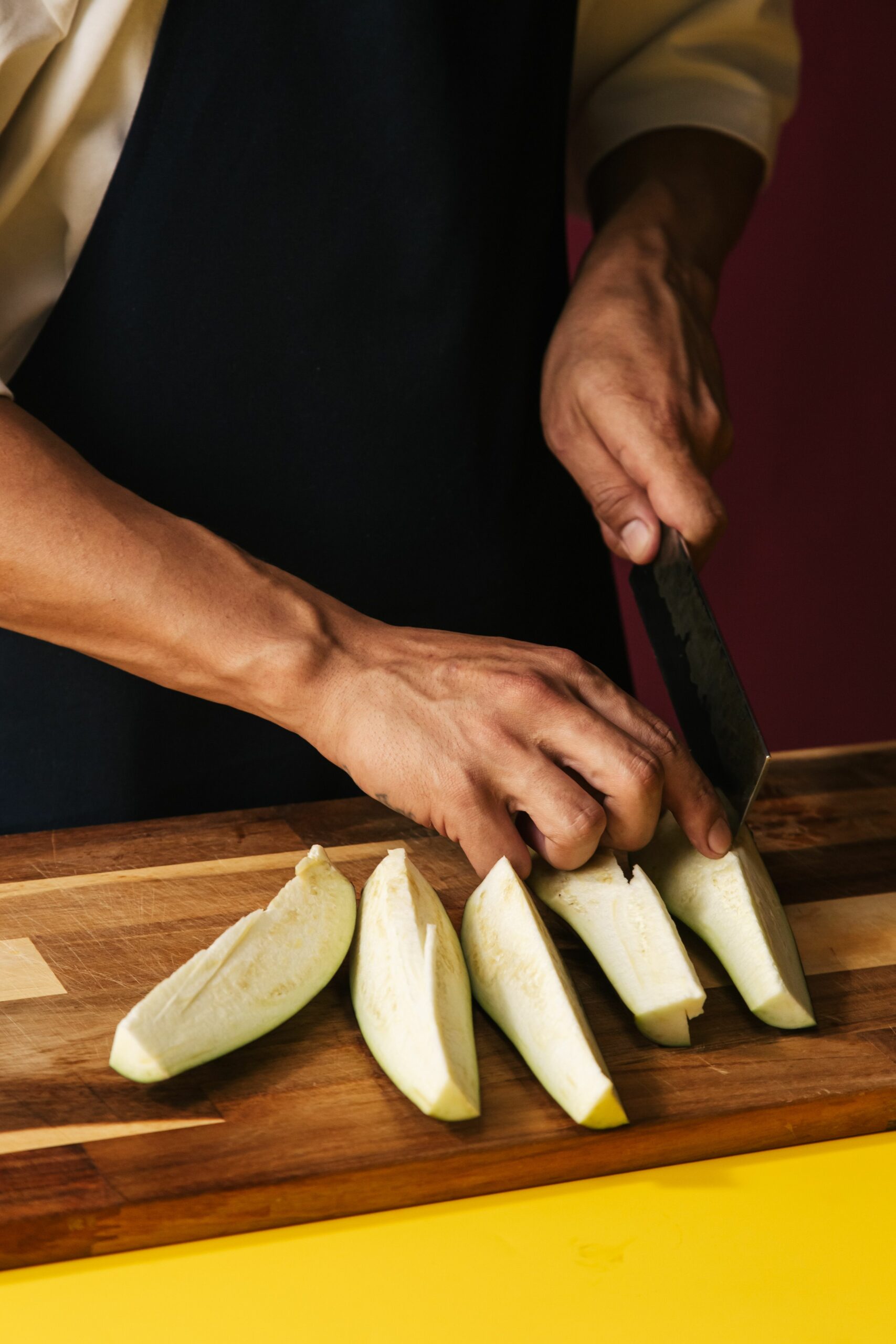
For decades, cooks have been told to slice eggplant, salt it, wait and rinse it in order to “remove bitterness”. The method is real and sometimes useful, but not every eggplant needs to be salted before cooking. Many modern varieties, harvested at a good stage and eaten fresh, have very little bitterness.
Salting also changes more than flavour. Salt draws some water from the tissue by osmosis, alters the surface and can affect texture, browning and oil uptake. It should therefore be a deliberate technique rather than an automatic ritual.
Where bitterness comes from
Eggplants contain phenolic compounds and other natural substances that contribute to flavour. Perceived bitterness varies with cultivar, maturity, growing conditions and storage. A very mature fruit with developed seeds or one kept too long can taste stronger than a younger, fresher eggplant.
A slight bitter edge is not automatically a defect. Eggplant has its own vegetal character. The useful question is whether bitterness dominates the dish or simply contributes normal complexity.
What salt actually does
When cut surfaces are covered with salt, the concentration outside the cells rises and some water moves out. Droplets appear on the surface, carrying small quantities of soluble compounds with them.
The eggplant becomes somewhat more flexible and less wet on the outside. Depending on the recipe, this can support browning, reduce excess moisture in layered dishes and alter the way oil interacts with the tissue.
Does salting remove all bitterness?
No. It is not a switch that turns a bitter eggplant sweet. It can reduce some bitterness, but the effect depends on the fruit. With a fresh mild eggplant, the difference may be too small to justify the extra step.
Cooking itself changes flavour. Roasting, baking and proper high-temperature cooking develop browned aromas and soften vegetal notes, which is why many contemporary recipes skip salting entirely.
When salting is worth considering
- When a cultivar is known to taste more bitter.
- When the eggplant is large, mature or has very developed seeds.
- When reducing moisture before frying, breading or gratinating is useful.
- When you want more flexible slices for rolling or layering.
- When a traditional recipe was designed around pre-salted eggplant.
When it is usually unnecessary
A fresh, firm, moderately sized eggplant intended for roasting, grilling, sautéing or purée can often go straight to cooking. If the fruit tastes mild and the recipe does not need moisture reduction, there is little reason to add a waiting step.
How to salt eggplant properly
Cut the eggplant to the thickness required. Sprinkle a moderate amount of salt over the surfaces and place the pieces in a colander or on a rack. There is no need to bury them in salt. Leave for roughly 20 to 40 minutes depending on thickness and purpose.
Remove excess salt and dry thoroughly. If you used a generous amount, a quick rinse can prevent oversalting, but careful drying then becomes even more important, particularly before frying.
Does salting stop eggplant absorbing oil?
It can change the structure and reduce uptake in some methods, but “salted eggplant does not absorb oil” is too simplistic. Oil temperature, slice thickness, cooking time and exposed surface area all matter.
A pan that is not hot enough prolongs cooking and can create a greasier result. Working in batches is often just as important as salting.
What if the inside is brown?
Internal browning and bitterness are different questions. Brown areas may come from ageing, oxidation or internal damage. Our guide to eggplant that is brown inside covers that diagnosis separately.
Salt cannot repair spoiled tissue. Slime, abnormal odour, rot and mould are not culinary problems that can be fixed by seasoning.
Cultivar and maturity matter
Black, striped, white and elongated eggplants differ in skin, seed development, water content and flavour. Even two fruits of the same cultivar can behave differently depending on maturity and post-harvest handling.
That is why tasting and observing the actual produce is more useful than following one universal rule.
A simple test
If you are unsure, cook a small slice quickly and taste it. Raw eggplant can seem astringent and may not represent the finished flavour, so a brief cooked sample is more informative. If there is no dominant bitterness, skip the salting step.
Common mistakes
- Using too much salt: this forces excessive rinsing and can oversalt the dish.
- Failing to dry: wet surfaces brown poorly and are unsuitable for frying.
- Confusing bitterness with spoilage: slime and bad smells are not fixed by salt.
- Using the same timing for every cut: thin slices and large cubes behave differently.
- Expecting technique to rescue poor produce: an over-aged eggplant remains over-aged.
Practical conclusion
Salting eggplant is a tool, not a requirement. Use it when you want to reduce moisture, modify texture or soften a particularly assertive fruit. Skip it when fresh eggplant and the recipe do not need those effects.
Frequently asked questions
How long should eggplant sit with salt?
For most home-sized cuts, around 20 to 40 minutes is enough to draw visible moisture. Thickness matters.
Do you have to peel it?
No. Healthy skin is edible. Peeling depends on cultivar, maturity and desired texture.
Can you salt only after cooking?
You can season after cooking, but you will not get the same pre-cooking osmotic effect on moisture and structure.
Is very bitter eggplant dangerous?
A modest bitter note can be normal. If the flavour is extraordinarily unpleasant or comes with signs of deterioration, it is better not to force consumption.
Vegetables available now
- EMDO Selection


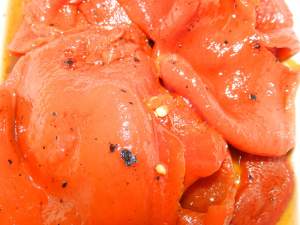 Artisan Spicy Roasted Peppers, 314 ml
 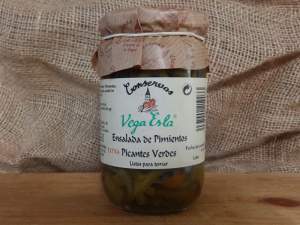 12 Jars of Hot Green Peppers in Vinegar, 314 ml