Buying food directly from a producer is often about more than placing an order. You may want to know who grew or made it, where its ingredients came from and who will answer if something goes wrong. Online shopping gives you access to farms and workshops far beyond your neighbourhood. It also makes it important to understand who is actually selling and dispatching your order.
Not every shop promising food “from the farm to your door” operates in the same way. Here is how to read those claims without losing sight of the practical details.
Direct shopping can involve an online marketplace
A farmer or maker may sell through a farm shop, local market or their own website. Another possibility is a marketplace displaying the products of several independent sellers. The marketplace may simplify discovery and checkout while the relevant seller prepares and dispatches each order. That model does not erase a product's origin; nor does it mean every listed seller personally grows all the ingredients.
At El Mercado de Origen, products come from identified producers and specialist sellers. Read each listing and seller profile to understand the relationship between the person who makes the food, the business that sells it and the business that sends it.
Four questions worth asking about provenance
Who grows or raises it? This is particularly relevant for vegetables and meat. Information about a farm, region, breed or cultivar becomes useful when its connection to the actual product is clear.
Who processes it? An oil mill, curing workshop, cannery and packer may be different businesses from the growers supplying ingredients. Words such as “artisan” are most useful when a seller explains the process rather than treating them as self-evident proof of quality.
Who dispatches it? A product page should identify the seller and the delivery requirements. Fresh meat and some cheeses require controlled temperatures, while other foods can travel without refrigeration under the maker's instructions.
What can you verify? A product's precise name, origin, ingredients, allergens, quantity, storage conditions and applicable labels matter more than an attractive slogan. A protected designation of origin is a specific scheme; a regional-sounding name alone does not establish certification.
Buying direct is not exactly the same as buying local
A small producer from another part of Spain may offer a carefully made product even when it travels a long distance. Conversely, a nearby purchase is not automatically fresher or better. Harvesting, handling, packaging and transport all affect the food that reaches your kitchen. Direct-from-producer refers to a commercial relationship; local or proximity food describes geography.
For a closer look at these distinctions, see our guide to local and proximity food.
Different food categories need different buying criteria
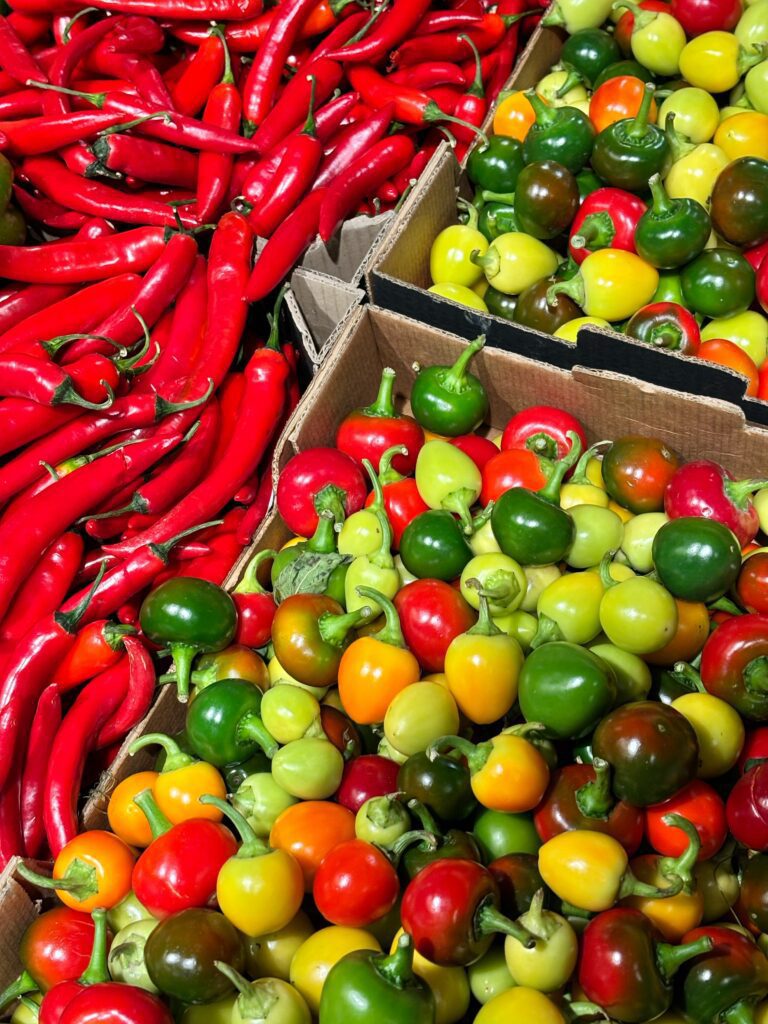
For vegetables, seasonality, variety and condition on arrival matter. When shopping for meat, the cut, cold chain and preparation method deserve attention. For olive oil, the category, variety, mill and storage are more informative. There is no single quality checklist that applies equally well to all food.
Start with the purpose of your purchase: everyday cooking, a special meal, exploring a regional food or sending a gift. You can then compare the details that matter for that decision.
Before confirming your order
Check whether the product can be delivered to your destination, who prepares it and what delivery conditions are specified. Pay particular attention to temperature-sensitive foods, the total shipping cost and how a seller handles incidents. Different sellers on the same marketplace may have different dispatch schedules; a single site-wide promise should not be assumed.
When the parcel arrives, compare its contents with the listing and follow the label's storage instructions. If packaging is damaged or the order is incorrect, report the problem promptly with photographs and the order details.
Choosing with better information
A direct relationship can reveal producers, regions and food-making traditions that are difficult to see in a conventional catalogue. It becomes genuinely useful when the story is supported by verifiable information and dependable delivery. The goal is not to romanticise every direct purchase, but to make an informed one.
Explore our online shop and each seller's details to see which products are currently available.