Description
IDENTIFYING PRODUCTS BY TAG COLOUR
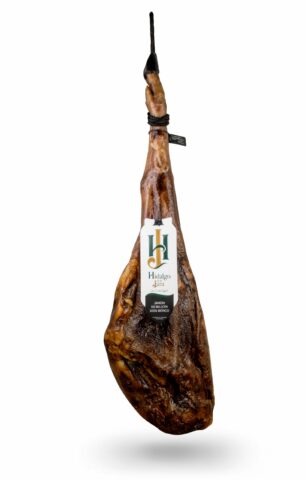
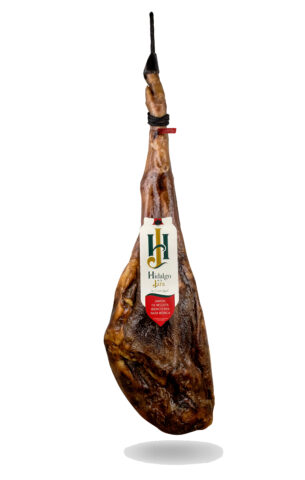
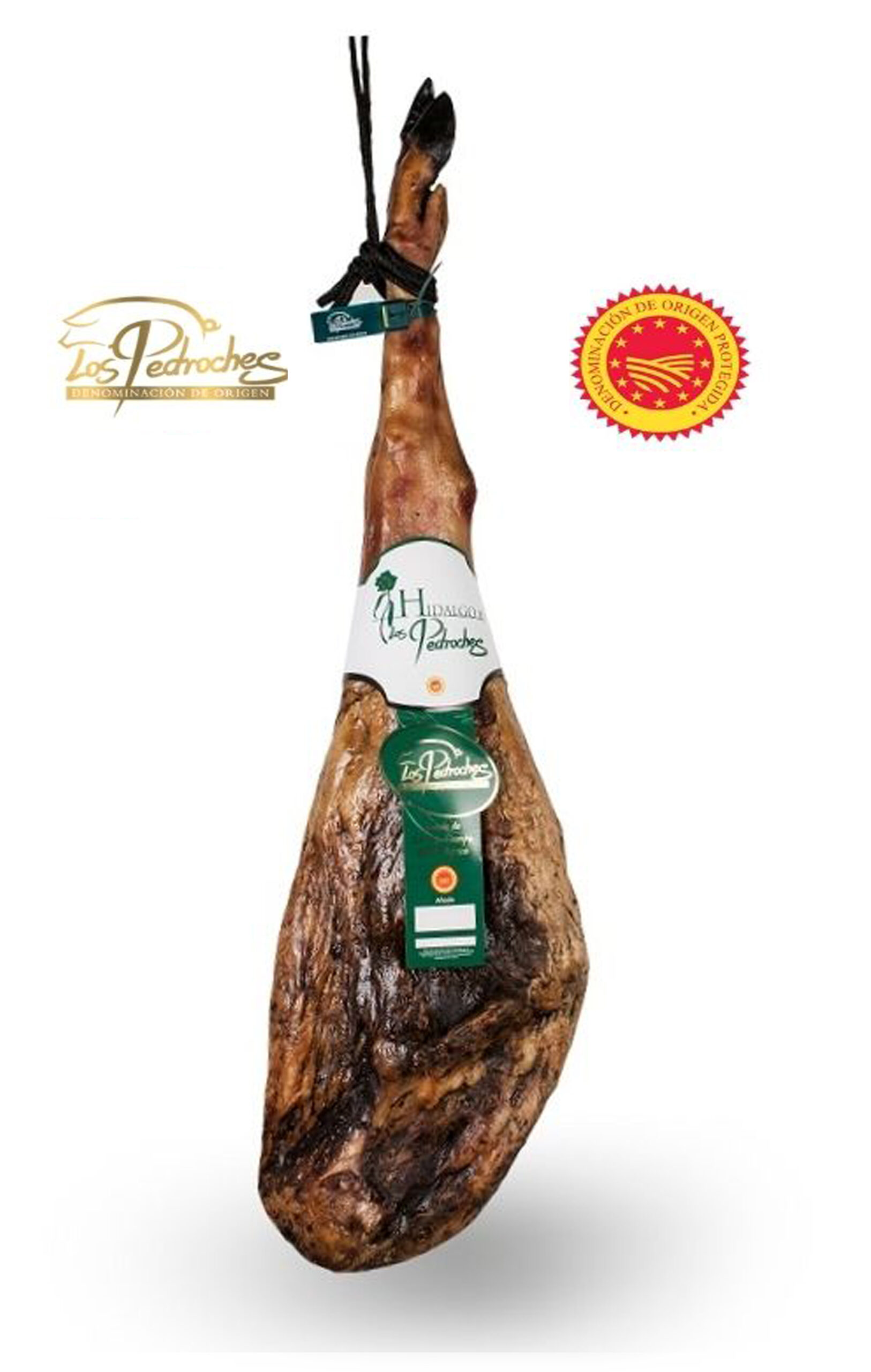
Iberian ham can be quickly identified by the coloured tag attached near the hoof. There are four colours:
- Black tag: for 100% Iberian acorn-fed ham. A black tag means the pig is 100% Iberian and, during the finishing period, was free-range in the dehesa, feeding on acorns and grass. Both parents are 100% Iberian and must be registered in the official Iberian pig herd book.
- Red tag: for Iberian acorn-fed ham. These hams come from pigs that are 50% or 75% Iberian and, during the finishing period, were free-range in the dehesa, feeding on acorns and grass.
- Green tag: for free-range grain-fed Iberian ham. These hams come from pigs that are 50% to 100% Iberian. They are raised free-range and feed on grain-based feed and natural resources, rather than finishing on acorns in the dehesa.
- White tag: for grain-fed Iberian ham. These products also come from pigs that are 50% to 100% Iberian, but they are farm-raised rather than free-range and are fed on formulated feed.
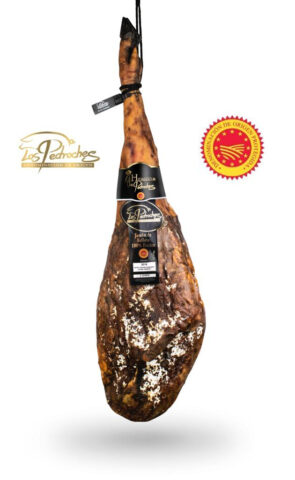
PROTECTED DESIGNATION OF ORIGIN (PDO)
Constituyen el sistema utilizado en nuestro país para el reconocimiento de una calidad diferenciada, consecuencia de características propias y diferenciales, debidas al medio geográfico en el que se producen las materias primas, se elaboran los productos, y a la influencia del factor humano que participa en las mismas.
El productor que se acoge a una D.O.P. se compromete a seguir las normas definidas para mantener la calidad en estándares elevados.
Además debe existir un organismo público que la regula y vigila el cumplimiento de las normas. Y en el caso de las D.O.P españolas, están protegidas por el reglamento europeo.
What is a PDO for?
Al consumidor, fundamentalmente para garantizarle unas características específicas y un nivel de calidad alto y constante.
Y para el fabricante, le protege frente a la elaboración de productos similares en otras zonas y le ayuda a llegar a nuevos mercados, amparado por la calidad de la DOP.
How are Iberian pigs raised?
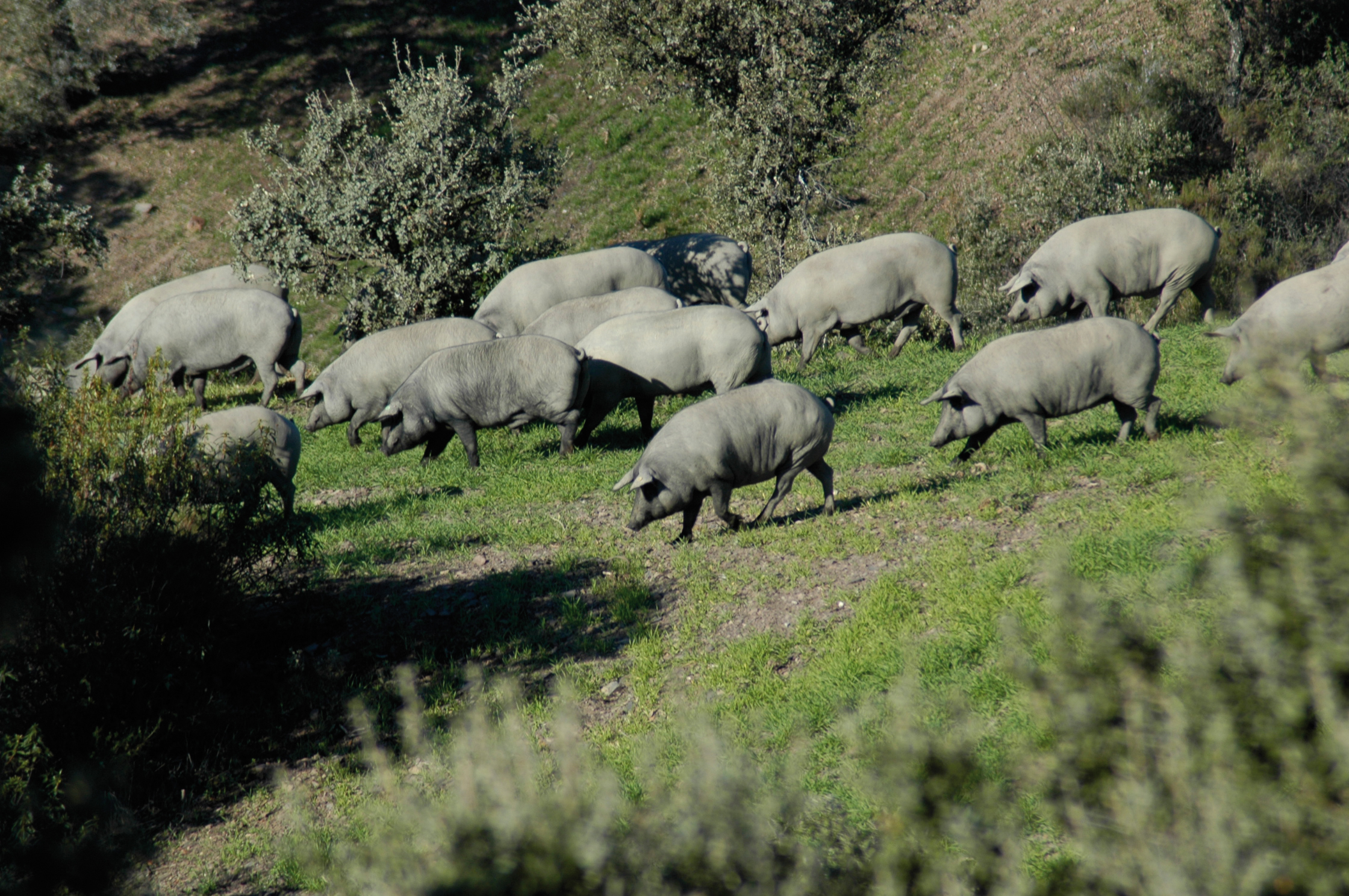
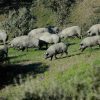
Our 100% Iberian pigs are born outdoors and are suckled by their mothers until they are old enough to fend for themselves and begin feeding on the resources of the dehesa. Piglets born in autumn may taste their first acorns during weaning, although most of the crop is reserved for the older pigs entering the montanera finishing season. During this period they typically grow from around 90–100 kg to 170–180 kg, feeding on acorns, grass and other natural resources from the dehesa, such as mushrooms, roots and tubers.
What do the pigs eat before the finishing period?
They feed on the natural resources of the dehesa. In summer, when these are scarcer, their diet is supplemented mainly with cereals and pulses. The farmers sow crops such as chickpeas, broad beans, vetch and oats so that, when summer arrives, the pigs can feed on them ad libitum, meaning directly in the field, without the crops needing to be harvested first.
Temperature, humidity and ageing time for hams and shoulders.
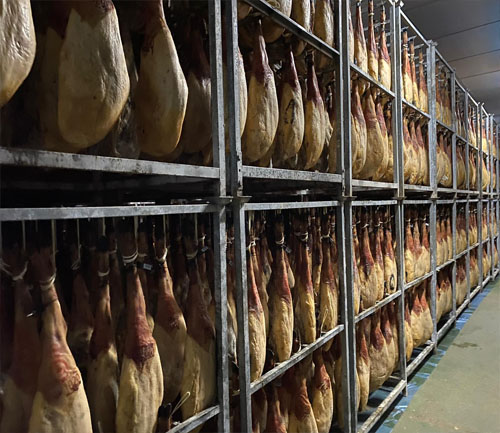
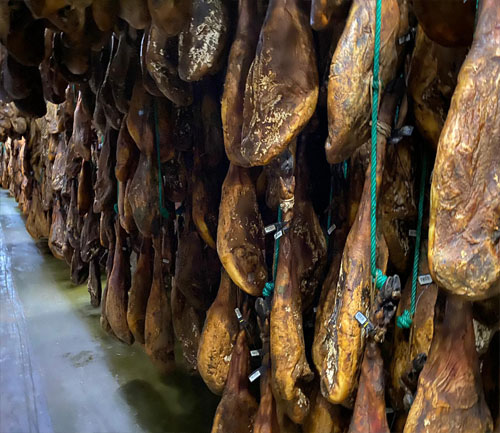
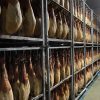
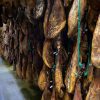
Our hams and shoulders go through several stages. The first is salting, carried out at very low temperature and high humidity. Depending on the weight of the piece, this lasts around two weeks. After a resting period in temperature- and humidity-controlled chambers, the pieces move to natural curing cellars, where temperatures range from around 18–20°C in summer to 10–12°C in winter. This slow curing process allows for long, optimal maturation — more than 30 months for the hams — and develops aromas that cannot be achieved through accelerated curing.