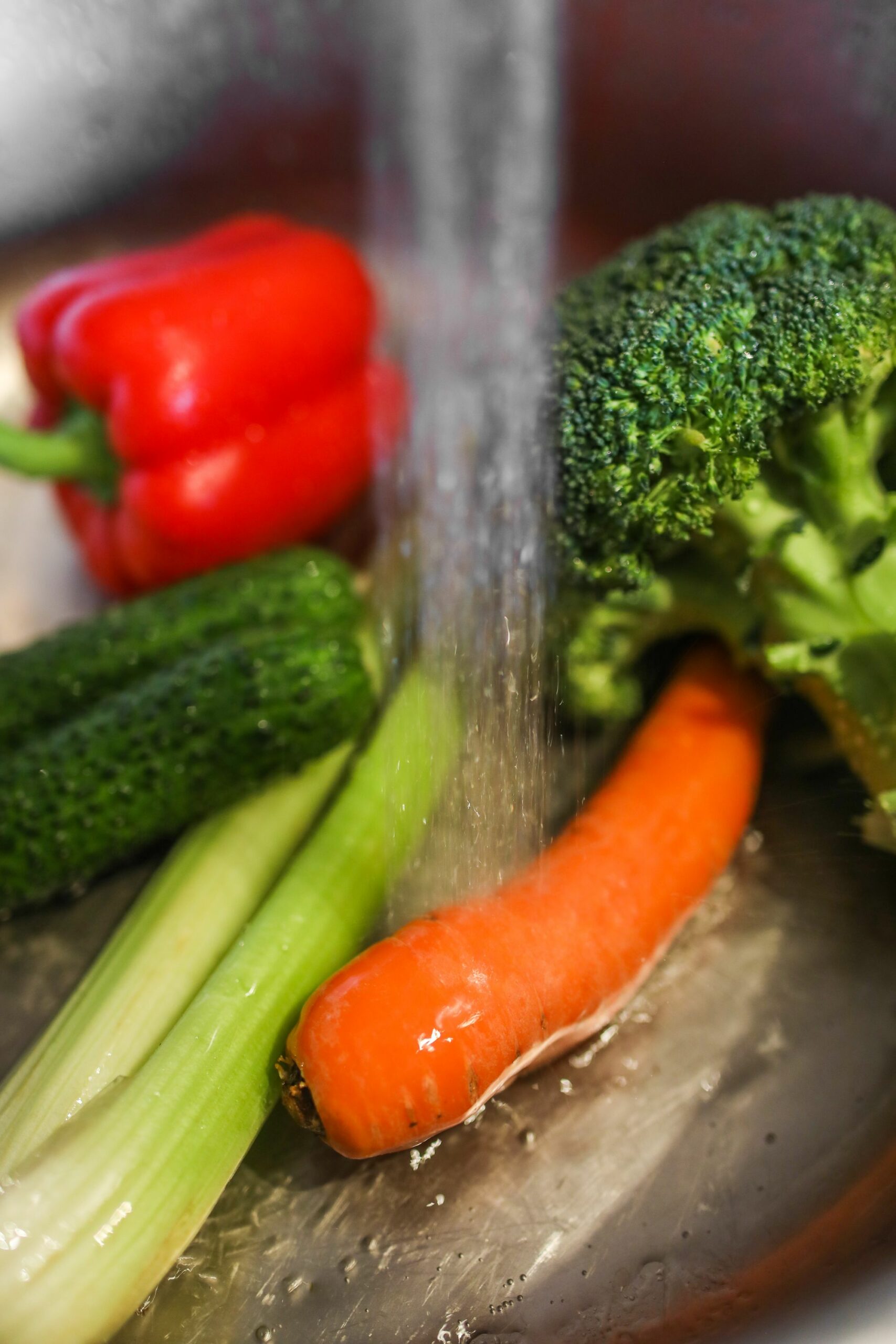
Washing vegetables properly has a specific purpose: removing soil and visible debris, reducing some surface contamination and limiting the transfer of dirt to knives, boards, hands and other foods. It does not make a vegetable sterile.
The most reliable household approach is simple: clean hands, clean utensils and running potable water, with gentle rubbing or separation of leaves and layers where necessary. Routine use of household chemicals does not automatically make produce safer.
Start with hands and work surfaces
If your hands, sink, board or knife are contaminated, produce can be recontaminated after washing. Wash hands well and use surfaces that have not been left contaminated by raw meat, fish or eggs.
This matters especially for vegetables eaten raw because there is no later cooking step to reduce heat-sensitive microorganisms.
Should every vegetable be washed?
Fresh produce that will be eaten or cut generally benefits from washing under potable water, even when an inedible skin will later be removed. A knife can transfer material from the surface into the edible interior.
A practical exception is packaged produce clearly labelled washed and ready to eat. Follow the pack instructions. Rewashing is not necessarily an improvement and can introduce contamination from the sink or hands.
Running water is the household baseline
Hold the vegetable under a moderate stream of potable water and rub the surface gently with clean hands. Firm produce such as potatoes, carrots and some roots can be scrubbed with a clean brush reserved for food.
Extreme pressure is unnecessary. The aim is to remove soil and surface material without damaging tissue. Broken skin and bruising shorten storage life.
Lettuce, escarole and leafy vegetables
Remove heavily damaged outer leaves and separate the leaves you intend to eat. Soil can hide in veins, folds and near the base. Rinse under potable water and drain thoroughly. A salad spinner removes water without crushing the leaves.
If the leaves will be stored after washing, drying matters. Free moisture held for a long period reduces crispness and can speed deterioration. Washing close to use is often practical unless you can store leaves very dry.
Leeks: soil hides between layers
Leeks require a different approach because soil can be trapped between layers during cultivation. Trim roots and damaged tissue, split the section you need lengthwise and gently separate layers under running water.
Rinsing only the outside is not enough when grit is inside. Our leek cleaning guide explains the method in detail.
Broccoli, cauliflower and complex surfaces
Rinse thoroughly and turn pieces so water reaches different areas. Separating florets before washing can improve access to cavities. Drain well afterwards, particularly before sautéing or roasting where excess surface water creates steam.
Long soaking is not necessary. A prolonged water bath is not the same as validated disinfection and may affect texture.
Should vegetables be washed with soap or detergent?
No. Dish soap and household detergents are formulated for surfaces and utensils, not for ingestion. Produce has irregular surfaces where residues can remain even after rinsing.
The idea that a product that cleans a plate must clean lettuce better is misleading. Food handling needs food-appropriate procedures; for routine household washing, potable water and good hygiene remain the baseline.
What about bleach?
Do not improvise a solution using any household bleach. Some formulations contain fragrance, detergents or other additives and are not intended for food contact. If a public-health authority or a product specifically authorised for food disinfection provides instructions, concentration, contact time and rinsing must be followed exactly.
Never estimate chemical concentrations by eye, and never mix bleach with vinegar, ammonia or other cleaners.
Vinegar is not a household steriliser
Vinegar is useful in cooking and acidity can affect some microorganisms, but a homemade vinegar bath does not provide a universal disinfection guarantee. Concentration, contact time, soil and the organism all change the result.
Do not use vinegar as a substitute for sound produce, potable water, clean hands and equipment, separation from raw animal foods and correct refrigeration.
What can baking soda do?
Baking soda is sometimes used to help remove certain surface residues or dirt, but it does not make washing equivalent to sterilisation. If used for a specific culinary purpose, produce should be rinsed thoroughly afterwards with potable water.
It is not required for ordinary washing. Friction and rinsing under running water remain the most important steps.
Wash before storing or before eating?
It depends on the vegetable. Many crops deteriorate faster when stored wet. If you buy vegetables for several days, it is often better to remove excessive loose dirt without wetting the entire batch and wash individual pieces near use.
If you wash in advance, dry carefully. Appropriate storage conditions matter as much as the wash itself.
Removing stubborn soil
For roots and tubers, let water soften soil briefly and use gentle friction or a clean food brush. Do not use scouring pads that also clean dishes or household surfaces. If tissue is damaged, trim the affected area after washing.
A sensible order to limit cross-contamination
- Wash your hands.
- Clean the work surface and utensils.
- Remove clearly damaged leaves or tissue.
- Wash under potable water, rubbing where appropriate.
- Drain or dry with clean material.
- Cut with a clean knife and board.
- Eat or store at the appropriate temperature.
Washing does not rescue spoiled produce
If a vegetable has extensive mould, rot, abnormal odour or slimy tissue, washing does not return it to a fresh condition. Washing prepares sound produce; it is not a treatment for deterioration. Inspecting vegetables before washing also prevents damaged items from contaminating others.
Seasonal vegetables
- EMDO Selection