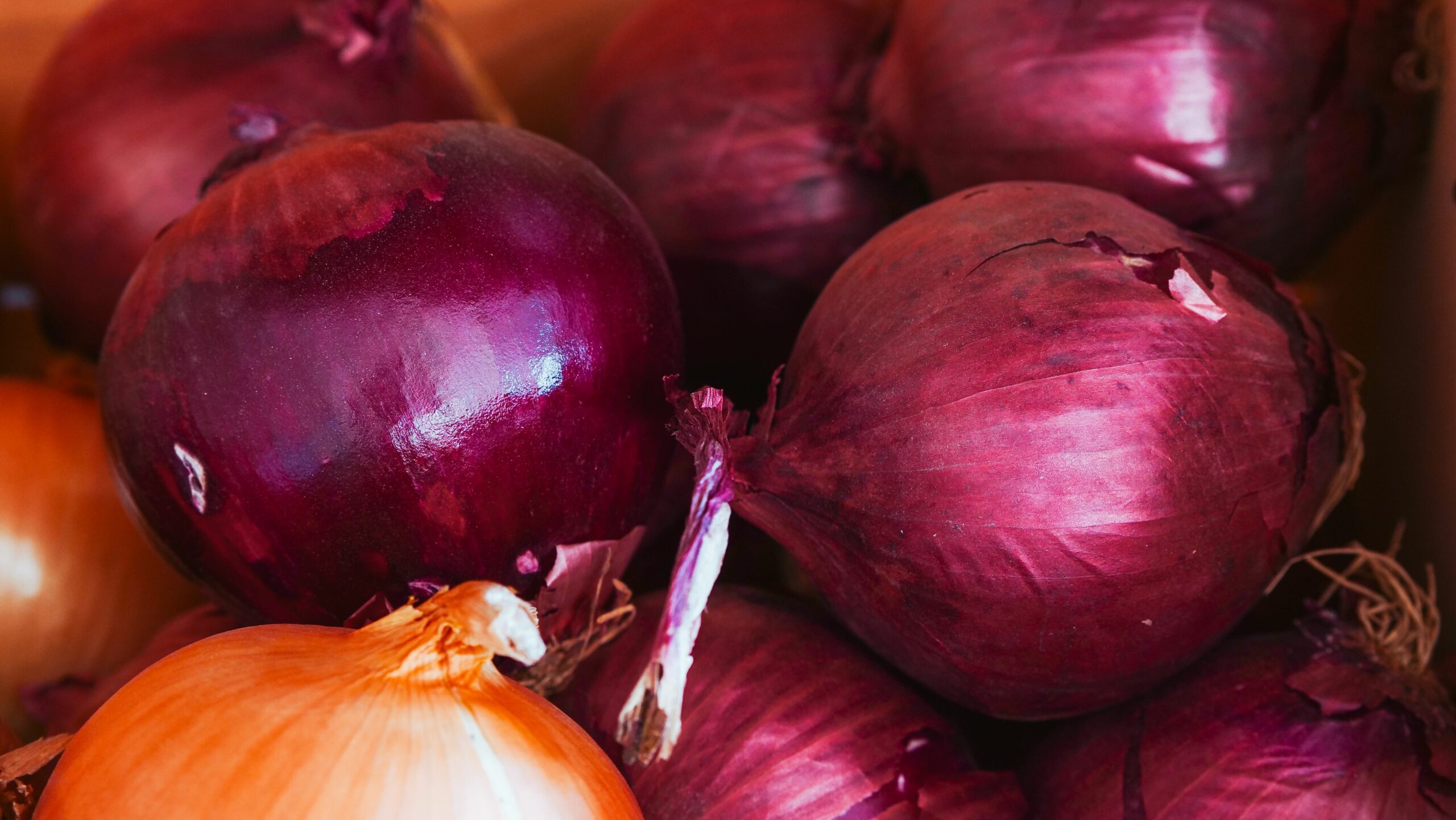
Markets sell many types of onions under names that are not always used precisely. Yellow, white, red, sweet onions, shallots and spring onions all belong to the wider Allium group, but they differ in water content, aromatic intensity, texture, shape and storage potential.
Choosing well is not about finding one onion that is better than every other. It is about recognising what you are buying and the characteristics it offers. A bulb bred and cured for months of storage behaves very differently from a fresh spring onion.
Yellow or common onion
This is one of the most widespread onion types. It has brown or golden outer skin and pale flesh. Its raw flavour can be fairly assertive and becomes sweeter as it cooks. Many varieties fall into this group, so size and pungency vary.
Properly cured yellow storage onions keep particularly well because dry outer layers protect the bulb. Choose firm, dense bulbs without long shoots, wet patches or sunken areas.
White onion
White onions have pale skin and outer layers. Depending on the variety, they can be crisp with a clean aromatic profile that differs from a typical yellow storage onion. The name covers more than one variety.
White colour does not automatically mean mild flavour. Pungency depends on genetics, growing conditions, maturity and storage. If you specifically want a sweet onion, look for that description from the grower rather than assuming it from colour.
Red or purple onion
Red onion is recognised by purple skin and coloured rings inside. The pigments belong to the anthocyanin family. Flavour ranges from fairly sweet to distinctly sharp depending on the variety.
Many red onions are valued for crisp texture and visual colour. Fresh bulbs should feel firm. Wet patches, abnormal odour or soft tissue beneath the skin indicate deterioration rather than a normal varietal trait.
Sweet onion
“Sweet” describes sensory character and generally refers to varieties perceived as less harsh, with a balance of sugars and sulphur compounds that gives a milder flavour. Sweet onions can be white, golden or other colours, so appearance alone is not enough to identify them.
Many sweet onions contain more water and have less protective skin than long-storage varieties. They can therefore be more delicate and have a shorter shelf life. Inspect them regularly for soft areas and follow the grower's storage advice.
Shallot
Shallots generally form smaller, more elongated bulbs than common onions and may divide into several segments. Their aroma can seem to sit between onion and garlic, although they have their own distinct character.
Skins can be copper, pink or reddish. Their small size is normal, not a sign of immaturity. Good shallots should feel firm and dry externally, without excessive sprouting.
Spring onion
The term “spring onion” can describe onions harvested before a full bulb develops or specific tender onion types, depending on the market. They are recognised by green leaves and a white or slightly swollen base that contains much more moisture than a dry storage onion.
This freshness changes storage completely. Spring onions are more perishable and usually need refrigeration, while properly cured dry onions prefer a cool, dry, ventilated and dark place. They should not be stored in exactly the same way.
Are leeks and spring onions the same?
No. Both belong to Allium, but they are different vegetables. Leeks develop a long false stem formed by leaf sheaths rather than the same rounded bulb structure as an onion. Their leaves may look related, but structure and flavour differ.
What makes some onions more pungent?
The characteristic onion aroma appears when cutting breaks plant cells and allows previously separated compounds to react. Volatile sulphur compounds are then produced, creating both the smell and the eye irritation associated with chopping onions.
Intensity depends on genetics, soil, sulphur availability, water, maturity and storage. Two onions that look similar may therefore differ in pungency. Colour alone cannot predict it accurately.
Why do some onions store better?
Storage varieties develop dry protective skins and a structure that tolerates long periods after proper curing. Tender, high-moisture onions are generally sold for quicker consumption.
Condition on arrival also matters. Bruising, cuts and trapped moisture speed up deterioration. A ventilated mesh bag behaves very differently from a closed plastic bag where condensation can accumulate.
How to choose fresh onions
- Firmness: the bulb should feel solid with no sunken areas.
- Skin: storage onions should have dry, reasonably intact outer layers.
- Neck: avoid soft or wet tissue where leaves emerge.
- Sprouting: a small shoot does not always make an onion unusable, but it shows the bulb has started consuming its reserves.
- Smell: a whole onion should not have a strong fermented or rotten odour.
- Origin: check provenance and season when these matter to your buying decision.
Are red onion and purple onion different?
In Spanish retail, both names are often used for onions with purple-red skins and rings. They do not necessarily identify separate varieties. The grower's exact variety name is more precise.
What is a storage onion?
It is an onion grown and cured to tolerate extended storage. Dry outer skin and a well-closed neck help protect the bulb. “Storage onion” describes keeping ability rather than one specific colour.
Can you eat an onion that has started sprouting?
A shoot alone does not necessarily mean the onion is spoiled. Check the bulb: if it remains firm, without mould or rotten areas, the main issue is usually declining quality and texture. Discard bulbs that are soft, wet or smell abnormal.
Frequently asked questions
Which onion is sweetest?
You cannot determine that from colour alone. Look for varieties specifically sold as sweet and consider their origin and season.
Are red onions always milder?
They can be, but it is not a universal rule. Variety and growing conditions strongly affect pungency.
Do spring onions last as long as dry onions?
No. Their fresh leaves and higher moisture make them much more perishable, and they normally need refrigeration.
Is a shallot just a small onion?
Not necessarily. Shallots have their own growth habit, shape and aroma. A common onion harvested at a small size is still a common onion.
Browse our vegetables for seasonal boxes from growers, including onions when they are in harvest.
- EMDO Selection

 100% mature beef burgers – gluten-free (2)
  Loras o ñoras
 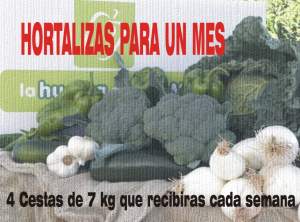 4 Weekly 7 kg Vegetable Boxes
  Oxtail