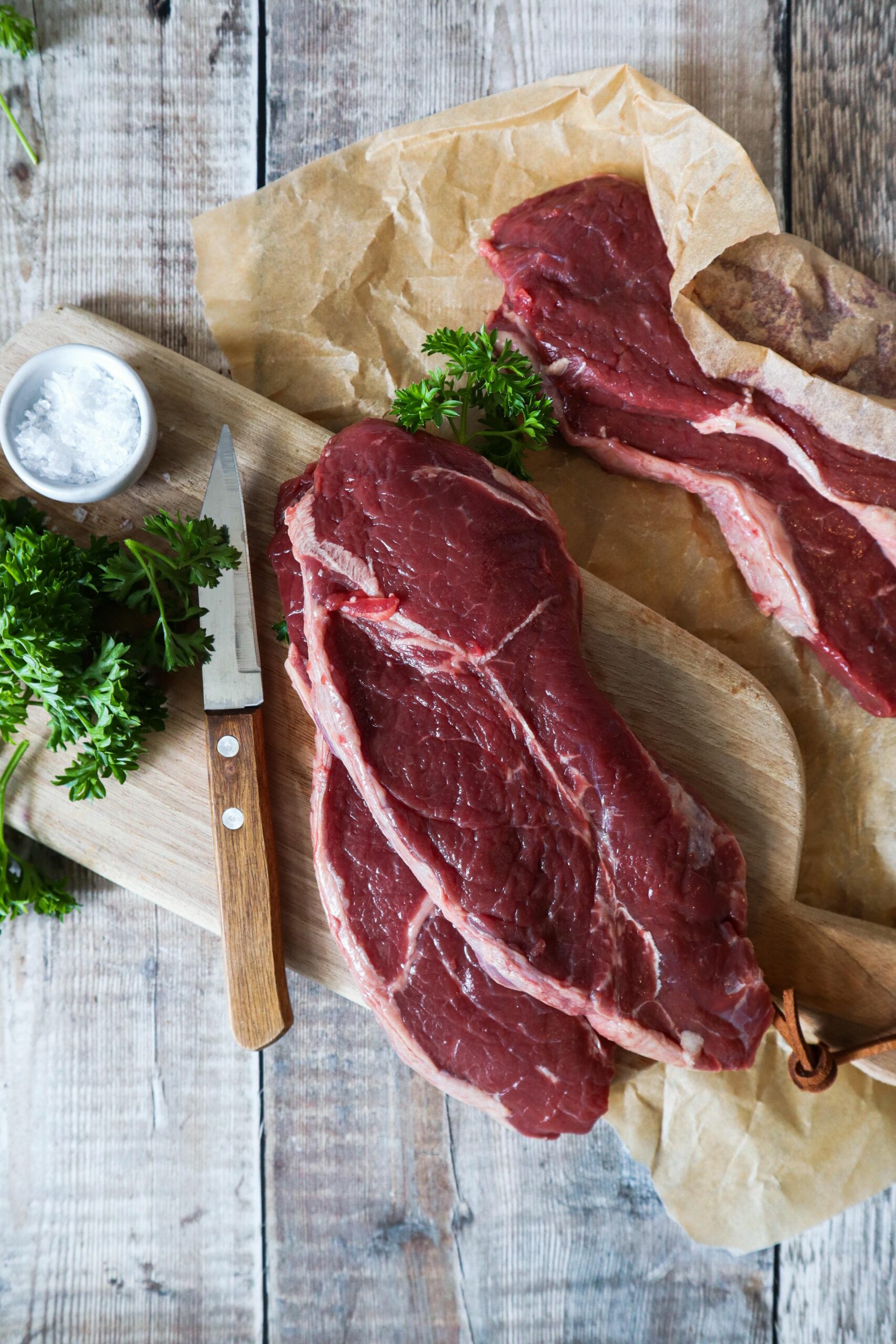
“How much meat should I buy per person?” sounds simple, but it is one of the easiest ways to over- or under-buy for a meal. A number that works for boneless steaks can be too low for a bone-in rib steak, excessive in a stew full of vegetables and pulses, or insufficient at a barbecue where meat is almost the entire meal.
The useful way to plan is not to memorise one number. Separate purchased weight, edible portion, cooking loss and the role of meat in the menu. The ranges below are practical culinary planning estimates, not official dietary serving recommendations. Appetite and side dishes should always modify them.
First ask: is meat the main event or one part of the menu?
If you are serving starters, bread, salad, potatoes and dessert, the meat portion can be smaller than at a meal built around one impressive cut. A stew with vegetables and sauce also distributes the plate across more ingredients than a ribeye served almost alone.
For an ordinary main course with side dishes, a useful starting point for boneless meat is about 180–250 grams raw per adult. This is not rigid: a multi-course menu may need less, while a meat-centred meal may need more.
Boneless meat: the easiest calculation
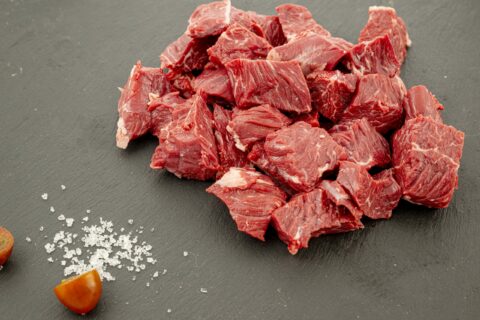
Steaks, boneless ribeye, diced stewing beef and pan-frying cuts are relatively straightforward because most of the purchased weight is edible, aside from trimmed fat and moisture lost in cooking. For a main course with accompaniments, 180–250 g per adult is a practical planning range.
Young children, light eaters and long tasting menus may require clearly smaller portions. A special occasion built around a premium steak may justify larger ones.
Bone-in cuts: grams are not directly comparable
An 800 g bone-in steak does not provide 800 g of edible meat. Part of the weight is bone, and some exterior fat may remain uneaten. Bone-in purchasing therefore needs more margin.
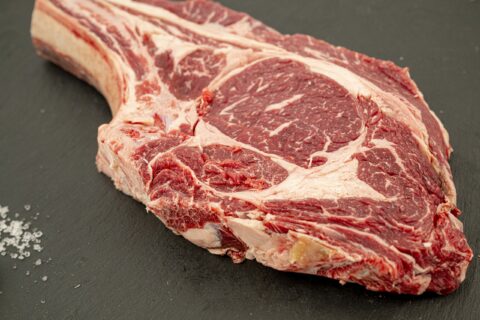
As a practical guide, roughly 300–450 g raw per adult can make sense for substantial bone-in cuts, depending on bone proportion and the rest of the meal. Large pieces are often easier to share than individual steaks because you can slice, serve moderately and offer seconds.
Sharing large steaks
For four adults, two medium-large bone-in steaks can be easier to manage than four separate pieces. It simplifies cooking and lets the table adjust consumption naturally. With thick steaks, total weight should always be read alongside bone size and thickness.
For more detail on ribeye, bone-in steaks and grill cuts, see our pan and grill beef guide.
Stews and braises
In a stew with potatoes, vegetables, rice or pulses, meat does not need to dominate the plate. A useful planning range is often 150–220 g raw meat per adult. Recipes with generous integrated side ingredients may need less; very meat-heavy braises may need more.
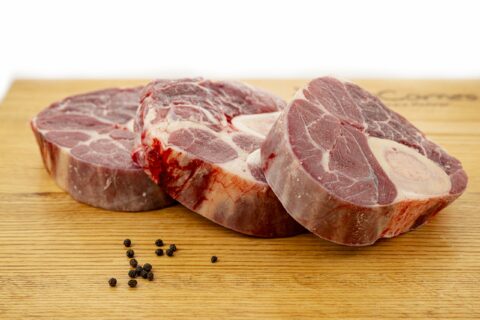
Connective-tissue-rich cuts lose weight during cooking but also enrich the liquid with gelatin and flavour. Osso buco requires extra allowance for bone, while boneless shank is easier to calculate directly.
Ground beef and burgers
For homemade burgers, 150–180 g raw meat generally produces a generous adult burger, especially with a bun and sides. Two smaller patties may add up to a similar total. Children and slider-style servings obviously use less.
For meatballs, bolognese and fillings, meat shares the dish with sauce, pasta, rice or other ingredients. A steak-style portion makes little sense here. Calculate the whole recipe and divide by the number of diners.
Barbecues with several meats
The classic barbecue mistake is to allocate a full serving of every item to every guest: one steak, one burger, sausages and another cut. Variety quickly becomes excess. Instead, decide on the total raw meat weight first and divide that amount between products.
As an organisational starting point, 250–350 g raw meat in total per adult can work for a mixed barbecue with side dishes, adjusted for appetite, duration and starters. Add extra allowance when a significant part of the selection is bone-in.
Cooking loss matters
Meat loses water and sometimes fat during cooking. The amount depends on cut, final internal temperature, duration and technique. A rare steak usually loses less weight than a long-cooked roast. That is why purchasing guidance is most useful when expressed as raw weight.
There is no need to apply one universal shrinkage percentage to every cut. For domestic planning, bone versus boneless and cooking style are more useful distinctions.
Adjust for the people at your table
A group with children and older adults will not eat the same average amount as a group of hungry young adults. Time of day, number of starters, duration of the meal and whether food is plated or shared also influence consumption.
When uncertain, a modest margin is sensible when the product can be stored safely and leftovers have a plan. Cooked beef can later become sandwiches, stir-fries or fillings if it is cooled and refrigerated properly.
A simple mental formula
For a normal meal, start with 180–250 g boneless; 300–450 g bone-in; 150–220 g in stews with substantial accompaniments; and 250–350 g total for a mixed barbecue. Then adjust for appetite, starters and sides.
The goal is not to hit an exact number. It is to buy using a model that reflects how much of the purchased weight will actually reach the plate.
Related beef products
-
Sale!
 Select options
This product has multiple variants. The options may be chosen on the product page
Select options
This product has multiple variants. The options may be chosen on the product page



 100% mature beef burgers – gluten-free (2)
  100% beef burgers – gluten-free (2)